Historic NZ events in December
Dec
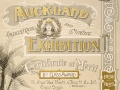
1898 First movie shot in New Zealand
The first motion pictures known to have been taken in New Zealand were made by photographer W.H. Bartlett for the entrepreneur Alfred Whitehouse, who in 1895 had imported the colony’s first ‘kinetoscope’.
Read more...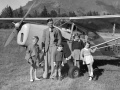
1933 First flight from North Cape to Invercargill
Twenty-two-year-old pilot E.F. ('Teddy') Harvie and his female passenger, 18-year-old Trevor Hunter, set a record for the longest flight within New Zealand in a single day. They completed the 1880-km journey in 16 hours 10 minutes.
Read more...
2018 Bronze medal won by young New Zealanders in Uruguay
New Zealand beat Canada 2–1 at the Estadio Charrúa in Montevideo in the third-place playoff at the FIFA Under-17 Women’s World Cup.
Read more...Dec
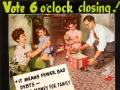
1917 'Six o'clock swill' begins
Six p.m. closing of pubs was introduced as a temporary wartime measure. It ushered in what became known as the 'six o'clock swill', in which patrons drank their fill before closing time. The practice was to last for 50 years.
Read more...
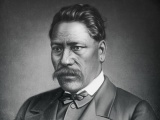
1928 First Bishop of Aotearoa consecrated
Frederick Bennett, who had a Ngāti Whakaue mother and an Irish father, was ordained as an Anglican priest in 1897. He spent 13 years as superintendent of the Māori mission in Rotorua before moving to Hastings for mission work in Hawke’s Bay.
Read more...Dec
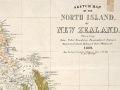
1863 Land confiscation law passed
The New Zealand Settlements Act enabled the confiscation (raupatu) of land from Māori tribes deemed to have ‘engaged in open rebellion against Her Majesty’s authority’. Pākehā settlers would occupy the confiscated land.
Read more...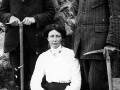
1910 First female ascent of Aoraki/Mt Cook
Freda du Faur was the first female to complete the ascent of Aoraki/Mt Cook.
Read more...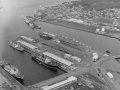
1960 Bluff Island Harbour opened
The 40-ha man-made Island Harbour, eight years in the making, is the centrepiece of the modern port facilities at Bluff, New Zealand's southernmost commercial deepwater port.
Read more...
2013 Alexia Pickering inducted into the Attitude Awards Hall of Fame
Alexia Pickering’s induction into the Attitude Awards Hall of Fame recognised her lifelong dedication to championing accessibility for all New Zealanders.
Read more...Dec
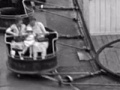
1928 Luna Park opens in Auckland
Inspired by its famous New York namesake, the amusement park opened to the public on Auckland’s waterfront (opposite the site of Spark Arena) at 2 pm.
Read more...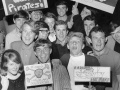
1966 Radio Hauraki rules the waves
Pirate station Radio Hauraki broadcast its first scheduled transmission from beyond New Zealand’s 3-mile territorial limit.
Read more...Dec

1890 First 'one man one vote' election
New Zealand’s electoral law had been changed so that no one could vote in more than one general electoral district. This ended the long-standing practice of ‘plural voting’ by those who owned property in more than one electorate.
Read more...Dec
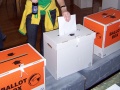
1905 Special votes cast in general election
For the first time in New Zealand’s electoral history, registered voters who were away from their electorate on polling day were able to cast a ‘special’ absentee vote at any polling booth in the country.
Read more...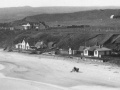
1922 Chatham Islanders vote in first election
Although the first elections for New Zealand’s House of Representatives were held in 1853, it would be another 69 years before residents of the isolated Chatham Islands (Rēkohu or Wharekauri) were able to vote for members of Parliament.
Read more...Dec
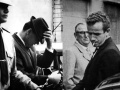
1963 Bassett Road machine-gun murders
The bullet-ridden bodies of Frederick George Walker and Kevin James Speight were found in a house on Bassett Rd in Remuera, Auckland. A team of 32 detectives began enquiries that led to the arrest of Ron Jorgensen and John Gillies.
Read more...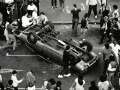
1984 Queen Street concert ends in riot
‘Tears, terror at the concert that made history’ was one of the newspaper headlines the day after the Queen St riot of December 1984.
Read more...Dec
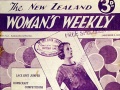
1932 First issue of New Zealand Woman's Weekly
The first issue of the New Zealand Woman’s Weekly was distributed during the Depression. The magazine contained advice on cooking and housework, romantic short stories, knitting patterns and feature articles.
Read more...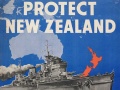
1941 New Zealand at war with Japan
The announcement by the Prime Minister’s Department that New Zealand was in a state of war with Japan followed the surprise attack on the United States naval base at Pearl Harbor, Hawaii. Japan also attacked Hong Kong, the Philippines, Thailand and Malaya.
Read more...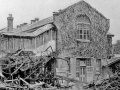
1942 Deadly fire at Seacliff Mental Hospital
The fire that swept through a locked ward of the Seacliff Mental Hospital, north of Dunedin, killed 37 female patients.
Read more...
1972 Whetu Tirikātene-Sullivan becomes first Māori woman Cabinet minister
Whetu Tirikātene-Sullivan became the first female Māori Cabinet minister when she was sworn in as Minister of Tourism in Norman Kirk’s third Labour government
Read more...Dec
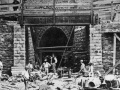
1867 First passengers traverse Lyttelton rail tunnel
After 6½ years of construction, it took just 6½ minutes for the first trainload of passengers to speed through the 2.6- km tunnel linking the Canterbury plains to the port of Lyttelton.
Read more...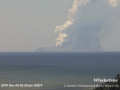
2019 Whakaari / White Island eruption kills 22
Forty-seven tourists and guides were on Whakaari (White Island) in Bay of Plenty when the active volcano erupted at 2.11 p.m. Twenty-two died immediately or subsequently from burns or respiratory damage. Most of the survivors suffered severe or critical injuries.
Read more...Dec
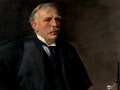
1908 Rutherford wins Nobel Prize
Ernest Rutherford’s discoveries about the nature of atoms shaped modern science and paved the way for nuclear physics. Albert Einstein called him a ‘second Newton’ who had ‘tunnelled into the very material of God’.
Read more...
1918 Anzac troops kill Arab civilians at Surafend
About 40 male Arab civilians were killed by Anzac troops in revenge for the death of New Zealand Trooper Leslie Lowry.
Read more...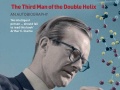
1962 Maurice Wilkins wins Nobel Prize
New Zealand-born Maurice Wilkins and his colleagues James Watson and Francis Crick shared the prize for their investigation of the structure of deoxyribonucleic acid (DNA), the genetic molecule found in all organisms.
Read more...
1999 Georgina Beyer becomes first transgender woman elected to Parliament
Georgina Beyer won the Wairarapa electorate for Labour in 1999 by a margin of 3033 votes.
Read more...
2016 Joseph Parker wins world heavyweight boxing title
The 24-year-old South Aucklander of Samoan descent became the second New Zealand-born holder of a recognised world professional boxing title by outpointing Mexican Andy Ruiz.
Read more...Dec
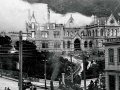
1907 Parliamentary Library escapes fire
A great library bonfire was narrowly avoided in 1907, when fire swept through Parliament Buildings in Wellington.
Read more...
1931 Statute of Westminster enacted
The British Parliament passed the Statute of Westminster, confirming the complete autonomy of its six Dominions. Australia and New Zealand held back from adopting this status, but in 1947 New Zealand became the last of the Dominions to do so.
Read more...Dec
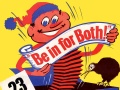
1961 First Golden Kiwi draw
Tickets went on sale for New Zealand’s new national Golden Kiwi lottery. All 250,000 tickets sold within 24 hours, with the £12,000 top prize (equivalent to nearly $550,000 today) four times that offered in previous lotteries.
Read more...Dec
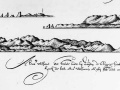
1642 First recorded European sighting of New Zealand
Towards noon the Dutch explorer Abel Tasman sighted 'a large land, uplifted high', possibly the peaks of the Paparoa Range behind Punakaiki.
Read more...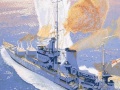
1939 Battle of the River Plate
When the cruiser HMS Achilles opened fire on the German pocket battleship Admiral Graf Spee in the South Atlantic, it became the first New Zealand unit to strike a blow at the enemy in the Second World War.
Read more...Dec
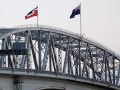
2009 Cabinet endorses Tino Rangatiratanga flag
The government recognised the Māori (Tino Rangatiratanga) flag as the preferred national Māori flag.
Read more...Dec
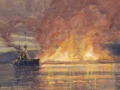
1915 Evacuation of Gallipoli begins
In a well-planned operation which contrasted sharply with those mounted earlier in the Gallipoli campaign, Allied troops were successfully withdrawn from Anzac Cove and Suvla Bay between 15 and 20 December.
Read more...
1944 Poll tax on Chinese immigrants abolished
The Finance Act (No. 3) 1944 abolished the poll tax introduced in 1881, which was described by Minister of Finance Walter Nash as a 'blot on our legislation'.
Read more...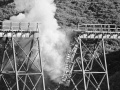
1951 Belmont viaduct blown up
The 38-m-high railway viaduct, near Johnsonville, Wellington, was built in 1885 and had not been used since 1937. It was demolished by army engineers as a training exercise.
Read more...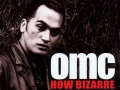
1995 OMC release ‘How bizarre’
It may have been the mariachi trumpets, the gently rapped lyrics or that ‘making-me-crazy’ chorus, but whatever the reason, ‘How bizarre’ by the South Auckland group Otara Millionaires Club (OMC) became one of the most successful songs ever recorded in New Zealand.
Read more...Dec
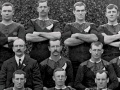
1905 All Blacks' non-try hands Wales historic win
A great rugby rivalry was born when a try by All Black Bob Deans was disallowed, resulting in the only loss of the ‘Originals’ tour.
Read more...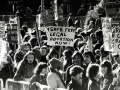
1977 Contraception, Sterilisation, and Abortion Act passed
The Act specified the circumstances in which contraceptives could be supplied to young people, sterilisations could be undertaken, and abortions could be authorised.
Read more...Dec
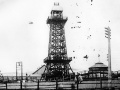
1889 New Zealand’s Eiffel Tower opens
Just 8½ months after Gustave Eiffel’s famous Paris tower was officially completed in March 1889, a wooden replica Eiffel Tower opened at the 1889–90 New Zealand and South Seas Exhibition in Dunedin.
Read more...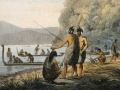
1773 Ten crew from the Adventure killed
At Wharehunga Bay, Queen Charlotte Sound, 10 men serving on the ship accompanying James Cook's Resolution died at the hands of Ngāti Kuia and Rangitāne.
Read more...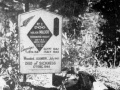
1944 Major Major, mascot of 19 Battalion, dies of sickness
Major Major, No. 1 Dog, 2NZEF, a member/mascot of 19 Battalion since 1939, died of sickness in Italy. He was buried with full military honours at Rimini.
Read more...Dec
1988 Air New Zealand women cabin crew win anti-discrimination case
Air New Zealand was found to be in breach of the Human Rights Act after more than a decade of female cabin crew campaigning for the same opportunities as male workers at the airline.
Read more...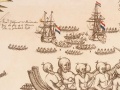
1642 First known encounter between Māori and Europeans
Abel Tasman’s Dutch East India Company expedition had the first known European contact with Māori. It did not go well.
Read more...Dec
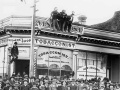
1879 Universal male suffrage introduced
The Qualification of Electors Act extended the right to vote (the franchise) to all European men aged 21 or over, regardless of whether they owned or rented property.
Read more...
1843 First Auckland A and P Show
Agricultural and pastoral shows celebrating excellence in agriculture and animal husbandry became annual events in communities around New Zealand.
Read more...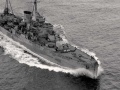
1941 HMS Neptune lost in Mediterranean minefield
In New Zealand’s worst naval tragedy, the Royal Navy cruiser HMS Neptune struck enemy mines and sank off Libya. Of the 764 men who lost their lives, 150 were New Zealanders.
Read more...Dec
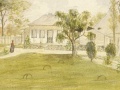
1832 New Zealand’s first cricket match
Church Missionary Society (CMS) leader Henry Williams gave the male pupils (Māori and Pākehā) of his mission school at Paihia in the Bay of Islands a rare day off. Read more...
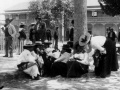
1893 Women vote in Māori seats for first time
Just over three weeks after New Zealand women became the first in the world to vote in a national parliamentary election, voting was held in the four Māori electorates.
Read more...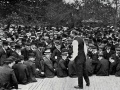
1913 Waterfront strike ends
The Great Strike of 1913, which had begun in late October when Wellington waterside workers stopped work, finally ended when the United Federation of Labour conceded defeat.
Read more...Dec
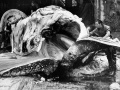
1964 New Zealand whalers harpoon their last victim
More than 170 years of New Zealand whaling history ended when J.A. Perano and Company caught its last whale off the Kaikōura coast.
Read more...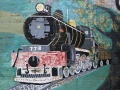
1971 Full steam ahead for Kingston Flyer
A few months after the last steam locomotives had been withdrawn from this country's scheduled rail operations, New Zealand Railways launched a new tourist-oriented steam passenger venture in the South Island.
Read more...Dec

1916 Future prime minister charged with sedition
Peter Fraser’s trial in the Wellington Magistrates’ Court was the sequel to a speech in which he attacked the government’s policy of military conscription.
Read more...Dec
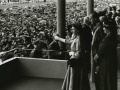
1953 Queen Elizabeth II arrives for royal tour
For the New Zealanders who experienced it, the visit of the young Queen and her dashing husband, Prince Philip, in the summer of 1953–4 was a never-to-be forgotten event.
Read more...Dec
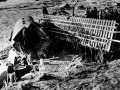
1953 Tangiwai railway disaster
The worst railway disaster in New Zealand’s history occurred on Christmas Eve 1953, when the Wellington–Auckland night express plunged into the flooded Whangaehu River, just west of Tangiwai in the central North Island.
Read more...Dec

1814 First Christian mission established
At Hohi (Oihi) Beach in the Bay of Islands, Samuel Marsden preached in English to a largely Māori gathering, launching New Zealand’s first Christian mission.
Read more...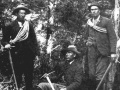
1894 First ascent of Aoraki/Mt Cook
At 1.30 on the afternoon of Christmas Day 1894, three young men became the first to stand atop Aoraki/Mt Cook, the highest mountain in the colony.
Read more...Dec
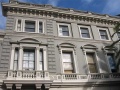
1879 Sectarian violence in Canterbury
In Christchurch, 30 Catholic Irishmen attacked an Orange (Protestant) procession with pick-handles, while in Timaru, 150 men from Thomas O’Driscoll’s Hibernian Hotel surrounded Orangemen and prevented their procession taking place.
Read more...Dec
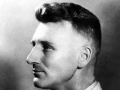
1987 Death of Rewi Alley
The former Cantabrian died in Beijing after living in China through six tumultuous decades.
Read more...Dec
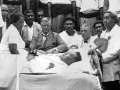
1929 'Black Saturday' in Samoa
New Zealand military police fired on Mau independence demonstrators in Apia, killing 11 Samoans, including the independence leader Tupua Tamasese Lealofi III.
Read more...Dec
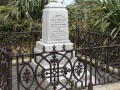
1880 Tuhiata hanged for murder of Mary Dobie
Tuhiata (Ngāti Ruanui, Tītahi; known as Tuhi) was hanged in Wellington for the murder of the artist Mary Dobie at Te Namu, near Ōpunake. He wrote to the governor of New Zealand a few days before his execution, asking that 'my bad companions, your children, beer, rum and other spirits die with me'.
Read more...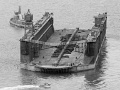
1931 Floating dock breaks moorings in Wellington Harbour
Built in England, the Wellington Harbour Board’s new Jubilee Dock was 178 m long, 36 m wide and could lift ships displacing 17,000 tons.
Read more...Dec
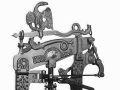
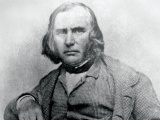
1834 Colenso arrives with a printing press
Church Missionary Society printer William Colenso arrived in the Bay of Islands on the schooner Blackbird with New Zealand’s second printing press.
Read more...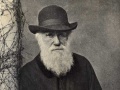
1835 Charles Darwin leaves New Zealand after nine-day visit
Darwin's visit to the Bay of Islands on HMS Beagle was brief and unspectacular from his point of view. The Beagle's captain, Robert FitzRoy, would later serve as the second governor of New Zealand.
Read more...Dec
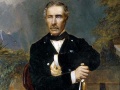
1853 Grey leaves New Zealand after first term as governor
During his first term as governor, George Grey was praised for ending the Northern War and obtaining land from Māori, but he angered settlers by delaying the implementation of a constitution that would have given them some political power.
Read more...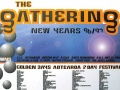
1996 First Gathering dance festival held
On New Year’s Eve around 4000 people made their way to the remote location of Canaan Downs, Tākaka, to take part in the first Gathering, a two-day festival for electronic dance music fans.
Read more...