Historic NZ events in August
Aug

1987 Te reo Māori recognised as official language
The Maori Language Act came into force, making te reo Māori an official language of New Zealand.
Read more...
1992 Lorraine Moller wins Olympic bronze
At the age of 37, Lorraine Moller ran the race of her life to place third in the marathon at the Barcelona Olympics.
Read more...Aug
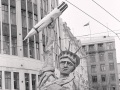
1983 Protest as USS Texas visits Auckland
The visit of the nuclear-powered guided missile cruiser Texas sparked anti-nuclear rallies on land and sea.
Read more...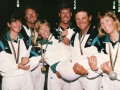
1992 Barbara Kendall wins gold at Barcelona
Windsurfer Barbara Kendall was New Zealand’s only gold medallist at the Barcelona Olympics.
Read more...Aug

1872 Anthony Trollope begins New Zealand tour
Anthony Trollope, one of the Victorian era’s most famous novelists, landed at Bluff at the start of a two-month tour of the colony.
Read more...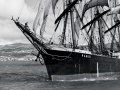
1941 Finnish sailing ship seized as war prize
Five days after its arrival in Wellington, the four-masted barque Pamir was seized in prize by the New Zealand government.
Read more...Aug
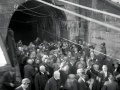
1923 Rail tunnel pierces the Southern Alps
The opening of the 8.5-km Ōtira tunnel completed the long-planned transalpine railway between Christchurch and Greymouth. At the time, it was the longest tunnel outside the Alps and the seventh-longest in the world.
Read more...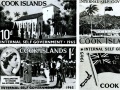
1965 Cook Islands achieves self-government
First included within the boundaries of New Zealand in 1901, the islands were governed by a Resident Commissioner until 1946. When they achieved self-government, Cook Islanders remained New Zealand citizens.
Read more...Aug
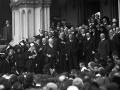
1914 New Zealand enters the First World War
New Zealand received the news of the outbreak of war just before 1 p.m. on 5 August. At 3 p.m. the Governor, Lord Liverpool, announced the news from the steps of Parliament to a large and enthusiastic crowd.
Read more...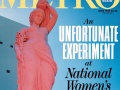
1988 Cartwright Report condemns cancer treatment
The report was triggered by the publication in Metro magazine of ‘An Unfortunate Experiment’, an article by Sandra Coney and Phillida Bunkle which alleged that cervical cancer patients at Auckland’s National Women’s Hospital were receiving inadequate treatment.
Read more...Aug
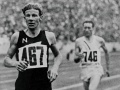
1936 Lovelock wins 1500-m gold at Berlin
Jack Lovelock won New Zealand’s first Olympic athletics gold medal at the 1936 Berlin Olympics in a race witnessed by 120,000 spectators – including Adolf Hitler.
Read more...
2012 Valerie Adams wins second Olympic gold
Valerie Adams won gold in the shot put at the London Olympic Games. It was awarded a week after the competition, when the intial winner was disqualified for testing positive for an anabolic steroid.
Read more...Aug
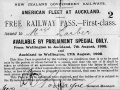
1908 First train runs length of main trunk line
The 'Parliament Special' travelled over a makeshift track in the central section of the still-unfinished main trunk line. It carried MPs north to greet the American navy's 'Great White Fleet'.
Read more...
1991 Death of Billy T. James
The much-loved entertainer was just 43 when he died of heart failure.
Read more...
1997 Beatrice Faumuina wins athletics world championship gold
Beatrice Faumuina became the first New Zealander to win an event at a World Athletics Championships when she threw the discus 66.82 m at Athens in 1997.
Read more...Aug
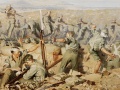
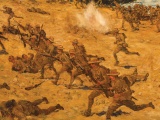
1915 Wellington Battalion captures Chunuk Bair
The high point of the New Zealand effort at Gallipoli, the capture of Chunuk Bair underlined the leadership qualities of Lieutenant-Colonel William Malone.
Read more...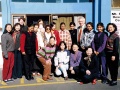
1995 Shakti begins in New Zealand
On 8 August 1995 Farida Sultana and seven other women met to discuss the establishment of a culturally specialist support service for Asian, Middle Eastern and African women in New Zealand.
Read more...Aug
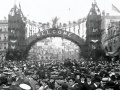
1908 US 'Great White Fleet' arrives in Auckland
Sixteen American battleships arrived in New Zealand with much pomp and ceremony.
Read more...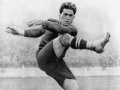
1930 George Nepia plays last All Blacks test
Nepia was one of the stars of the 1924-5 All Blacks, playing in all 32 matches on the team's tour of the British Isles, France and Canada. He played the last of his nine tests in 1930, against the British Lions.
Read more...Aug
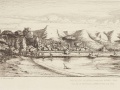
1840 British proclaim sovereignty as French head for Akaroa
HMS Britomart arrived at Akaroa, on Banks Peninsula, a week before a shipload of French colonists landed there. The Britomart's captain raised the Union Jack to confirm the British claim to sovereignty over the area.
Read more...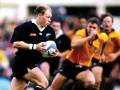
1995 News Corporation's rights to professional rugby bolstered
All Blacks Josh Kronfeld and Jeff Wilson signed contracts with the New Zealand Rugby Football Union (NZRFU), heralding the victory of Rupert Murdoch over Kerry Packer in a battle for the right to televise professional rugby.
Read more...Aug
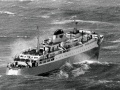
1962 Picton ferry Aramoana enters service
Few ships have had as much impact on New Zealand history as the Aramoana, the country’s first roll-on roll-off ferry, which entered service between Wellington and Picton in 1962.
Read more...Aug
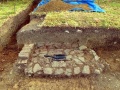
1816 New Zealand’s first mission school opens
The simple building measured about 10m x 6m and included an area for Māori students to sleep and a cordoned-off platform for teachers and Pākehā students
Read more...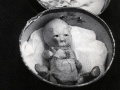
1895 Winton baby-farmer Minnie Dean hanged
In 1895 Southland’s Williamina (Minnie) Dean became the first – and only – woman to be hanged in New Zealand. Her story exposed the stark realities of paid childcare and the lack of choice for many women in this period.
Read more...
1975 John Walker breaks world mile record
John Walker became history’s first sub-3:50 miler, running 3:49.4 at Gothenburg, Sweden.
Read more...Aug
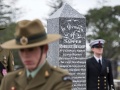
1914 First fatal NZ casualty of the First World War
Sapper Robert Arthur Hislop was guarding the Parnell railway bridge in Auckland when he accidentally fell. He died from his injuries six days later, but it would take a century for Hislop to be officially recognised as the first New Zealand casualty of the Great War.
Read more...
2005 Death of David Lange
David Lange was New Zealand's youngest prime minister of the 20th century. Renowned for his sharp wit and oratory, he led the fourth Labour government from 1984 until 1989.
Read more...Aug
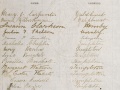
1891 Women's suffrage petitions presented to Parliament
These petitions, signed by 9000 women, contributed to the introduction of a Female Suffrage Bill in Parliament. This received majority support in the House of Representatives but was defeated in the Legislative Council.
Read more...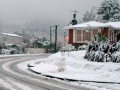
2011 Polar blast sweeps the country
New Zealand’s heaviest snowfall in decades closed airports and schools, forced the cancellation of buses and trains, caused electricity blackouts and cut off many communities across the country. Weather watchers described the storm as ‘a once in a lifetime event’.
Read more...Aug
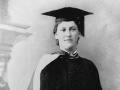
1881 First woman Master of Arts in British Empire graduates
Helen Connon was the first woman in the British Empire to gain her Master of Arts degree. Her academic career started with edcuation in Dunedin, New Zealand.
Read more...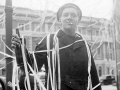
1945 The war is over! VJ Day
Japan's surrender following the atomic bombing ofHiroshima and Nagasaki ended the Second World War. More than 200,000 New Zealanders had served during the war and more than 11,500 had died.
Read more...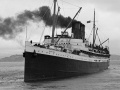
1951 Troopship Wahine wrecked en route to Korea
The TSS Wahine was chartered by the New Zealand government to transport Kayforce troops to the Korean War. Shortly after leaving Darwin it ran aground on Masela Island in the Arafura Sea, east of Timor.
Read more...Aug
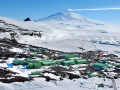
1923 New Zealand makes claim to Ross Dependency
A notice in the New Zealand Government Gazette gave effect to a British Order in Council, which stated that coasts of the Ross Sea would be administered by New Zealand.
Read more...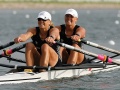
2008 Evers-Swindell twins defend Olympic rowing title at Beijing
While Kiwis had high expectations of their rowing squad at the Beijing Olympics, few expected identical twins Caroline and Georgina Evers-Swindell to successfully defend the double sculls title they had won in Athens in 2004.
Read more...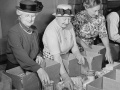
1944 CORSO formed
CORSO was set up to support aid efforts in war-torn nations. It became increasingly involved in the developing world and also spoke out about poverty in New Zealand.
Read more...Aug
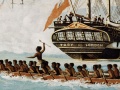
1839 New Zealand Company ship Tory arrives
The sailing ship Tory dropped anchor in Queen Charlotte Sound to pick up fresh water, food and wood before proceeding to Port Nicholson (Wellington Harbour).
Read more...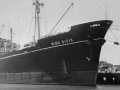
1942 Attack on the Nino Bixio
118 New Zealand prisoners of war died when the Italian transport ship Nino Bixio was torpedoed by a British submarine in the Mediterranean.
Read more...Aug
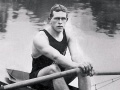
1910 Champion rower Dick Arnst wins world title race on Zambezi River
Former top cyclist Dick Arnst had become world sculling champion in 1908. After two successful title defences at home, the muscular Arnst raced in a more exotic setting – on the Zambezi River.
Read more...
1955 20-year-old hanged for murder
Edward Te Whiu was one of the last four people executed in New Zealand. He admitted to killing 75-year-old widow Florence Smith, but his underprivileged background and childlike mental state led some to question the appropriateness of the death penalty.
Read more...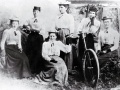
1892 First women's cycling club in Australasia formed
Soon after the development of the modern bicycle, Australasia's first women's cycling club was formed in Christchurch.
Read more...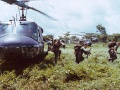
1971 Deadline for Vietnam pull-out announced
Prime Minister Keith Holyoake’s statement in Parliament that New Zealand’s combat force would be withdrawn before the end of the year coincided with a similar announcement by the Australian government.
Read more...Aug
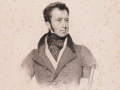
1853 E.G. Wakefield elected to Parliament
The originator of the New Zealand Company was elected to the House of Representatives as the member for Hutt six months after arriving in the colony. He had been quick to lobby for the introduction of responsible government.
Read more...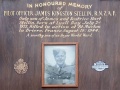
1944 Kiwi pilot's sacrifice saves French village
As his damaged Hawker Typhoon fighter-bomber rapidly lost height, Pilot Officer James Stellin struggled to avoid crashing into Saint-Maclou-la-Brière, a village of 370 people. He succeeded, but at the cost of his own life. The villagers gave him a hero’s funeral and have honoured his memory ever since.
Read more...
2012 Three New Zealand soldiers killed in Afghanistan
At approximately 9:20 p.m. local time, a Humvee taking a patrol member to see a doctor at Romero base in Bamiyan province was destroyed by an improvised explosive device.
Read more...Aug
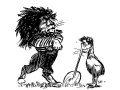
1904 First use of kiwi as unofficial national symbol?
The New Zealand Free Lance printed a J.C. Blomfield cartoon in which a plucky kiwi morphed into a moa as the All Blacks defeated Great Britain 9–3 in the first rugby test between Motherland and colony. This may have been the first use of a kiwi to symbolise the nation in a cartoon.
Read more...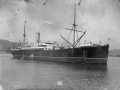
1940 Turakina sunk by German raider in Tasman
It was the first naval battle in the Tasman Sea. The New Zealand Shipping Company freighter Turakina was intercepted and sunk by the Orion nearly 500 km off the Taranaki coast with the loss of 36 lives. Twenty survivors were taken prisoner.
Read more...Aug
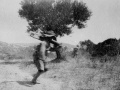
1915 New Zealanders attack Hill 60
Hill 60 was the last offensive action fought by the New Zealanders during the Gallipoli campaign. The ‘abominable little hill’, as it was dubbed by Brigadier-General Andrew Russell, saw bitter fighting between New Zealand and Ottoman troops in late August 1915.
Read more...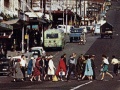
1958 Auckland pedestrians begin 'Barnes Dance'
Auckland became the first New Zealand city to introduce the ‘Barnes Dance’ system, which stopped all traffic at intersections, allowing pedestrians to cross in any direction at the same time.
Read more...Aug
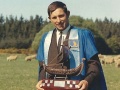
1969 First Young Farmer of the Year chosen
Held at the South Pacific Hotel in Auckland, the competition was open to all members of the Young Farmers’ Club. The inaugural winner was Gary Frazer from Swannanoa, near Christchurch. The contest has become an established part of the farming calendar.
Read more...Aug
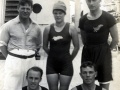
1920 New Zealand's first female Olympian
Violet Waldron was New Zealand’s first female Olympian, and part of New Zealand’s first Olympic team of four. She competed in freestyle swimming in the 1920 Antwerp Summer Olympics.
Read more...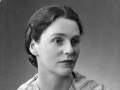
1939 Writer Robin Hyde dies in London
The journalist, poet and novelist, born Iris Wilkinson, was one of New Zealand's finest inter-war writers. Troubled by depression, illness and poverty, she took her own life in London.
Read more...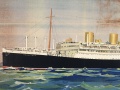
1947 Assisted immigration resumes after war
The first draft of 118 British immigrants arrived in Auckland on the New Zealand Shipping Company liner Rangitata. They were among 77,000 men, women and children who arrived from Great Britain under the assisted immigration scheme between 1947 and 1975.
Read more...Aug
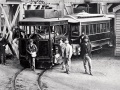
1878 Wellington steam-tram service opened
The governor, the Marquess of Normanby, formally opened the new service, which was said to be the first in the southern hemisphere.
Read more...Aug
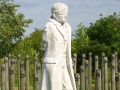
1916 New Zealand soldier executed
After being found guilty of desertion, 28-year-old Private Frank Hughes was killed by a firing squad in Hallencourt, northern France. He was the first New Zealand soldier executed during the First World War.
Read more...
1920 First flight across Cook Strait
Captain Euan Dickson completed the first air crossing of Cook Strait, flying a 110-hp Le Rhone Avro from Christchurch to Upper Hutt with the first air mail between the South and North Islands.
Read more...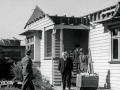
1948 Killer twister hits Frankton
Three people were killed, 80 injured and about 150 buildings destroyed or badly damaged by New Zealand’s deadliest recorded tornado. The damage was estimated at more than £1 million (equivalent to $77 million in 2020).
Read more...Aug
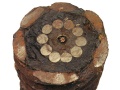
1866 Telegraph line laid across Cook Strait
After two bungled attempts and near disaster at sea, the installation of the first communications cable between the North and South Islands of New Zealand was completed. A simple copper telegraph cable was laid on the sea floor from Whites Bay, north of Blenheim, to Lyall Bay on Wellington’s south coast.
Read more...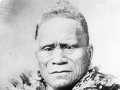
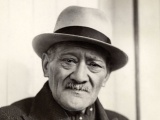
1894 Death of second Māori King
Tāwhiao had led his people through the traumatic period during and after the wars of the 1860s. He was succeeded by his son Mahuta.
Read more...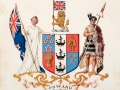
1911 New Zealand Coat of Arms warranted
On this day King George V signed the Royal Warrant assigning the first New Zealand Coat of Arms. The Warrant was published in the New Zealand Gazette on 11 January 1912.
Read more...Aug

1904 Foundation stone for Victoria University’s first building laid
Victoria College (now Victoria University of Wellington) was founded in 1897 to mark Queen Victoria's 60th jubilee. Until the opening of the Kelburn building in 1906, classes were taught in rented rooms.
Read more...
1911 Pawelka's last prison break
Joseph Pawelka’s escape from Wellington’s Terrace Gaol was the last of three bold but seemingly effortless prison escapes he made over a period of 18 months.
Read more...Aug
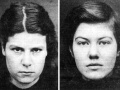
1954 'Heavenly creatures' found guilty of murder
Pauline Parker, aged 16, and Juliet Hulme, 15, were convicted of the murder of Pauline's mother Honora at Christchurch on 22 June. Their story was later the subject of Peter Jackson's acclaimed film, Heavenly creatures.
Read more...
1992 Canterbury's 'Big Snow'
Cantabrians awoke to find the region blanketed in snow. The ‘Big Snow’, as the 1992 storm came to be known, was the region’s heaviest for 30 years.
Read more...Aug
1914 New Zealand force captures German Samoa
Colonel Robert Logan led a 1400-strong expeditionary force to capture German Samoa in New Zealand’s first military action of the First World War. This was the second German territory, after Togoland in West Africa, to fall to the Allies in the war.
Read more...Aug
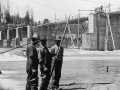
1926 Kawarau Falls dam becomes operational
Hundreds attended the opening ceremony for a dam above the Kawarau Falls which was to temporarily block the outlet from Lake Wakatipu and hopefully expose gold-bearing rock to prospectors.
Read more...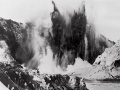
1903 Four killed by Rotorua geyser
Guide Joseph Warbrick and three tourists were killed instantly when the Waimangu geyser erupted unexpectedly.
Read more...Aug
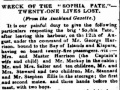
1841 Wreck of the Sophia Pate
The fate of the brig Sophia Pate, wrecked on a sandbar at the entrance to Kaipara Harbour with the loss of 21 lives, highlighted the dangers of navigating New Zealand’s poorly charted coastal waters.
Read more...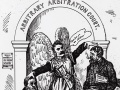
1894 Arbitration Act becomes law
The Industrial Conciliation and Arbitration (IC&A) Act made New Zealand the first country in the world to outlaw strikes and introduce compulsory arbitration.
Read more...
1974 Death of Norman Kirk
Leader of the Labour Party since 1965 and prime minister since late 1972, 'Big Norm' died suddenly at the age of 51. He was the fifth New Zealand PM to die in office.
Read more...