
A selection of stories about New Zealand libraries and librarians.
Stories
New Zealand’s first public library
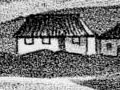
New Zealand’s first public library, The Port Nicholson Exchange and Public Library, opened in Wellington in 1841. It was established by a group of the city’s first settlers, and operated for one year, at the corner of Charlotte Street (now Molesworth Street) and Lambton Quay, an area now occupied by the Wellington cenotaph. Read more about NZ's first public library.
Carnegie’s free libraries
In the early 20th century a number of New Zealand communities established ‘free' libraries with the assistance of Scottish-born American businessman and philanthropist Andrew Carnegie. In practice 'free' library services proved to be a lofty ideal which many communities struggled to meet, and others simply chose to ignore. Read more about Carnegie's 'free' libraries.
The Munn Barr report
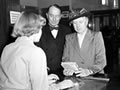
The Munn Barr report (1934), officially titled New Zealand Libraries: a survey of conditions and suggestions from their improvement, was a seminal document in the history of New Zealand library development. Providing a picture of the deficiencies in the country's library system and recommendations for its development, it is credited with setting the direction for New Zealand's modern library system. Read more about the Munn Barr report.
Library disasters
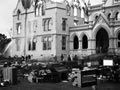
Fire was the scourge of colonial towns and cities. Old, tinder-dry wooden buildings and books were a highly combustible combination, and many private and public libraries caught alight. Fire has not been the only threat to libraries. Water damage, through floods, heavy rain or sprinkler systems, has proved to be just as destructive to library collections. Read more about some of the fires and floods that have struck NZ libraries.
Library fashion
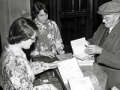
In New Zealand the ubiquitous smock has defined the perception of librarians. The wearing of smocks continued in libraries through the 1980s as they protected clothing when undertaking the less than glamorous roles of checking and dusting library shelves. Other library fashion accoutrements include plastic sleeves, offering even greater protection to clothing. Read more about some of these fashions.
The Great New Zealand Television Turn-Off

In 1992 the New Zealand Library Association organised a campaign in association with the Friends of National Radio (Inc) called the ‘Great New Zealand Television Turn-Off'. It encouraged New Zealanders to turn off their televisions during Library Week (from June 21-27) and to read and take part in other activities. Read more about the Great New Zealand Television turn-off.
Grey, Turnbull, Hocken - the collectors
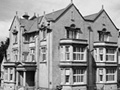
Three collectors were pre-eminent in their contribution to New Zealand library holdings in the 19th and early 20th century: Sir George Grey, Alexander Turnbull and Dr Thomas Hocken. Grey’s donation to the Auckland Public Library influenced similar acts of generosity by Turnbull and Hocken. But while his other achievements have overshadowed this act, Turnbull and Hocken are largely known for the collections that bear their names. Read more about these three collectors.
People
Read more about some of the people associated with these stories:
- Frederick Knox: Librarian of New Zealand’s first public library
- Andrew Carnegie: generous benefactor of libraries
- John Barr: chief librarian of Auckland Public Library from 1913 to 1952
- Charles Wilson: first chief librarian of the General Assembly Library
See further information page for more biographies.


Community contributions