
She's here. The new Rangatira will enter service tomorrow. It's a whole new experience in inter-island sea travel. Attractively decorated cabins, many with private shower and toilet facilities. A restaurant with an a la carte menu and a representative wine list. The cafeteria and General Lounge with T.V. are bold in their colour schemes; the Sports Bar and Pacific Room are relaxed in their atmosphere.
Union Steam Ship Company advertisement, 1972
The Wahine tragedy of 1968 cast a dark cloud over the Lyttelton–Wellington service. Hopes of salvaging the sunken vessel were dashed, and for years passengers on both the Cook Strait and Lyttelton ferries endured the grim sight of the converted salvage ship Holmpark cutting up the wreck.
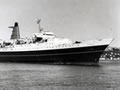
The Union Steam Ship Company responded by ordering a bigger, better Wahine – the second Rangatira, which entered service in 1972 – but times had changed. The National Airways Corporation's Boeing 737 and Friendship aircraft now made flying more convenient and increasingly more affordable, grabbing the business travellers who were the bedrock customers. For those wanting to travel with their cars, the Picton–Wellington ferries offered a shorter, cheaper crossing. The long overnight voyage attracted fewer people, and soaring crew costs only added to the Rangatira's problems.
The Union Steam Ship Company now abandoned its glamour service, sending the Maori to the scrappers in 1974 and then chartering the Rangatira to the Ministry of Transport, which ran the ship for another two years before returning her in September 1976. The Rangatira later served as a British troopship in the Falkland War. After several renamings, and much time laid up, it was finally scrapped in Türkiye in 2005.


