
Decline and revival
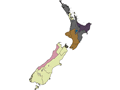
In the last 200 years the history of the Māori language (te reo Māori) has been one of ups and downs. At the beginning of the 19th century it was the predominant language spoken in Aotearoa/New Zealand. As more English speakers arrived in New Zealand, the Māori language was increasingly confined to Māori communities. By the mid-20th century there were concerns that the language was dying out.
Major initiatives launched from the 1980s have brought about a revival of te reo. In the early 21st century, about 125,000 people of Māori ethnicity could speak and understand te reo, which was an official language alongside New Zealand Sign Language.
One land, many dialects
The Māori language evolved in Aotearoa over several hundred years. There were regional variations that probably widened because local populations were relatively isolated. These variations had their origins in the fact that the ancestors of modern Māori came by canoe from different villages and islands in eastern Polynesia. Māori had no written language, but the symbolic meanings embodied in carving, knots and weaving were widely understood.
Māori: a common means of communication
For the first half-century or so of European settlement, the Māori language was a common way of communicating. Early settlers were dependent on Māori for many things and had to learn to speak the language if they wished to trade with them.
Language figures
In 2006:
- 131,613 (23.7 per cent) of Māori could hold a conversation about everyday things in te reo
- One-quarter of Māori aged 15 to 64 could hold a conversation in te reo
- Just under half (48.7 per cent) of Māori aged 65 years and over could hold a conversation in te reo
- More than one in six Māori (35,148 people) aged under 15 could hold a conversation in te reo.
Source: Statistics New Zealand 2006 Census
As more settlers arrived, the need for written communication in Māori grew. Missionaries first attempted to write down the Māori language in 1814. Professor Samuel Lee of Cambridge University worked with the chief Hongi Hika and his junior relative Waikato to systematise the written language in 1820. Literacy and expanded numeracy were two exciting new concepts that Māori took up enthusiastically. In the 1820s missionaries reported that Māori all over the country were teaching each other to read and write, using materials such as charcoal and leaves, carved wood and the cured skins of introduced animals when no paper was available.
Up to the 1870s, and in some areas for several decades after that, it was not unusual for government officials, missionaries and other prominent Pākehā (European New Zealanders) to speak Māori. Growing up with Māori youngsters, their children were among the most fluent European speakers and writers of Māori. Particularly in rural areas, interaction between Māori and Pākehā was constant.
Kōrero Pākehā
Pākehā were in the majority by the early 1860s and English became the dominant language of New Zealand. Increasingly, te reo was confined to Māori communities that lived separately from Pākehā.
Most Pākehā did not understand that the Māori language was an essential expression and envelope of Māori culture, important for Māori in maintaining their pride and identity as a people. Speaking Māori was now officially discouraged, and many Māori themselves questioned its relevance in a Pākehā-dominated world where the most important goal seemed to be to get ahead as an individual.
The Māori language was suppressed in schools, either formally or informally, to ensure that Māori youngsters assimilated with the wider community. Some older Māori still recall being punished for speaking their language. In the mid-1980s Sir James Henare recalled being sent into the bush to cut a piece of pirita (supplejack vine) with which he was struck for speaking te reo in the school grounds. One teacher told him that ‘if you want to earn your bread and butter you must speak English.’
By the 1920s only a few private schools still taught Māori grammar. Many Māori parents encouraged their children to learn English and even to turn away from other aspects of Māori custom. Increasing numbers of Māori people learnt English because they needed it in the workplace or on the sportsfield. ‘Kōrero Pākehā’ (Speak English) was seen as essential for Māori people.
A language lives
Despite the emphasis on speaking English, the Māori language survived. Until the Second World War most Māori spoke te reo as their first language. They worshipped in Māori, and Māori was the language of the marae. More importantly, it was still the language of the home, where parents passed it on to their children. Political meetings, such as those of the Kotahitanga parliament in the 1890s, were conducted in Māori; there were Māori newspapers; and literature such as Apirana Ngata’s waiata collection, Ngā mōteatea, was published in Māori with English translations.
The language that Māori spoke was changing. All living languages are influenced by the other languages their speakers hear. English became the major source of borrowed words, which were altered by Māori usage to fit euphonically and grammatically.
Loan words such as teihana (station) and hōiho (horse) are called transliterations, Some transliterations were unnecessary. Māori had perfectly good names for places like Napier (Ahuriri), but sometimes transliterations of the European names, such as Nepia (Napier) and Karauripe (Cloudy Bay), were used. The English language in New Zealand was also changing and borrowing words from Māori or Polynesian languages, such as taboo (tapu), kit (kete) and Kiwi (a New Zealander).
The lure of the city
The Second World War brought about momentous changes for Māori society. With plenty of work available in towns and cities, Māori moved into urban areas in greater numbers. Before the war, about 75% of Māori lived in rural areas. Two decades later, approximately 60% lived in urban centres.
English was the language of urban New Zealand – at work, in school and in leisure activities. Māori children went to city schools where Māori was unknown to teachers. Enforced contact between large numbers of Māori and Pākehā caused much strain and stress, and te reo was one of the things to suffer.
The number of Māori speakers began to decline rapidly. By the 1980s fewer than 20% of Māori knew enough te reo to be regarded as native speakers. Even for those people, Māori was ceasing to be the everyday language in the home. Some urbanised Māori people became alienated from their language and culture. Others maintained contact with their original communities, returning for important hui (meetings) and tangihanga (funerals), or allowing the kaumātua at home to adopt or care for their children.
Seeds of change
From the 1970s many Māori people reasserted their identity as Māori. An emphasis on the language as an integral part of Māori culture was central to this identity. Māori leaders were increasingly recognising the danger that the Māori language would be lost. New groups with a commitment to strengthening Māori culture and language emerged in the cities.
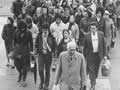
In 1972, three of these groups, Auckland-based Ngā Tamatoa (The Young Warriors), Victoria University’s Te Reo Māori Society, and Te Huinga Rangatahi (the New Zealand Māori Students’ Association) petitioned Parliament to promote the language. A Māori language day introduced that year became Māori language week in 1975. Three years later, New Zealand’s first officially bilingual school opened at Rūātoki in the Urewera. The first Māori-owned Māori-language radio station (Te Reo-o-Pōneke) went on air in 1983.
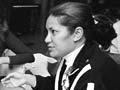
Major Māori-language recovery programmes began in the 1980s. Many were targeted at young people and the education system. The kōhanga reo movement, which immersed Māori pre-schoolers in the Māori language, began in 1982, when the first kōhanga reo opened in Lower Hutt. Other programmes followed, such as kura kaupapa, a system of primary schooling in a Māori-language environment.
The ‘Kia ora’ controversy
Increasingly, Māori words were heard on radio and television, and read in newspapers. The first Māori television programme, Koha, was broadcasting from 1980. Some announcers began radio shows or news bulletins by saying, ‘Kia ora’.
But there was some controversy. In 1984 national telephone tolls operator Naida Glavish (of Ngāti Whātua) began greeting callers with ‘Kia ora’. When her supervisor insisted that she use only formal English greetings, Glavish refused and was demoted.
The issue sparked widespread public debate. Not everyone was keen to hear ‘kia ora’ used commonly, but many others came out in support of Māori greetings. People called the tolls exchange to speak to ‘the kia ora lady’, and airline pilots began to use the term to greet passengers. After Prime Minister Robert Muldoon intervened, Glavish returned to her old job. Eventually, she was promoted to the international tolls exchange, where she greeted New Zealand and overseas callers alike with ‘Kia ora’.
Legislating for change
Efforts to secure the survival of the Māori language stepped up a gear in 1985. In that year the Waitangi Tribunal heard the Te Reo Māori claim, which asserted that te reo was a taonga (treasure) that the Crown (government) was obliged to protect under the Treaty of Waitangi. The Waitangi Tribunal found in favour of the claimants and recommended a number of legislative and policy remedies. Māori was made an official language of New Zealand under the Maori Language Act 1987.
There are now many institutions, most set up since the 1980s, working to recover te reo. Even so, the decline of the Māori language has only just been arrested. There is a resurgence of te reo, but to remain viable as a language, Māori needs a critical mass of fluent speakers of all ages, and it needs the respect and support of the wider English-speaking and multi-ethnic New Zealand community.
Angela Ballara


Community contributions