
DSIR established
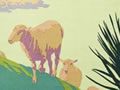
Following pressure from scientists (including Ernest Rutherford) and the recommendations of a visiting British expert, the government established a Department of Scientific and Industrial Research (DSIR). Although it was based on the British DSIR, the New Zealand organisation focused on agriculture, rather than industrial manufacturing as in the UK. The DSIR coordinated the work of the newly established Dairy Research Institute (1927) and Wheat Research Institute (1928), which made important contributions to their industries. In 1928 it joined with the Department of Agriculture to establish a Plant Research Station which produced some important results, especially on pasture plants. Along with superphosphate fertiliser, this work provided the basis for New Zealand’s ‘grasslands revolution’.
Anna Pavlova wows New Zealand
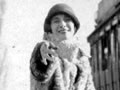
Anna Pavlova defined the art of ballet in the first third of the 20th century. The famed Russian ballerina arrived in Auckland on 25 May 1926, during a five-month Australasian tour. Accompanied by a troupe of 50 dancers, a 22-member orchestra and conductor Lucien Wurmser, she thrilled audiences in Auckland, Whanganui, Hastings, Napier, Palmerston North, Wellington, Christchurch, Timaru and Dunedin, performing a stamina-sapping 38 shows in 39 days. Her troupe included a New Zealander, Thurza Rogers, who had travelled to London to study ballet in 1920 and joined Pavlova’s company two years later. Today Pavlova is perhaps best remembered in Australasia for the popular dessert that was named in her honour, apparently by a Wellington hotel chef.
First Miss New Zealand crowned
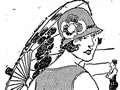
New Zealand’s first national beauty contest, organised by leading daily newspapers, featured provincial heats, public voting and a lavish finale in Auckland’s His Majesty’s Theatre. The winner was Miss Otago, Thelma McMillan. The contest was hugely popular, but not everyone was enchanted: NZ Truth, perhaps jealous of its rivals’ success, accused the newspapers of manipulating the voting to boost their circulation. Truth slammed the contest as:
The most pernicious and audacious advertising stunt ever perpetrated in the Dominion because the youth, beauty, grace and intellect of New Zealand girls were brutally commercialized to provide trade and furnish profits for the soulless exploiters from whom the scheme originated.
Family benefits introduced
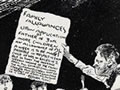
Gordon Coates’ Reform government introduced the world’s first fully state-funded family benefit, partly in response to concerns over New Zealand’s falling birth rate. The Family Allowances Act 1926 provided a weekly allowance of 2s (equivalent to nearly $10 today) for the third and each subsequent child in a family. The means-tested benefit was restricted to families earning less than £4 ($385) a week, but covered the self-employed as well as wage-earners. Payment was made directly to the mother of the family, an important official recognition of women’s role in the household economy. Although the assistance provided was meagre, the 1926 benefit set a precedent for the more far-reaching social security system introduced by the Labour government in 1938.
Other events in 1926:
- The first women Justices of the Peace were appointed on 20 December. The 18 appointees included Janet Fraser, Annie McVicar and Elizabeth McCombs, who in 1933 would become New Zealand’s first woman MP.
- Bessie Te Wenerau Grace became the first Māori woman to receive a university degree, graduating with a BA.
- The Tuwharetoa Maori Trust Board was established following a settlement with the government over ownership of Taupō’s lakebed.
- New Zealand novelist Jean Devanny’s best-known work, The butcher shop, was banned for obscenity; the Censorship Appeal Board denounced it as ‘sordid, unwholesome and unclean’.
- In New Zealand’s first radio sports broadcast, Allan Allardyce commentated on a rugby match at Christchurch’s Lancaster Park.
- The New Zealand Railways Magazine was launched in May. Initially intended as a ‘shop journal’ for the Railways Department’s 18,000 staff, it soon evolved into a highly popular general-interest magazine and was published monthly until 1940.
- Nine coalminers were killed in a mine explosion at Dobson on the West Coast.
- Former Premier Robert Stout retired as Chief Justice of the Supreme Court, a post he had held since 1899.
- The Catholic nun and social worker Mother Mary Aubert, who had been active in New Zealand for more than 60 years, died in Wellington on 1 October, aged 91.
- American writer and big-game fisherman Zane Grey visited New Zealand, promoting the Bay of Islands as an ‘Angler’s Eldorado’.
- English daredevil Bobby Leach, who had famously gone over Niagara Falls in a barrel in 1911, slipped on an orange peel during a New Zealand publicity tour. His injured leg became infected and he died of gangrene two months later.


Community contributions