
Beatlemania arrives
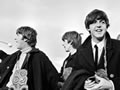
Some New Zealanders must have wondered what had hit the country when the Beatles arrived at Wellington airport in June 1964. Hysterical fans greeted the ‘Fab Four’ wherever they went. In Auckland the decision by the mayor, Dove-Myer Robinson, to hold a civic reception for them led one of his councillors to complain about encouragement of the ‘hysteria, antics, adulation, rioting, screaming and roaring’ that was associated with ‘these bewigged musicians.’
Marsden Point refinery opened
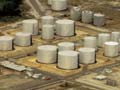
As New Zealand was a small market, most oil companies operating here imported fuels in their finished form. After the Second World War a growing economy saw an increase in the demand for oil products. The government decided to build an oil refinery in New Zealand.
Marsden Point near Whangārei was selected because of its proximity to both a deep-water harbour and the country's biggest population centre, Auckland. Construction began in 1962 and the refinery was officially opened by Prime Minister Keith Holyoake on 30 May 1964. Designed to supply the majority of New Zealand's demand, it produced the full range of petroleum products, including petrol, diesel, jet fuel and fuel oil.
The Marsden Point refinery was the first of a number of significant projects developed in the 1960s to enhance New Zealand's industrial infrastructure. Others included the Manapōuri hydro scheme and the Glenbrook steel mill.
Lyttelton road tunnel opens
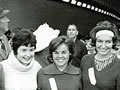
A rail tunnel between Christchurch and the port of Lyttelton had opened in 1867, but road users waited almost a century for a convenient road link between the two places. The opening of the Lyttelton-Christchurch road tunnel on 27 February 1964 meant that the more arduous trip over Evans Pass in the Port Hills could now be avoided. The travelling time by road was halved.
Construction work on the tunnel, a joint venture between New Zealand’s Fletcher Construction Ltd and American company Henry J. Kaiser Inc., began in 1962. The £3 million cost was met by the imposition of a toll of 2 shillings (20 cents) which was removed in 1978. By the time Governor-General Sir Bernard Fergusson opened the tunnel, 250 kg of explosives had been used to remove 150,000 cubic metres of rock. Approximately 1.5 million glazed white tiles were used to line its walls. Almost 2 km long, it was New Zealand’s longest road tunnel until 2017, when the 2.4-km Waterview tunnel in Auckland was opened.
She’s a mod
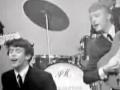
'She’s a mod', by Ray Columbus and the Invaders, was released here in June 1964, but initially overlooked amid the clamour of the Beatles tour. In October it became an overnight smash in Sydney, topping the charts and reportedly selling 20,000 copies in less than three weeks. Success at home followed and the band became a sensation with Australasian teens. They inspired Beatlesque hysteria and were mobbed wherever they went. Ray Columbus’s ‘Mod’s Nod’ dance routine captured the joy, dizziness and sheer optimism of 1960s youth.
Other 1964 events
- Police stood guard during the first cricket test between New Zealand and South Africa at Wellington’s Basin Reserve in February as New Zealand's fledgling anti-apartheid movement protested against the tourists. Worldwide condemnation of South Africa's racist apartheid policies had led to a call to boycott its sports teams. Later that year the International Olympic Committee prevented South Africa competing at the Tokyo Olympics.
- Auckland's urban population surpassed 500,000. By 2017 it had exceeded 1.5 million.
- Tram #252, displaying the message 'end of the line', travelled from Thorndon to Wellington Zoo in Newtown, bringing to an end the use of electric trams in New Zealand.
- Following the shooting deaths of four police officers the previous year, training began of officers for a specialist armed offenders' squad.
- Peter Snell's victories in the 800m and 1500m at the Tokyo Olympics cemented his place as the greatest middle-distance runner of his generation.
- More than 170 years of New Zealand whaling history came to an end when J.A. Perano and Co. caught their last whale off the coast near Kaikōura.
- The British architect Sir Basil Spence's design for a new executive wing of Parliament was unveiled to a mixed reception. The 'Beehive', as the building became known, was eventually opened in 1981.
- Massey University of Manawatu was formally established on 1 January (from 1966 it was known simply as Massey University).
Can you remember 1964? Add your memories and comments in the form below.


Community contributions