
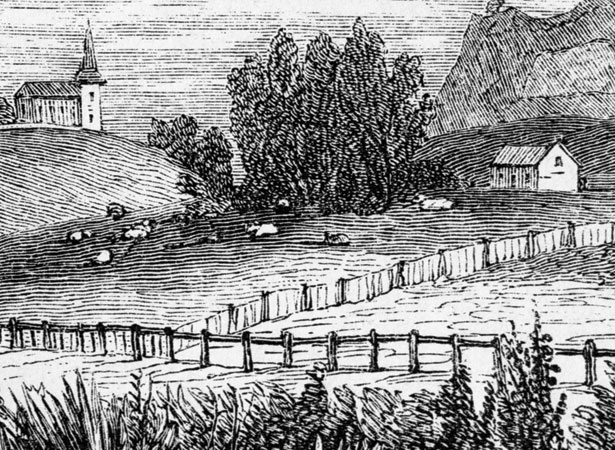
During his second visit to New Zealand in 1773, James Cook released a ewe and a ram in Queen Charlotte Sound. They survived only a few days after apparently eating poisonous plants – an inauspicious start to this country’s long association with sheep.
Sheep farming was established by the 1850s, and has played an important role in New Zealand’s economy ever since. For several decades wool accounted for more than a third of New Zealand’s exports by value. Following the first export shipment of frozen meat in 1882 (see 15 February), sheep meat became a significant source of revenue as New Zealand forged a role as Britain’s farmyard.
For many, sheep symbolise New Zealand as a nation. The sheep population peaked at just over 70 million in 1982. By 2020 numbers had dropped to 26 million, after profits declined compared to other types of farming, notably dairying.
More than half of New Zealand’s sheep are Romney, an English breed capable of producing both wool and meat of good quality. Romneys are also able to tolerate New Zealand’s varied weather.
External links
How to cite this page
'New Zealand's first sheep released', URL: https://nzhistory.govt.nz/first-sheep-released-in-new-zealand, (Ministry for Culture and Heritage), updated 20-Jan-2021

