
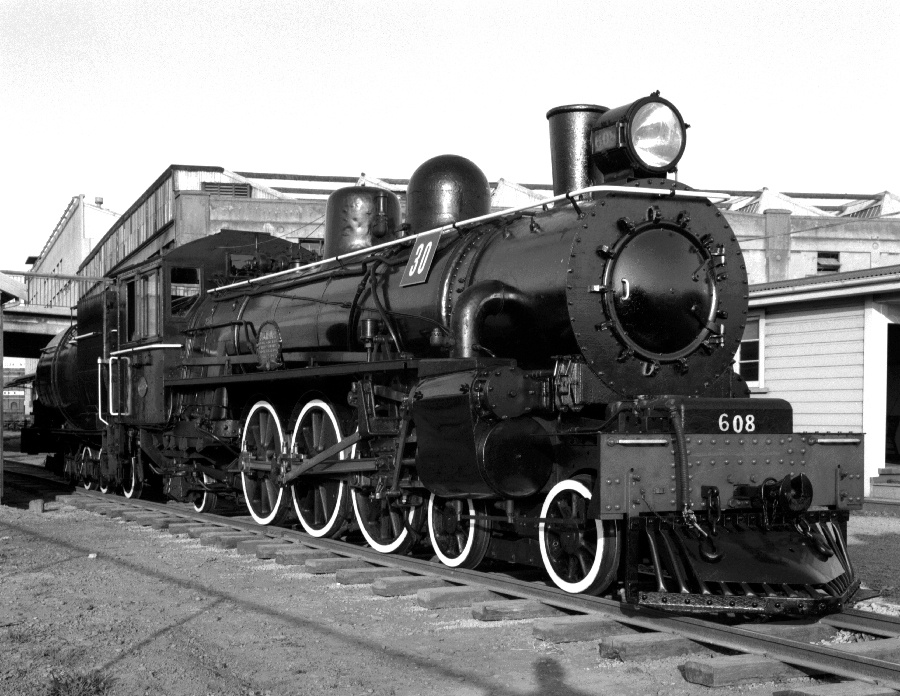
AB 608, Passchendaele, on display at New Zealand Railways' centennial celebrations in Christchurch in 1963.
In 1925 the Minister of Railways, Gordon Coates, agreed to a proposal to name a steam locomotive ‘in memory of those members of the New Zealand Railways who fell in the Great War’. After considering the names Somme, Le Quesnoy and Ypres, Coates chose Passchendaele.
The locomotive selected to carry the name was AB 608. Built at Christchurch’s Addington railway workshops in 1915, this was the first of the famed class of AB ‘Pacifics’ – probably the most successful and versatile locomotives ever to run on New Zealand railways. More than 140 of these engines were produced between 1915 and 1926.
The memorial nameplates fitted to the engine’s flanks were formally unveiled by Governor-General Sir Charles Fergusson on 17 November 1925, the opening day of the New Zealand and South Seas Exhibition in Dunedin, where the gleaming Passchendaele was on public display. In 1927 it was chosen to haul the Duke and Duchess of York’s royal train in the South Island (a role it had also performed, unnamed, during the Prince of Wales’ tour in 1920).
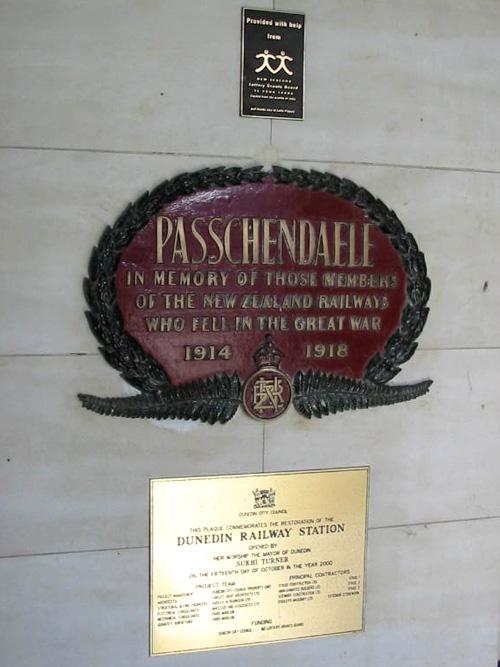
The nameplates were removed during the Second World War. The originals were later put on display at Christchurch and Dunedin railway stations (in 1963 they were temporarily restored to the locomotive for New Zealand Railways’ centennial celebrations in Christchurch).
By the time it was withdrawn from service in 1967, AB 608 had steamed more than 2.4 million km. The locomotive has since been restored to full working order by Steam Incorporated at Paekākāriki, north of Wellington, and has taken part in First World War centenary commemorations, including the 100th anniversary of the Petone Anzac Day service on 25 April 2016.
This March 2014 film by Bert Wouda shows a test run of the restored locomotive:


Community contributions