
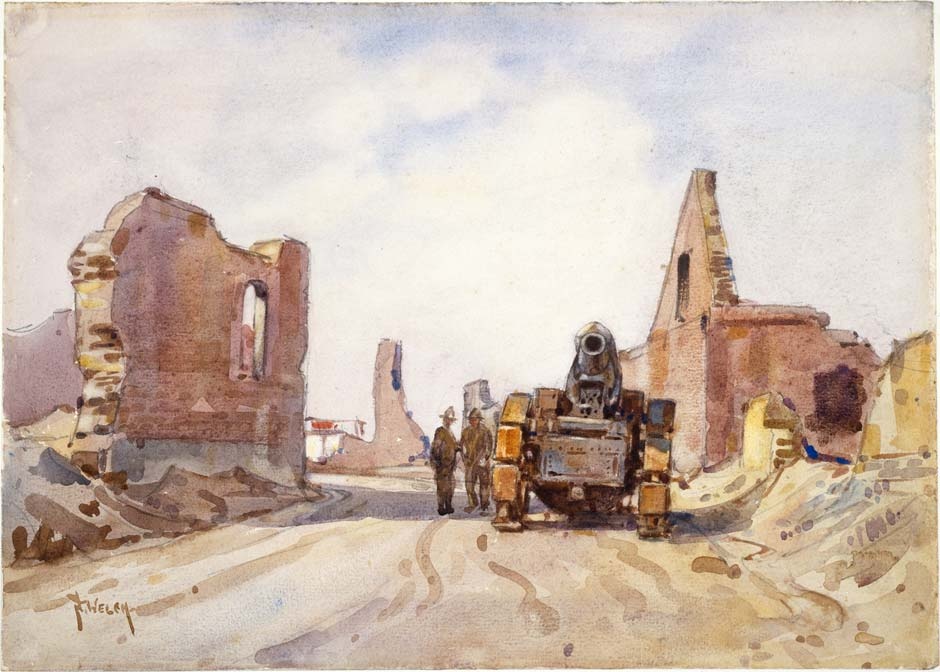
Howitzer, Haucourt painted by Nugent Welch, circa 1918.
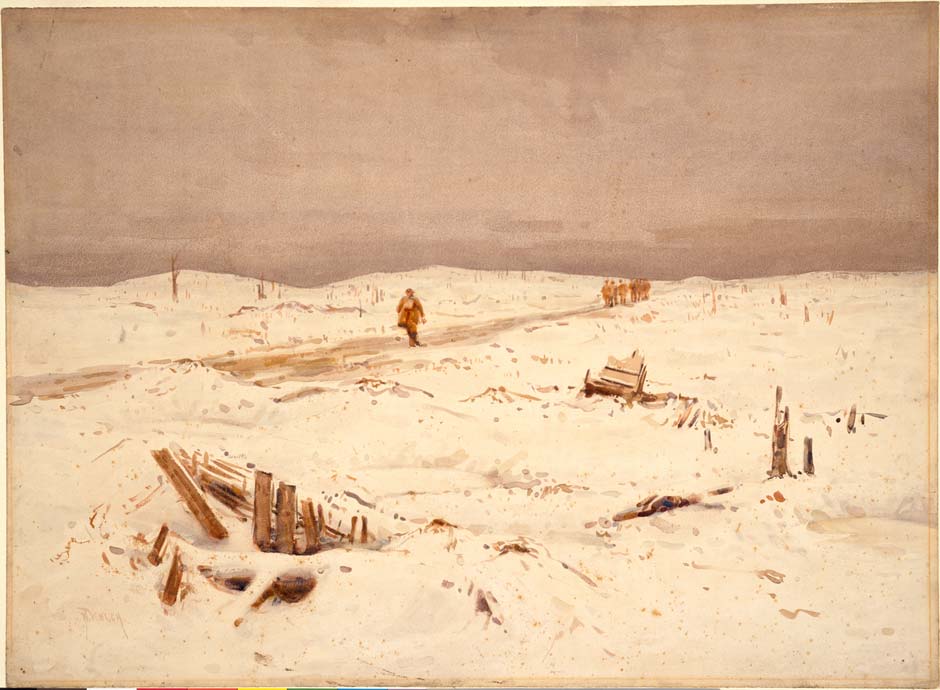
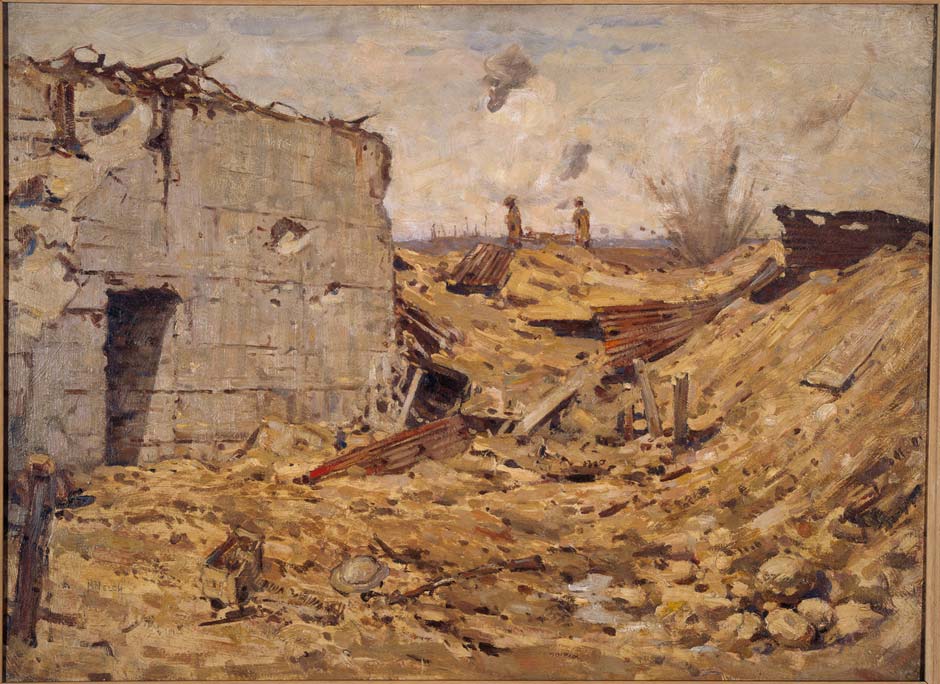
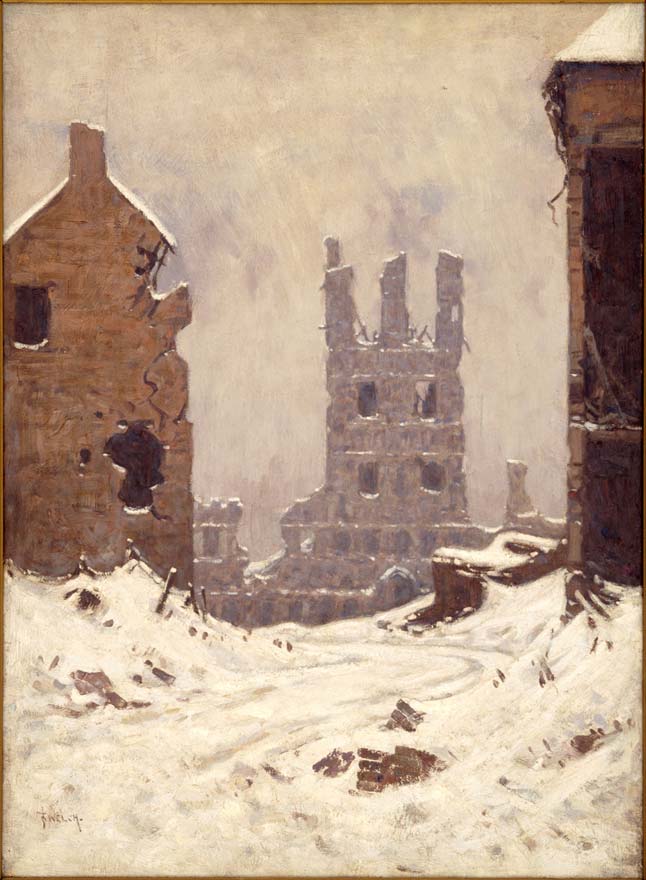
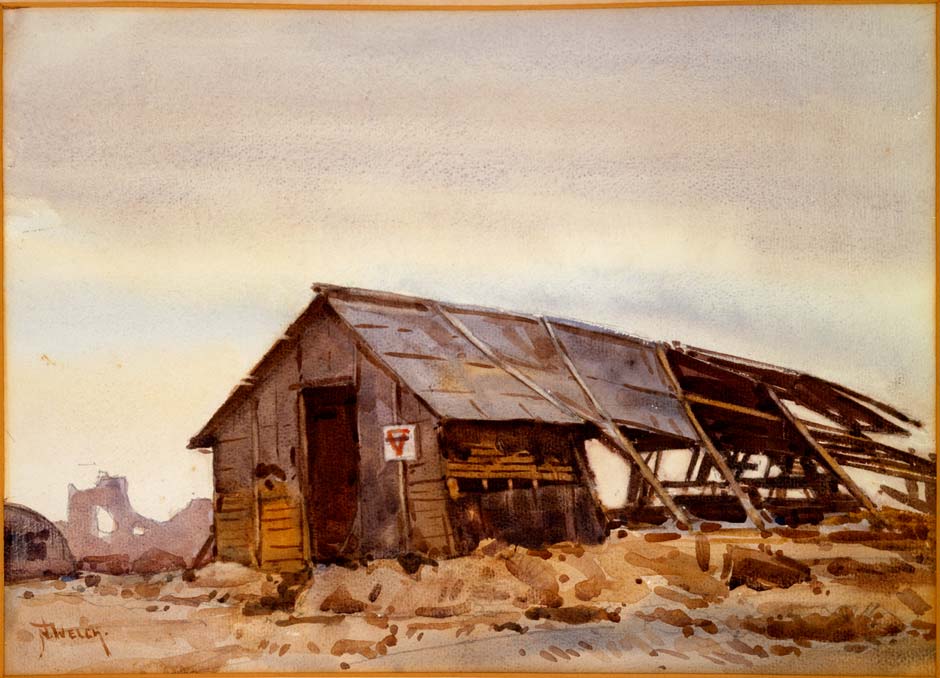
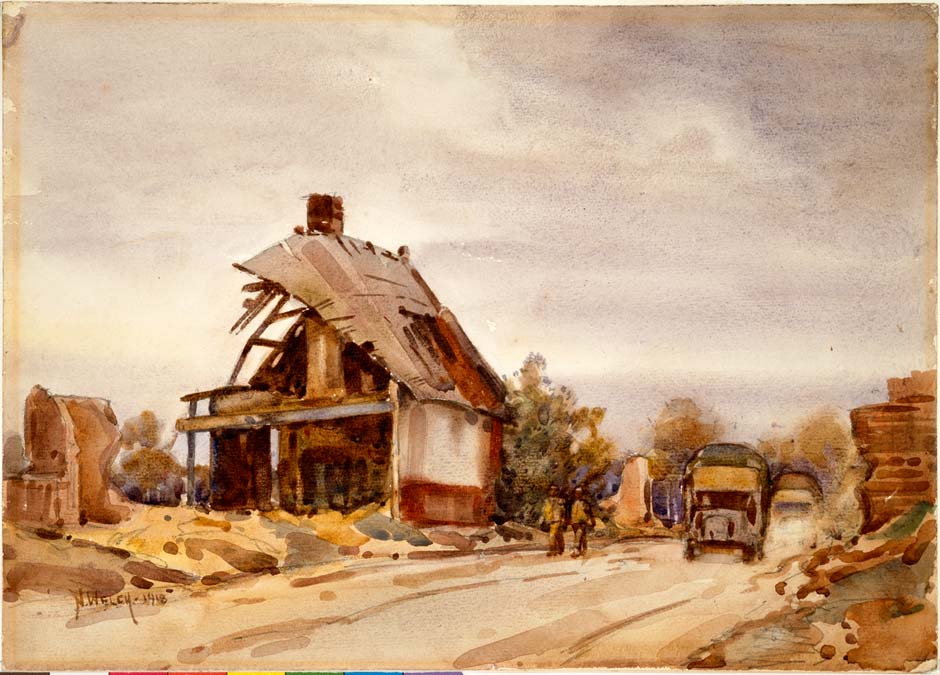
Other Nugent Welch First World War paintings (click on thumbnails to see full images).
Nugent Welch's war art
Nugent Welch was New Zealand’s first ‘war artist’. A professional artist before the war, Welch was quick to respond to the call for official artists in February 1918. The War Records Office in London accepted his credentials, which were based on his exhibition history in New Zealand and Australia.
Welch predominantly focused on painting the landscape, and human forms very rarely featured in his paintings. As the official artist of the New Zealand Division, he was obliged to paint New Zealand soldiers on the Western Front, but they were never the main focus of his war art. In works such as Scene behind the lines in the snow or German Pillbox on Upper Section, where soldiers do appear their figures are invariably represented as sketchy miniatures. This is a strategic compositional device used by Welch to emphasise the smallness and fragility of the human body within the vast scale of the war-torn environment.
When soldiers are not present in Welch’s war paintings, damaged buildings often stand in as anthropomorphic or human-like figures. Welch presents the brutally disfigured structures in Ypres, Winter and the skeletal broken beams of the Shell wrecked YMCA Hut as piteous victims of war. By explicitly showing the vicious power that the high-powered weaponry used in the First World War could inflict on solid timber and mortar, these paintings allude to the savagery they could unleash on vulnerable flesh and bone. By focusing on the inanimate infrastructure of the Western Front instead of people, Welch’s paintings also draw attention to the effect that the war had on the local civilian population whose towns, cities, churches and farms were devastated by battle. However, even in these images of devastation, Welch attempts to capture the beauty and dignity of the forms that remain through the dramatic interplay of light and shadow.


Community contributions