
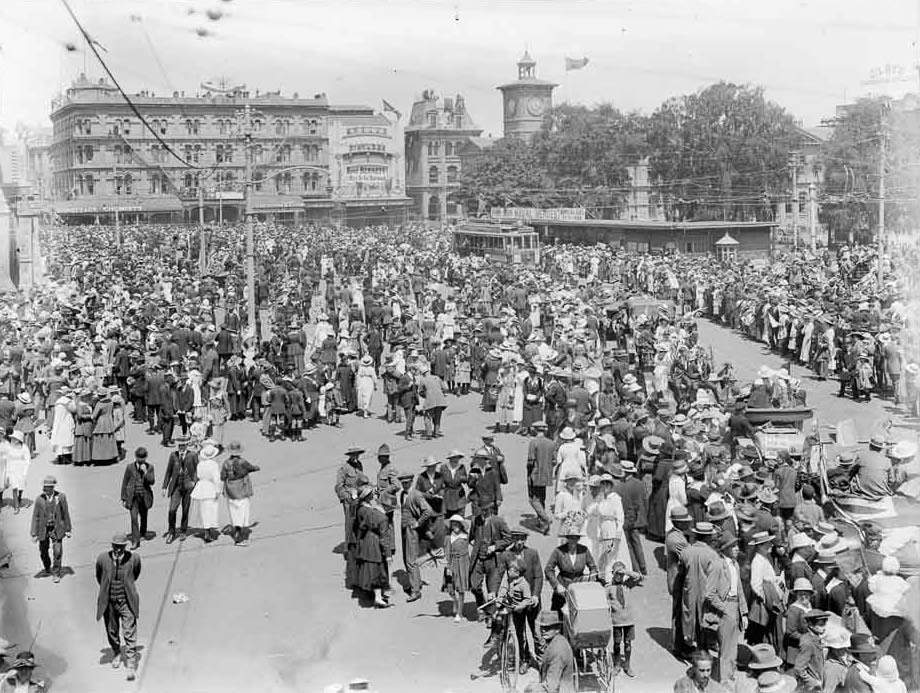
Crowd in Cathedral Square, Christchurch after the armistice procession on 12 November 1918.
As the second wave of the influenza pandemic spread throughout the country, many New Zealanders found a reason to celebrate: an armistice had been signed between the Allies and Germany on 11 November.
In Auckland the District Health Officer, Dr Joseph Frengley, banned any official celebrations. He was concerned that if crowds formed, as they had when false news of an armistice had circulated on 8 November, the disease would spread further. But official celebrations went ahead in many other towns and cities, and it is believed that these contributed significantly to the spread of the disease. In Christchurch the show and race meetings of Carnival Week were also a factor.
It is unclear whether people were ignorant of the severity of the disease that was spreading throughout the country, or simply determined to celebrate the armistice. Auckland was struck first, but by 11 November there were clear signs of the disease elsewhere. In Wellington, celebrations occurred as the first inhalation chambers and emergency hospitals opened. In Dunedin, they went ahead despite a warning against ‘crowded assemblages’ from the District Health Officer, Dr Irwin Faris. Even those staffing the inhalation booths were given time off to attend.
- See also death rates from the influenza pandemic in towns and counties in the North Island and South Island


Community contributions