
What happened that day?

Kiwi of the Week

  • te-whiti-biog.jpg

    Te Whiti-o-Rongomai

    Te Whiti was a Taranaki leader and prophet. A resistance movement based at Parihaka was led by him and Tohu Kakahi. Te Whiti was arrested following the infamous raid on Parihaka by Armed Constabulary in 1881.

This WeeK's Quiz

Today in History

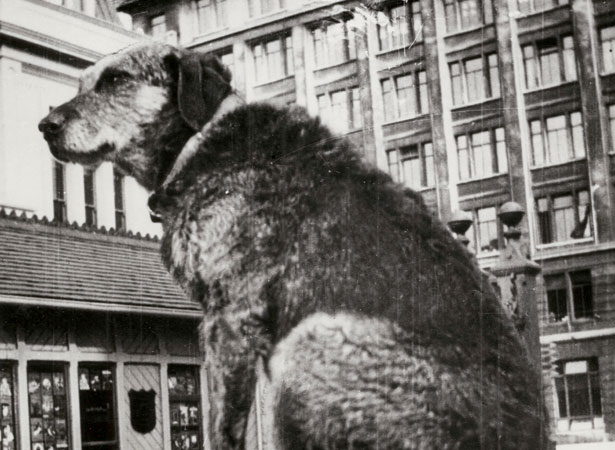
1939 Death of Paddy the Wanderer

Paddy, a ginger and brown Airedale terrier, became a national celebrity because of his exploits on the Wellington waterfront (and beyond) during the 1930s. He was remembered as providing a ‘little light in the dark days of the Depression’.

Paddy probably began life as Dash, the pet of a young girl whose father was a seaman. Dash spent a lot of time on the Wellington wharves when the family came to meet his ships. After the girl’s death in 1928, Paddy, as he became known, began to wander the wharves. Some say he wandered in search of his lost playmate.

Paddy became a much-loved identity on the Wellington waterfront during the Depression years. Watersiders and harbour board workers, seamen and taxi drivers took turns at paying his annual dog licence. Wellingtonians got to know him well as he travelled around the city on trams and in taxis. His fame grew wider as he journeyed by sea to New Zealand and Australian ports. In December 1935 he took to the air in a Gypsy Moth biplane. All of these adventures saw Paddy achieve extensive media attention and his popularity with the public grew.

The Wellington City Council awarded Paddy the ‘Freedom of the City’. The Harbour Board made him ‘Assistant Night Watchman responsible for pirates, smugglers and rodents’.

As he aged, Paddy wandered less. He was usually to be found on the Tally Clerks’ stand inside the Queen’s Wharf gates. As his health deteriorated he was given a sickbed in a shed on the wharves; many people called by to enquire about his health.

When Paddy died on 17 July 1939 obituary notices were placed in the local papers and a radio tribute was broadcast. A fleet of black taxis formed a funeral cortège to escort his coffin from Queen’s Wharf to the city council yards for cremation. It was a scene more in keeping with the death of a high-profile public figure. A drinking fountain near the Queen’s Wharf gates commemorates Paddy’s life. It was built in 1945 using stones taken from Waterloo Bridge in London and paid for with funds raised by the many friends of Paddy the Wanderer.

Image: Detail from Paddy the Wanderer memorial on Wellington waterfront.

paddy-event.jpg

How to cite this page: 'Death of Paddy the Wanderer', URL: http://www.nzhistory.net.nz/page/death-paddy-wanderer, (Ministry for Culture and Heritage), updated 11-Aug-2011