
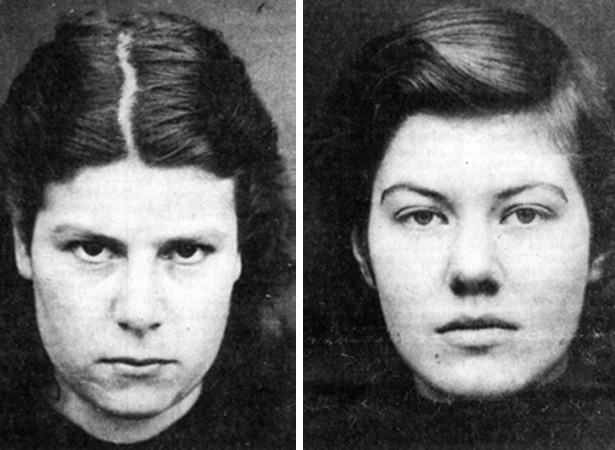
Armed with a brick in a stocking, 16-year-old Pauline Parker and her best friend Juliet Hulme, 15, became two of New Zealand’s most notorious murderers when they killed Pauline’s mother, Honorah, in Victoria Park, Christchurch.
The girls’ trial was a sensation. Much of the evidence presented by witnesses focused on the close relationship between Parker and Hulme, their absorption with one another, and their fantasies about becoming famous novelists. When their parents, concerned that the girls’ friendship had become obsessive and co-dependent, threatened to separate them, they had reacted violently.
Parker and Hulme were found guilty, sentenced to indefinite imprisonment, and ordered never to contact each other again.
The case remains one of New Zealand’s most infamous murders and lives on in popular culture, having inspired a play, Michaelanne Forster’s Daughters of heaven, and Peter Jackson’s Academy Award-nominated film Heavenly creatures.
The two young women were released after serving about five years in prison and both of them moved to the United Kingdom. Hulme changed her name to Anne Perry and became a successful writer of crime novels.
Read more on NZHistory
Pauline Parker1954 - key events – The 1950sNew Zealand crime timeline – Crime timelineThe search for Anne Perry – Crime timeline
External links
How to cite this page
'Parker-Hulme murder in Christchurch', URL: https://nzhistory.govt.nz/parker-hulme-murder, (Ministry for Culture and Heritage), updated 23-Feb-2024


