
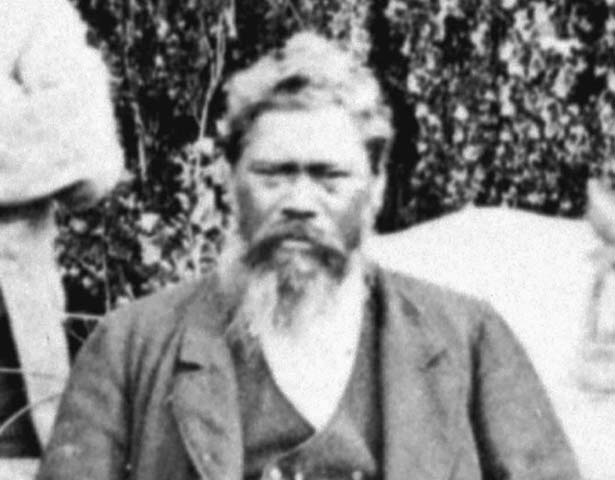
The Ngāti Kahungunu chief Hēnare Matua first came into contact with Europeans in the 1840s, when he arranged some land leases for European squatters. Although he signed the Waipukurau land deed in 1851, he later opposed the sale of further land.
Although Matua had an early link with the King Movement, and opposed land sales, in the 1860's he supported the government against the Hauhau – members of the Pai Mārire religion who opposed the sale of land to Europeans. However, he did not become directly involved in the fighting.
By 1871 Matua was calling for government and private land purchases in Hawke’s Bay to be reversed, claiming they were tainted by fraud or sharp dealing. He soon became a key figure in the Repudiation movement, based in Hawke's Bay. The movement grew out of a widespread Māori dissatisfaction with many land transactions.
Matua also regarded the Native Land Court as little more than an agent for land purchasers. He demanded that tribal rūnanga (committees) control title approvals and land alienation. Partly as a result of his campaign, the government set up a commission of inquiry in 1873. Matua presented a long list of grievances to the commission, but no land was restored to Māori.
Matua continued to build the Repudiation movement, however, supported by a number of other tribes and some influential Europeans. He consistently stressed that compensation would be achieved by lawful means and not through violence. Even though they were never given any legal authority, local Hawke’s Bay rūnanga were, by 1875, settling a wide range of disputes. They were also challenging the authority of the Native Land Court.
Matua remained an energetic advocate for his people. But the Repudiation movement and the runanga began to dwindle after the mid-1870s because of inadequate funds and a lack of success against the government's inflexibility. Matua died in Hastings in 1894.
Adapted from the DNZB biography by Angela Ballara
Henare Matua
He rangatira a Hēnare Matua (?-1894) o te iwi o Ngāti Kahungunu. I te tekau tau atu i 1840 ka tūtaki tuatahi ia ki te Pākehā, i a ia ka whakarite i ētahi rīhi whenua mō ngā Pākehā noho whenua noa. I haina ia i te hokonga whenua mō Waipukurau i te tau 1851, heoi nō muri ka puta ana whakahē.
I te pueanga ake o te Kīngitanga, ka tautokona e Matua; ka whakahē hoki ia i ngā hokonga whenua. Ahakoa tērā, i te tau 1860 ka tū ia ki te taha o te kāwanatanga i ngā riri ki te Hauhau e ātete ana i te hoko o ngā whenua ki te Pākehā. Heoi anō, kāore ia i urutomo ki ngā whawhai.
Kia tae ki te tau 1871, kua puta te kōrero a Matua kia whakakāhoretia ngā hokonga whenua ki te kāwanatanga me ētahi atu i Te Matau a Māui, nā te mea he whānako aua hokonga. Taro ake, ka eke ia hei tangata nui i roto i te rōpū Whakahētanga Hoko Whenua, ko tōna pokapu kei Te Matau a Māui. I tipu ake te rōpū nei i te pōuri o te iwi Māori ki te maha o ngā hokonga whenua.
Ka titiro a Matua ki te Kōti Whenua Māori ānō kei te mahi te kōti mā ngā kaihoko whenua. I whakahau ia mā ngā rūnanga ā-iwi e whakahaere ngā whakaaetanga taitara me ngā hokonga whenua. Nā tēnei take me ētahi atu, ka whakatūria e te kāwanatanga he kōmihana uiui i te tau 1873. He maha ngā nawe i tāpaea e Matua ki mua i te kōmihana, hauwarea; kāore he whenua i whakahokia ki te iwi Māori.
Ka mahi haere a Matua kia tipu te rōpū Whakahētanga Hoko Whenua. I āwhinatia te kaupapa e ētahi atu iwi me ētahi Pākehā whai mana. Ka rite tana whakaputa i te kōrero, ko te ara o te ture te ara tika ki te rapu paremata, kāpā te ara o Tū. Kāore he mana o ngā rūnanga i raro i te ture. Hāunga tērā, tatū ki te tau 1875, he maha ngā take kei te haria ki mua i ngā rūnanga o Te Matau a Māui hei whakatau mā rātou. I tua atu, ka whakatumatuma ngā rūnanga i te mana o te Kōti Whenua Māori.
Tino kaha a Matua ki te mahi mō tōna iwi. Heoi, kia tae ki te pokapū o te tekau tau atu i 1870 ka ngoikore haere te kaupapa Whakahētanga Hoko Whenua, tae atu ki ngā rūnanga, nā te iti o te pūtea me te ngākau kōhatu o te kāwanatanga. Ka mate a Matua ki Heretaunga i te tau 1894.
How to cite this page
'Hēnare Matua', URL: https://nzhistory.govt.nz/people/henare-matua, (Ministry for Culture and Heritage), updated 8-Nov-2017


Community contributions