
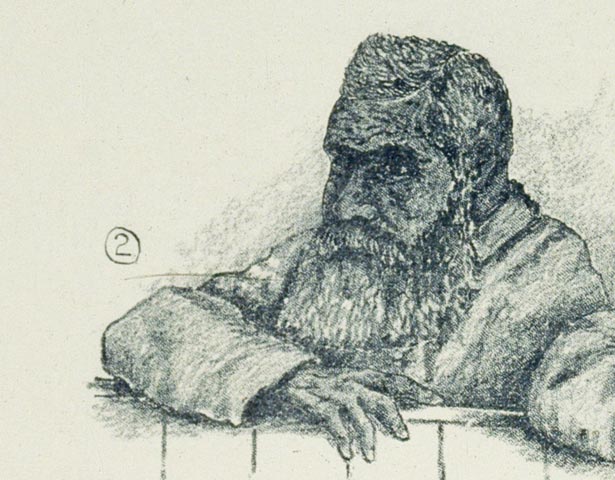
Tītokowaru, of the south Taranaki tribe Ngā Ruahine, was born in about 1823. He grew up in the shadow of the ‘Musket Wars’, and is said to have received formal training as a tohunga (Māori spiritual expert).
Later he learned to write in Māori, and he became a Christian in the early 1840s. In the 1850s, his opposition to land-selling led him to support the King Movement (Kīngitanga). An enthusiastic advocate of the prophetic Pai Mārire religion, he lost an eye in battle in 1864.
In 1867 Tītokowaru began to campaign for peace, holding a series of large hui (gatherings). He renounced his connection with the Kīngitanga, called for peaceful resistance, and even accepted the loss of some confiscated land. As the historian James Belich notes, Tītokowaru’s peace was in many respects as remarkable as his later war. But his hopes for reconciliation were dashed by the government's ‘creeping confiscation’. By 1868, Ngā Ruahine faced a stark choice: war or starvation.
Tītokowaru began a campaign of plunder without bloodshed. Government forces responded by seizing stolen goods and taking prisoners. When Tītokowaru refused to return an escaped prisoner, war broke out in earnest.
Despite being heavily outnumbered Tītokowaru won several stunning victories. He was both an extremely talented military engineer and a master of tactics. By early 1869 he had won back 110 km of territory between the Waingongoro and Whanganui rivers. His force grew from 150 to around 1000, and he gained the tacit support of the King Movement. His victories almost brought the colony to its knees, and the government considered returning confiscated land. But at the height of his success Tītokowaru’s army mysteriously fell apart. He seems to have lost his mana, perhaps through committing adultery with the wife of one of his chiefs. As Belich remarks, Tītokowaru lost his war but the government can hardly be said to have won it.
The government left Tītokowaru alone, and he became a strong supporter of the pacifist prophets Te Whiti and Tohu at Parihaka. When creeping confiscation began again in 1878, he helped to organise a campaign of non-violent resistance.
In 1881 Parihaka was invaded by a force of almost 1600 volunteers and Constabulary Field Force troops, led by Native Minister John Bryce. They destroyed much of the settlement and imprisoned Tītokowaru for eight months. After his release he remained committed to peace but continued to protest against the confiscations. He was imprisoned again in 1886, despite his age and poor health. He died in August 1888. Belich describes him as arguably one of the best generals New Zealand has ever produced.
Adapted from the DNZB biography by James Belich
Riwha Tītokowaru
I whānau mai a Tītokowaru i te takiwā o te tau 1823. Ko Ngā Ruahine o Taranaki tōna iwi. I pakeke ia i te ata o ngā pakanga mau pū. E ai ki te kōrero, i akongia a ia hei tohunga. Nō muri ka ako ia ki te tuhi ki te reo Māori. Ka iriiria ia hei Karaitiana i te tōmuatanga o te tekau tau atu i 1840. Heoi, i te wā 1850 ki 1854, nā tana whakahē ki te hokonga o ngā whenua, ka tautoko a Tītokowaru i te Kīngitanga. Nō ngā riri o 1860-61 ka whakaaturia e ia ngā tohu o te kaingārahu. Ka kuhu hoki ia ki ngā riri i Waikato; i reira ka pura tōna kanohi katau.
I te tau 1867 ka tīmata te whakahau a Tītokowaru i te rangimārie, ka tū ana “hui nui mō te rangimārie”. Ka wetekina e ia ōna hono ki te Kīngitanga, ka karanga ia kia mautohe mārire te iwi. Ka whakaae ia ki te raupatunga o ētahi o ngā whenua, engari kaua ko te katoa. E ai ki te kōrero a te tumu kōrero a James Belich, he rite te mīharo mō te rangimārie o Tītokowaru, ki te mīharo mō te riri o Tītokowaru ka whai iho. Heoi, nā te “āta raupatu” a te kāwanatanga i te whenua, ka pau tana hau ki te kimi huarahi mārire. Tatū ki te tau 1868, e rua ngā whiringa kei mua i a Ngā Ruahine: ko te ara o te riri rānei, ko te mate i te kore kai rānei.
I te tīmatanga, ka murua e Tītokowaru te mahi a te taonga, heoi kāore i maringi te toto. Ka whakautua ēnei mahi e ngā hōia a te kāwanatanga, ka murua ngā taonga i whānakohia, ka kawea ētahi o te iwi hei mauhere. I te kore whakaaetanga atu a Tītokowaru kia tukua e ia tētahi mauhere, kātahi ka mumura ngā ahi o te riri.
Ahakoa te nui o te hoariri, ka puta rā te ihu o Tītokowaru i ngā pakanga. Kātahi tētahi tohunga hanga maioro, tohunga rautaki pakanga, ko Tītokowaru. Kia tae ki te tōmuatanga o te tau 1869 kua riro mai anō i a Tītokowaru tētahi whenua e 80 maero te roa (e 129 kiromita) i te tonga o Taranaki, atu i te awa o Waingongoro ki te awa o Wanganui. Ka nui haere ana toa mai i te 150 ki te 1000; ka tautokona mai ia e te Kīngitanga. Tata tonu ka hinga te koroni i a ia, ka whakaaro te kāwanatanga kia whakahokia ētahi whenua i raupatutia. Heoi, i te wā e kaha rawa ana a ia, nā te aha rā, ka waimeha tana taua. Tērā pea nā tana mahi pūremu me te wahine a tētahi o ana toa. Hei tā Belich, nā tōna ringa tonu a Tītokowaru i hinga ai, kāpā nā te ringa o te kāwanatanga.
Ka waihotia a Tītokowaru e te kāwanatanga, ka kaha haere tana tautoko i ngā poropiti mautohe mārire o Parihaka, a Te Whiti rāua ko Tohu. I te tīmatanga anō o ngā raupatunga whenua i te tau 1878, ka āwhina ia i ngā mautohe mārire.
I te tau 1881 ka whakaekea a Parihaka e ngā pirihimana mau pū me ngā tūao 1600 te rahi hui katoa, i raro i ngā whakahaere a Te Paraihe (John Bryce), te Minita mō ngā Take Māori. Ka pāhuatia, ka wāwāhia a Parihaka, ka mauherea a Tītokowaru mō te waru marama. Ka tukua ia, ka mau tonu ia ki te kaupapa mautohe mārire mō ngā whenua raupatu. Ahakoa tōna kaumātua me tōna tino pāngia e te mate, i te tau 1886 ka whiua anōtia ia ki te herehere. Ka mate ia i te marama o Ākuhata o te tau 1888. Ko te kōrero a Belich mōna, tērā pea ko ia tētahi o ngā tino kaingārahu i te hītori o Aotearoa.
How to cite this page
'Riwha Tītokowaru', URL: https://nzhistory.govt.nz/people/riwha-titokowaru, (Ministry for Culture and Heritage), updated 21-Apr-2022


Community contributions