
Go to home page - New Zealand History online

What happened that day?

Kiwi of the Week

  • godfrey-bowen-biog.jpg

    Godfrey Bowen

    Bowen helped establish sheep shearing as a legitimate sport and a form of entertainment. He was one of the inaugural inductees into the New Zealand Sports Hall of Fame in 1990.

Personal Details

Lifetime:

  • 2 Sep 1812

    ~

    23 Jun 1892

Name:

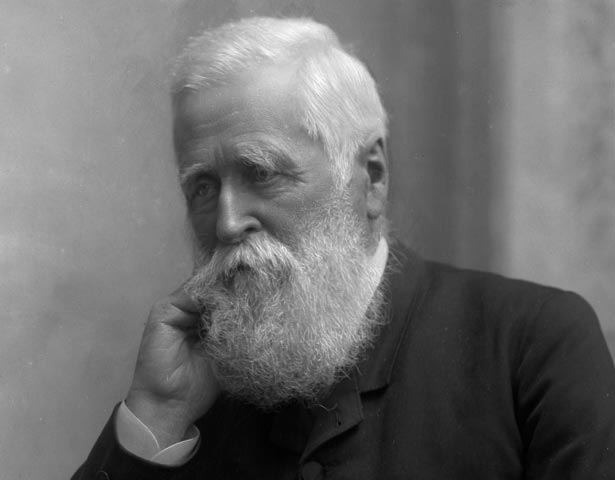
William Fox

William Fox was called to the English bar in 1842, and a few weeks later emigrated to New Zealand. He was an enthusiastic supporter of planned immigration of the sort promoted by the New Zealand Company.

At first Fox was unable to practise law in New Zealand. He refused to swear an oath of good character required by the Chief Justice, William Martin, seeing it as an insult to his honour.

He then became a journalist, and condemned the Treaty of Waitangi as "shallow, flimsy sophistry". He also promoted the idea that Maori land rights should apply only to those areas actually occupied or cultivated. In September 1843 he became the New Zealand Company agent at Nelson, taking over from Arthur Wakefield, who had been recently killed at the Wairau.

Fox later became the Company's principal agent on the death of William Wakefield in 1848. He remained resolutely opposed to Governor George Grey. Fox felt that Grey had obstructed settlers' hopes for self-government, and was not ruthless and energetic enough in acquiring Maori land. When the Company wound up, Fox returned to England, where he published arguments against Grey's Maori policy. He was convinced that Maori were a declining race, and would disappear in his lifetime, through either "extermination" or assimilation.

Fox returned to New Zealand in 1854. Soon after, he won a seat on the Wellington Provincial Council, and the following year he was elected to Parliament representing Wanganui. He later spoke out against the 1859 Waitara purchase. Because of this, he and his supporters were labelled "philo-Maori" (Maori-lovers) , and "the peace at any price party". In reality Fox was no more sympathetic to Maori than his opponents. His guiding principles were pragmatism and political opportunism.

In 1861 he became Premier. During this period the government stood by, simply observing events which would soon lead to an extension of the war. Fox appeared far better at bringing down governments than putting his own policies into practice. As one historian has noted, he was a "great hater" but had little positive vision.

In 1862 the Fox government fell, mainly because it was seen to be accepting responsibility for financing the imminent Waikato conflict, which many settler politicians thought should have been paid for by the British Government. Fox then became Colonial Secretary under the premiership of Frederick Whitaker, and was part of the government that confiscated nearly three million acres (1.2 million hectares) of Maori land in 1864. Fox later defended this, and blamed Maori for starting the wars.

Fox once again left New Zealand, and returned in 1867. The following year he resumed his seat in Parliament. He became Premier again in 1869, passively supervising a massive programme of borrowing, public works, and extensive acquisition of Maori land. The mastermind was Julius Vogel, one of his leading and more active ministers. Fox’s government fell in 1872, and after that he was only occasionally involved in politics.

In the early 1880s he and F. D. Bell were appointed to the West Coast Commission. Fox had been a member of the government that had confiscated Taranaki land, and Bell had defended the Waitara purchase. However, their job was to investigate promises that successive governments were said to have made to Taranaki Maori, and to resolve land disputes. Despite his background Fox worked diligently. He and Bell later reported that Taranaki was "littered" with broken promises. They granted extensive reserves to Maori, both "rebel" and "loyal". Although Maori remained dissatisfied, the Commission went at least some way towards resolving Taranaki's land problems. Fox died in 1893.

See also: biography of William Fox at DNZB website 

How to cite this page: 'William Fox', URL: http://www.nzhistory.net.nz/people/william-fox, (Ministry for Culture and Heritage), updated 25-Feb-2008