
Early elections
The electoral franchise established under the 1852 New Zealand Constitution Act was theoretically colour-blind. In reality, though, very few Māori men could qualify under the property requirement because they possessed their lands communally (as iwi, hapu or whanau groups) and not under individual freehold or leasehold title as Europeans did. Only about 100 Māori voted in the first general election in 1853, out of a total electorate of 5849. In 1859 the British Crown Law Office confirmed that Māori could not vote unless they had individual title granted by the Crown.
European colonists generally welcomed this state of affairs because they did not think Māori were yet 'civilised' enough to exercise such an important responsibility. They were also worried that if large numbers of Māori were enrolled, they could swamp the votes of settlers in many North Island electorates.
In any case, in the 1850s and 1860s few Māori were interested in the 'Pakeha Parliament'; they preferred to deal directly with the governor (and the Queen) or, like the Kingitanga, create their own political structures.
During the wars of the early 1860s, some European politicians argued that it was vital to assimilate Māori into the political mainstream to ensure lasting peace between the two races. They were also keen to reward those Māori tribes who had fought alongside the Crown.
The Māori Representation Act 1867
After much debate, in 1867 Parliament agreed to set up four electorates specifically for Māori – three in the North Island and one covering the whole South Island. This solution was similar to the 'special representation' introduced for gold miners earlier that decade.
To avoid difficulties with property ownership, all Māori men over 21 years of age were eligible to vote (and stand for Parliament). The small number of Māori who owned individual freehold land were still allowed to vote in the European electorates. This dual vote would survive until 1893.
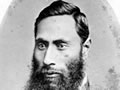
Four seats were a fairly modest concession: on a per capita basis at that time, Māori deserved 14 to 16 members (Europeans then had 72). The arrangement was supposed to be temporary, lasting only five years. Most politicians expected that in due course Māori would own or rent land as individuals and the seats could be done away with. It soon became clear that this process – the individualisation of Māori land ownership – would take much longer. The experiment was extended in 1872, and in 1876 the Māori seats were established on a permanent basis.
By that time some of the Māori Members of Parliament were pressing for an increase in the number of seats, not only to better represent their population, but also to reduce the size of their huge electorates. It would be more than a century, however, before these efforts were successful.
Māori go to the polls
Very few Māori took part in the first elections, held in 1868, but interest began to grow in the 1870s and 1880s. The first Māori MPs came exclusively from tribes that had fought alongside the Crown or remained neutral during the New Zealand Wars. The government tried to bring all Māori into the system, however, by establishing polling booths in areas such as the King Country and Urewera.
In 1890, for example, the government decided to set up a polling station at Maungapōhatu, deep in the Urewera ranges, an area largely inaccessible to Europeans. After trekking for six days through thick bush and mist, the returning officer, J.T. Large, arrived to find that most of the people had left for Whakatāne. Those that remained told him that he would 'get no votes except those of the trees standing round', but he eventually persuaded some men to cast votes. Despite getting lost and injuring his foot, Large declared his 14-day round trip had achieved its aim of 'maintaining friendly relations' with 'this isolated tribe'.
The 1893 Electoral Act gave all New Zealand women the vote, including Māori. Other law changes in 1893 and 1896 completed the almost total separation of the Māori and European electoral systems. From then until 1975 only so-called ‘half-castes’ (people with one Māori and one European parent) were allowed to choose which seats they wished to vote in.


