
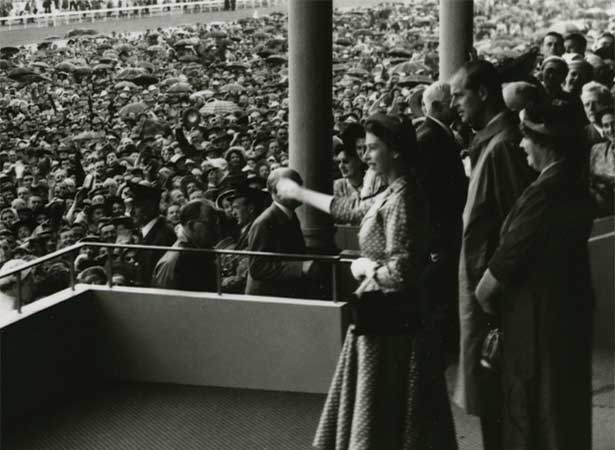
For the New Zealanders who experienced it, the visit of the young Queen and her dashing husband, Prince Philip, in the summer of 1953–4 was a never-to-be forgotten event.
Thousands greeted the first reigning monarch to visit this country in Auckland’s aptly named Queen St. In scenes reminiscent of a modern-day rock concert, hundreds of people had camped overnight to secure a good spot for the occasion.
The Queen visited 46 towns and cities and attended 110 functions during her stay. It was said that three out of every four New Zealanders saw her.
The country was gripped with patriotic fervour; sheep were even dyed red, white and blue. It was hard to spot a car that did not sport a Union Jack, or a building in the main cities that was not covered in bunting and flowers during the day or electric lights at night.
Sadly, the Queen’s triumphant arrival was swiftly followed by one of New Zealand’s darkest moments, when disaster struck at Tangiwai on the following night, Christmas Eve (see 24 December).
Read more on NZHistory
The royal visit, 1953-54 – Royal Visit of 1953-54Waitangi Day 1940s-1950s – Waitangi Day1953 - key events – The 1950sLake Karāpiro - roadside stories – Royal Visit of 1953-54The 1953–54 royal tour of NZ – Auckland to Stratford – Royal Visit of 1953-54
External links
How to cite this page
'Queen Elizabeth II arrives for royal tour', URL: https://nzhistory.govt.nz/queen-elizabeth-ii-arrives-to-begin-first-visit-to-new-zealand-by-a-reigning-monarch, (Ministry for Culture and Heritage), updated 23-Sep-2020


