What happened that day?

Kiwi of the Week

  • freyberg.biog.jpg

    Bernard Freyberg

    A First World War hero and commander of the 2nd New Zealand Expeditionary Force, Bernard Freyberg was British-born but New Zealand-raised. He proved to be a charismatic and popular military leader who would later serve a term as Governor-General

This WeeK's Quiz

Today in History

previous10 Junenext

rss feed
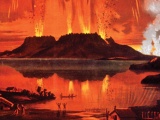
Eruption of Mt Tarawera

1886 Eruption of Mt Tarawera

The eruption lasted six hours and caused massive destruction. Several villages were destroyed, along with the famous silica hot springs known as the Pink and White Terraces. Around 120 people, mainly Maori, lost their lives.

Eleven days beforehand, passengers on a tourist boat led by renowned guide Sophia Hinerangi reported seeing what appeared to be a phantom war canoe on Lake Tarawera. Tribal elders believed this was a waka wairua (spirit canoe) and an omen of doom. More tangible signs included an increase in hot spring activity and surges in Lake Tarawera.

In the early hours of 10 June, locals awoke to earthquakes, lightning, fountains of molten rock, and columns of smoke and ash up to 10 kilometres high. People as far away as Blenheim heard the eruption. Some thought it was an attack by a Russian warship which had recently visited Wellington.

A rift split Tarawera, extending to Waimangu some 10 kilometres away. Millions of tonnes of ash and debris covered the land. Lakes were transformed, and bush was flattened. The eruption was over by about 6 a.m., though ash made day as dark as night. Once the darkness abated, able-bodied men in Rotorua and Ohinemutu formed rescue parties and attempted to dig out survivors and casualties. Local settlements Te Tapahoro, Moura, Te Ariki, Totarariki, Waingongongo and Te Wairoa were destroyed. Te Wairoa, where many survived by sheltering in the stronger buildings, is now a tourist attraction called 'The Buried Village'.

New Zealand’s volcanoes still pose a risk today. A geological hazard monitoring scheme, GeoNet, is being developed by the Crown research institute GNS Science and the Earthquake Commission. GeoNet includes an alert system in case of increased volcanic activity.

Death of Richard Seddon

1906 Death of Richard Seddon

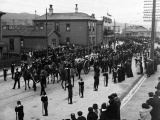
Known as 'King Dick', Seddon had dominated the New Zealand political scene since the early 1890s. The Liberal government that he headed as Premier from 1893 is widely credited with establishing the tradition of state welfare in this country. Seddon died at sea while returning from Australia to what he called 'God's own country'.

Image ref: PAColl-3861-30-01, Alexander Turnbull Library