What happened that day?

Kiwi of the Week

  • john-reid-bio.jpg

    John Reid

    After debuting for the New Zealand cricket team against England in 1949 John Reid went on to play another 57 tests for his country, 34 of those as captain.

This WeeK's Quiz

Today in History

previous12 Julynext

rss feed
New Zealander wins Tour de France stage

2001 New Zealander wins Tour de France stage

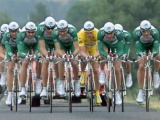
The only stage win by a New Zealander in the Tour de France was a team time trial. Although Chris Jenner didn't finish with the core of his Credit Agricole team, he is still credited as sharing the stage win - he got to stand on the podium that day.

Few New Zealand riders have completed the world's greatest cycle race. The first was Harry Watson, who in 1928 was part of a four-main 'down-under' team. The team was supposed to have ten riders, but their six European teamates failed to show - a major handicap given that 15 of the stages were over 380 kms long. Watson still managed an impressive 28th overall.

Our highest-placed Tour rider ever was Tino Tabak, who finished 18th overall in 1972. Eric McKenzie completed four Tours in the early 1980s, finishing third in one stage. Nathan Dahlberg (1988), Stephen Swart (1994, 1995) and Julian Dean (2004, 2006, 2007, 2008, 2009) are the other New Zealand finishers.

Dean has gained a reputation as one of the best lead-out men in the world, helping set up his team's fastest rider as they reach speeds of up to 80 km/hr before crossing the finishing line in the frantic and dangerous sprint stages. In 2009 he is a member of the Garmin-Slipstream team working for the young American sprinter Tyler Farrar. He became the first New Zealand rider to complete the Tour five times.

Another first in 2009 was to have two riders in the Tour peloton, the other being Haydon Roulston on the Cervelo Test Team. Roulston got third place on stage 14, equalling McKenzie's best ever stage result for an individual New Zealand rider. 

Chris Jenner retired from professional racing in 2004. Apart from his Tour stage, he won the overall Le Télégramme in 2002, two stages and the overall of the Tour of Wellington in 2001, as well as stages in the Tour de l'Ain and Tour de l'Avenir in 1999.

Image: Credit Agricole on the podium (cyclingnews.com) 

British forces invade the Waikato

1863 British forces invade the Waikato

On 12 July 1863 British troops invaded Waikato when they crossed the Mangatawhiri stream. The Kingitanga had declared this to be an aukati (a line that should not be crossed) and considered any breach to be an act of war.

The Kingitanga or Maori King Movement had been established in 1858. The settler government viewed it as an anti-land-selling league and an impediment to settler progress. The involvement of Kingitanga warriors in fighting in Taranaki added to the increasing fear that this was a separatist movement that challenged British sovereignty in New Zealand. In January 1863 Governor George Grey stated that it was his intention to 'dig around the Kingitanga until it fell'.

Rumours of an imminent Maori attack on Auckland from Waikato increased the tension. A number of violent incidents saw settlers and missionaries flee Waikato. Grey exploited these tensions to convince the authorities in London to back his request for more manpower.

Fresh fighting erupted in Taranaki in the autumn of 1863 and the involvement of Kingitanga forces in an ambush at Oakura gave Grey the excuse he needed. In July he issued all Maori living between Auckland and the Waikato River with an ultimatum: swear allegiance to the Queen and give up arms, or be deemed to be in rebellion and face the consequences.

Grey was now backed by a force of 18,000 troops, including some kupapa Maori forces. Lieutenant-General Cameron enforced this ultimatum when he crossed the Mangatawhiri stream on 12 July. The Waikato War had begun.

Image New Zealand Wars map