What happened that day?

Kiwi of the Week

  • wiremu-te-rangitake-biography.jpg

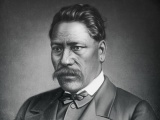
    Wiremu Kingi Te Rangitake

    Te Ati Awa leader Wiremu Kingi Te Rangitake's refusal to give up his land at Waitara led to the outbreak of the Taranaki War. In later life joined the pacifist community at Parihaka

This WeeK's Quiz

Today in History

previous15 Octobernext

rss feed
'Anti-terror' raids in Urewera

2007 'Anti-terror' raids in Urewera

Citing the Terrorism Suppression Act, police arrested 18 people in nationwide raids linked to alleged weapons-training camps in the Urewera mountain ranges, near the township of Ruatoki in eastern Bay of Plenty.

In addition to raids in Ruatoki and nearby Whakatane, search warrants were also executed in Auckland, Wellington, Palmerston North and Hamilton. The raids followed 12 months of police surveillance of activist groups ranging from environmentalists to Maori separatists. Around 300 police, including members of the Armed Offenders and anti-terror squads, were involved in the raids. They seized a small number of guns and 230 rounds of ammunition.

Among those arrested was veteran Tuhoe activist Tame Iti. Police claimed Iti was involved in running military-styled training camps in the Urewera Ranges and was planning a guerrilla war to establish an independent state on traditional Tuhoe land. The Solicitor-General subsequently decided that there was insufficient evidence to lay charges under the Terrorism Suppression Act, although 16 people faced weapons charges.

Those arrested were released on bail within a month of their arrest. Depositions hearings to determine whether they should stand trial did not begin until September 2008. On 17 October Judge Perkins ruled that all but one of those arrested in the raids be committed to trial on various firearms, weapons and explosives charges. The accused were remanded on bail to appear back in court in February 2009, indicating a lengthy legal process to determine the outcome of these raids.

The Urewera's had experienced similar police action before. In April 1916 a large force of heavily armed constables was sent to arrest the Tuhoe leader Rua Kenana. Shooting broke out and two Maori, including Rua's son, were killed. Rua's trial in the Supreme Court was one of the longest in New Zealand's legal history. He was found not guilty of sedition, but guilty of resisting arrest and sentenced to one year's hard labour, followed by 18 months’ imprisonment. The presiding officer, Judge Chapman, commented that Maori needed to learn that the law "reached every corner" of the land. Eight members of the jury later publicly protested the harshness of this sentence.

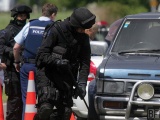
Image: Police detaining a man at Ruatoki (Stuff.co.nz)

Former Governor Grey becomes Premier

1877 Former Governor Grey becomes Premier

Sir George Grey was a dominant figure in 19th century New Zealand politics, serving two terms as Governor before becoming Premier on 15 October 1877. He was the first person to have held both positions – an achievement matched only by former National Party Prime Minister Keith Holyoake, who became Governor-General a century later.

Historian Keith Sinclair described Grey as one of the most remarkable 19th-century British colonial governors and one of the most remarkable people to have lived in New Zealand.

During his first term as Governor (1845-53), critics viewed him as a despot, unwilling to share power with settlers. He opposed an 1846 proposal for an elected assembly on the grounds that the minority settler population could not be trusted to pass measures that would protect the interests of Maori. This, he feared, would lead to conflict.

In 1852 Grey was the chief author of a new constitution which established provincial and central representative assemblies. He was criticised for arranging provincial elections before those for the General Assembly, giving the provincial councils a five-month headstart on central government. Some believed this entrenched provincialism in New Zealand politics.

After his second term as Governor (1861-68), Grey led the fight against Julius Vogel's proposal to abolish the provincial system that he had helped establish in 1852. In 1875 Grey was elected superintendent of Auckland province and also as Member of the House of Representatives (MHR) for Auckland City West. Despite his best efforts, Grey was unable to save the provinces.

When the ministry led by Harry Atkinson lost a confidence vote on 13 October 1877, Grey formed a new ministry that combined conservatives and radicals. Lacking a safe majority, Grey asked the Governor, Lord Normanby, to dissolve Parliament and call for fresh elections. Normanby refused. This ensured there would be no last minute reprieve for the provinces.

Grey now championed a number of so called radical causes such as 'one man one vote'. While this stirred up considerable enthusiasm, tough economic conditions in 1878 focused attention on the economy. In 1879 the government lost a division in the House and failed to win a majority in the following election. After the defection of four Auckland members, Grey resigned in October that year. He remained an MHR until 1895, then returned to London, where he died in 1898.

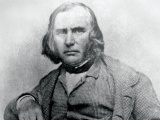
Image: George Grey