What happened that day?

Kiwi of the Week

  • charles-heaphy-biog.jpg

    Charles Heaphy

    The multi-faceted Charles Heaphy made quite an impact on colonial New Zealand as an artist, explorer, soldier and colonial administrator. He was the first colonial soldier to win the Victoria Cross

This WeeK's Quiz

Today in History

previous17 Marchnext

rss feed
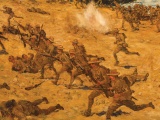
First Taranaki war erupts at Waitara

1860 First Taranaki war erupts at Waitara

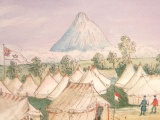
The opening shots of the first Taranaki War were fired on 17 March 1860 when Imperial troops attacked a pa built by the Te Ati Awa chief Te Rangitake at Te Kohia. Te Rangitake (also know as Wiremu Kingi) and his supporters were resisting the governments claims to have purchased the Waitara block. 

In 1859 another Te Ati Awa chief, Te Teira Manuka, had offered Governor Thomas Gore Browne land at Waitara. Te Rangitake opposed the offer and warned the Governor: ‘I will not permit the sale of Waitara to Pakeha. Waitara is in my hands, I will not give it up’. Te Rangitake’s supporters erected a flagstaff to mark the boundary of their land as a way of establishing what would not be sold.

Government policy at the time dictated that if there was a dispute over ownership, a sale should not proceed until the dispute had been fully investigated and resolved. Despite this, Gore Browne accepted the offer. For the Governor this was an opportunity to assert his authority. Te Rangitake was portrayed as a bully who was holding back progress in this part of Taranaki. New Plymouth settlers were desperate for more land and Gore Browne no doubt saw the chance to win the support of frustrated colonists.

When Gore Browne ordered surveyors into the area, protestors pulled up their surveying pegs. The Governor responded by declaring martial law and sending troops to occupy the disputed land.

Te Rangitake‘s pa at Te Kohia incorporated anti-artillery bunkers and was shaped like an L, making it difficult to surround. Despite being built in a single night, it withstood close-range fire from 500 troops for an entire day and 200 rounds from two 24-pound howitzers. No Maori were killed. Te Rangitake and his 70 or so men simply abandoned the pa on March 18. The L-shaped pa was to become a feature of Maori defences during the New Zealand Wars as it was quick to build, effective and expendable.

Image: detail from plan of Pekapeka Block, Waitara - see full image (NZETC)