What happened that day?

Kiwi of the Week

  • freyberg.biog.jpg

    Bernard Freyberg

    A First World War hero and commander of the 2nd New Zealand Expeditionary Force, Bernard Freyberg was British-born but New Zealand-raised. He proved to be a charismatic and popular military leader who would later serve a term as Governor-General

This WeeK's Quiz

Today in History

previous19 Februarynext

rss feed
21 drown in Kopuawhara flash flood

1938 21 drown in Kopuawhara flash flood

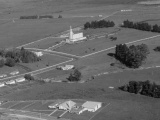
Twenty men and one woman were drowned when a sudden cloudburst sent a wall of water surging through a public works camp at Kopuawhara, near Mahia. This was New Zealand's deadliest 20th-century flood.

Located on the banks of the Kopuawhara Stream, the No. 4 camp had been established for workers building the Wairoa–Gisborne railway. Houses for married men were situated up on higher ground, with a cookhouse and huts for 47 single men closer to the river bank.

While the stream was in flood due to heavy rain, the level had been higher at other times and there was no sense of danger. No one was prepared for the 5-metre-high wall of water that hit the camp sometime after 3 a.m.

One worker woke just as the water breached the banks of the stream and began pouring across the camp site. He tried in vain to raise the alarm, running from hut to hut and frantically beating on the doors before being swept away. Men struggled in water up to their necks. Some took refuge on the roofs of their huts, but the torrent collapsed most of these structures.

Other workers climbed onto the roof of the cookhouse. This structure partially collapsed, but they managed to hang on and were rescued when daylight came. The 11 men who took refuge in one of the work trucks were not so lucky. The force of the water tossed it onto its side, sweeping its occupants away; remnants of the vehicle were found 12 kilometres downstream.

Image: No 4 camp after the Kopuawhara flood (Te Ara

Release of Parihaka leaders Te Whiti and Tohu

1883 Release of Parihaka leaders Te Whiti and Tohu

Parihaka had become the symbol of opposition to the government policy of land confiscation in the aftermath of the NZ Wars. Te Whiti and Tohu were imprisoned without trial after the occupation of Parihaka in November 1881.

Image: Parihaka