What happened that day?

Kiwi of the Week

  • wiremu-te-rangitake-biography.jpg

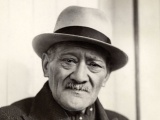
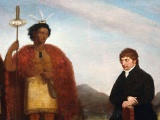
    Wiremu Kingi Te Rangitake

    Te Ati Awa leader Wiremu Kingi Te Rangitake's refusal to give up his land at Waitara led to the outbreak of the Taranaki War. In later life joined the pacifist community at Parihaka

This WeeK's Quiz

Today in History

previous21 Decembernext

rss feed
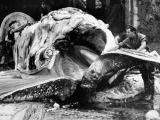
NZ whalers harpoon their last victim

1964 NZ whalers harpoon their last victim

More than 170 years of New Zealand whaling history came to a close when J. A. Perano and Company caught its last whale off the coast near Kaikoura.

Dunedin-born Joe Perano had started whaling out of Tory Channel in the Marlborough Sounds in 1911, beginning a 53-year family business. He was credited with bringing many modern innovations to the New Zealand whaling industry: he constructed this country's first power-driven whale chaser, was the first operator to use explosive harpoons, introduced the electric harpoon, and in 1936 equipped his whale chasers, mother ship and shore stations with radio telephones.

Joe Perano died in 1951, aged 74. In 1964 the business was being run by his sons, Gilbert and Joseph. The whale they killed on 21 December was the last to be harpooned in New Zealand waters from a New Zealand-owned ship. Perano Head, a steep headland that stands sentinel over the Cook Strait waters in which Joe Perano and two of his sons whaled for more than half a century, is named after the family.

Image: South seas whaling painting, 1820s 

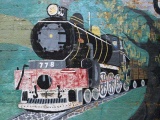
Full steam ahead for Kingston Flyer

1971 Full steam ahead for Kingston Flyer

A few months after the last steam locomotives had been withdrawn from this country's scheduled rail operations, New Zealand Railways (NZR) launched a new tourist-oriented steam passenger venture in the South Island.

Beginning on 21 December 1971, the Kingston Flyer ran twice daily on the 61-km line between Lumsden in northern Southland and Kingston on the shores of Lake Wakatipu. It used two of NZR's famous AB-class Pacific locomotives, built in the 1920s, and a number of preserved wooden carriages dating back to 1898, including an historic ‘birdcage' (balcony) car. As a rare example of a state-owned railway entering the heritage and preservation fields, the Kingston Flyer attracted widespread media attention, both in New Zealand and overseas.

In more recent years the (now privately owned) venture ran two daily trips in summer over a 14-km section of line between Fairlight and Kingston, as well as offering charters throughout the year. In 2009 the railway's future was clouded by financial problems.

The Kingston-Lumsden line was originally built as part of the ‘Great Northern Railway' from Invercargill, which was completed in 1878. The original Kingston Flyer was a passenger train that ran between Gore, on the main Dunedin-Invercargill line, and Kingston, from where lake steamers provided a connection with Queenstown. It was withdrawn in 1937, although Christmas and Easter specials continued into the 1950s.

Image: Kingston Flyer