See historic events for any day of the year by entering the date below. Why not try your birthday?

In the midst of boxing's golden age, Gisborne-born Tom Heeney took on Gene Tunney for the world heavyweight title in front of 46,000 spectators at Yankee Stadium, New York. Although he was defeated, his title bid aroused tremendous interest in both New Zealand and the US.
A plumber by trade, Heeney showed early promise at boxing; he was also a representative rugby player and a powerful swimmer. He turned professional in 1920 and soon won the New Zealand heavyweight title. After fighting with considerable success in Australia, Britain, South Africa and Ireland, he sailed for New York in 1926.
A series of victories against leading boxers gained Heeney number four ranking among the world's heavyweights. He then emerged victorious from an elimination series to find an opponent for world champion Gene Tunney. He was popular with American crowds, and earned the nickname 'The Hard Rock from Down Under' because of his non-stop style and refusal to back away from an opponent.
On 26 July 1928 Heeney met Tunney at Yankee Stadium in New York. He entered the ring wearing a Maori cloak that had been sent to him by Heni Materoa, Sir James Carroll's widow. He was guaranteed $100,000 for the bout. Heeney fought bravely and did well in the early rounds, but had little chance against the talented Tunney. The bout was stopped in the 11th round to save the New Zealander from further punishment.
During a visit to New Zealand the following month, Tom and his new wife were welcomed by huge crowds throughout the country, especially in his home town, Gisborne. After returning to the US, Heeney took out American citizenship and continued to box until 1933. He visited New Zealand again in 1947 and once more shortly before his death in 1984, in Miami, Florida. Tom Heeney remains the only New Zealand-born heavyweight to fight for the world title.
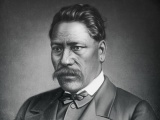
Image: Tom Heeney (Gene Tunney website)
The capital moved from Auckland to the more central Wellington on the recommendation of a specially appointed Australian commission. The old Wellington Provincial Council chamber became the new home for Parliament.
The location of New Zealand's Parliament had been a matter of debate for some years. For South Island members the long sea voyage to Auckland was a genuine trial. The issue came to a head as the populations of Canterbury and Otago grew rapidly in the 1860s.
Eventually an independent commission made up of Australian Governors was charged with selecting New Zealand's capital. After visiting Wellington, Wanganui, Picton, Port Underwood, Havelock and Nelson, at a cost of £4085, they concluded that Wellington was the clear choice. The move, which was a substantial logistical exercise, took place in early 1865, at a total cost of £54,665.
Image: detail from Parliament buildings, 1906