What happened that day?

Kiwi of the Week

  • barratt-boyes-biog.jpg

    Brian Barratt-Boyes

    At Green Lane Barratt-Boyes assembled a team that was at the forefront of heart surgery. He pioneered new surgical techniques involving the replacement of defective heart valves. In 1958 Barratt-Boyes performed New Zealand's first cardiopulmonary bypass using an imported Melrose Heart-Lung machine.

This WeeK's Quiz

Today in History

previous27 Marchnext

rss feed
Trades Hall bombing

1984 Trades Hall bombing

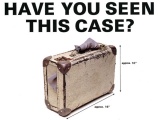
Ernie Abbott, the caretaker at Wellington's Trades Hall, was killed instantly when he moved a booby-trapped suitcase. Despite lengthy police investigations, the crime remains unsolved.

The suitcase – designed to go off when moved – contained the equivalent of at least 1kg of gelignite, although the actual explosive has never been identified. The lack of a definite motive by the bomber hampered investigations. An initial theory centred on a bus strike that had occurred the day before. Trades Hall was a union building so it was suspected the bomb was aimed at a unionist. Police investigating the crime, however, concluded that it would have been difficult to assemble the bomb and put it in place in such a short time. 

Image: Ernie Abbott (Timeframes

The 'Sallies' come to New Zealand

1883 The 'Sallies' come to New Zealand

On 27 March 1883 two young English Salvation Army officers, Captain George Pollard and Lieutenant Edward Wright, arrived at Port Chalmers. Their mission was to establish a New Zealand branch of the quasi-military Christian evangelical movement, which had been founded in the slums of London’s East End in 1865.

In 1882 several New Zealanders had written to the Army’s founder, General William Booth, asking him to send officers to the colony, then in the throes of economic depression. Pollard and Wright, aged 20 and 19, were commissioned in November 1882. They were met in Dunedin by a handful of supporters and ridicule in the press. Some joked that England had already sent New Zealand its thistles, sparrows and rabbits; a further scourge wasn’t needed.

The Army ‘opened fire’ in New Zealand on Sunday 1 April 1883, holding four meetings at Dunedin’s Temperance Hall and in front of the fountain (Cargill’s monument). Crowds soon packed the Army’s gatherings, but there were also disputes over the holding of street meetings and occasional outbreaks of hooliganism. Pollard quickly established a presence in Auckland, Christchurch and Wellington, and the first issue of the journal War Cry appeared on 16 June. Rescue homes were opened in the main centres and by the end of 1884 the Army had 30 corps and more than 60 full-time officers.

At the beginning of the 21st century the ‘Sallies’ retain a visible presence in New Zealand cities and towns, distinguished by their uniforms, brass bands, thrift shops, and ongoing charitable work among the disadvantaged, alcoholics, drug users and other vulnerable New Zealanders.

Image: Captain George Pollard and Lieutenant Edward Wright (Salvation Army)