
What happened that day?

Kiwi of the Week

  • freyberg.biog.jpg

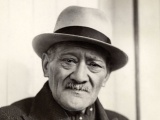
    Bernard Freyberg

    A First World War hero and commander of the 2nd New Zealand Expeditionary Force, Bernard Freyberg was British-born but New Zealand-raised. He proved to be a charismatic and popular military leader who would later serve a term as Governor-General

This WeeK's Quiz

Today in History

previous27 Octobernext

rss feed
NZ troops make first opposed landing since Gallipoli

1943 NZ troops make first opposed landing since Gallipoli

New Zealanders from 8 Brigade, New Zealand 3rd Division, helped their American allies clear Mono Island of its Japanese defenders.

While New Zealand's effort in the Second World War was largely focused on fighting in the Northern Hemisphere, our forces also played a significant role in the Pacific War against the Japanese. An important part of this campaign was the struggle for control of the Treasury Islands, a small group of islands to the south of Bougainville in the Solomon Islands. The two largest islands in this group, Mono and Stirling, are only a kilometre apart.

The troops of 8 Brigade arrived in Guadalcanal, the largest island of the Solomons archipelago, in mid-September 1943. On 16 October orders were received from 1 US Marine Amphibious Corps to seize and hold Mono and Stirling Islands, in order to establish a long-range radar station in the north of Mono Island.

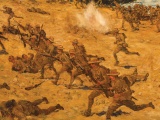
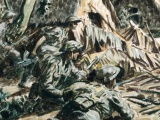
The New Zealanders landed on Mono Island at approximately 6.25 a.m. on 27 October. They came under immediate enemy machine-gun fire, including from Cummings Point on nearby Stirling Island. The landing enjoyed ‘excellent naval and air support' and the New Zealand and American forces managed to establish a beach-head. By the end of the day 21 New Zealanders had been killed and 70 wounded. American units under the brigade's command suffered nine killed and 15 wounded.

Although the Japanese defenders were outnumbered, Mono's geography afforded them some protection. The island rose steeply from the sea to a cone a little over 300 metres high, and its dense forest cover concealed many caves in which the enemy was able to hide. Flushing Japanese soldiers out of their concealed positions was a slow and difficult task which took days to accomplish. By 12 November 8 Brigade Group had killed 205 Japanese and taken eight prisoners. New Zealand casualties had risen to 40 killed and 145 wounded. Some enemy positions were still being mopped up at the end of November and a number of Japanese eluded capture for months.

Image: landing on Mono Island under fire