What happened that day?

Kiwi of the Week

  • wiremu-te-rangitake-biography.jpg

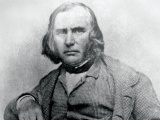
    Wiremu Kingi Te Rangitake

    Te Ati Awa leader Wiremu Kingi Te Rangitake's refusal to give up his land at Waitara led to the outbreak of the Taranaki War. In later life joined the pacifist community at Parihaka

This WeeK's Quiz

Today in History

previous3 Novembernext

rss feed
Birth of iconic Anchor butter brand

1886 Birth of iconic Anchor butter brand

From a dairy factory at Pukekura, Waikato, Henry Reynolds launched his Anchor butter. The brand name was allegedly inspired by a tattoo on the arm of one of his workers. It would become one of this country's best-known trademarks.

New Zealand's temperate climate is well suited to dairy farming. Its potential as an export industry was suggested in 1882 with the success of the first shipment of frozen meat to Britain. The same technology could be used to export butter and cheese to Europe. A highly innovative and efficient approach, based on farmer-owned co-operative companies, enabled dairying to grow into New Zealand's most important industry. The production of butter and cheese flourished as New Zealand established itself as 'Britain's farmyard'.

Henry Reynolds arrived in New Zealand from Cornwall in 1868. By the 1880s he was dairy farming in the Waikato and established a small dairy factory. The recipe for this butter came from an American, David Gemmell, who was farming near Hamilton. Reynolds was impressed with both the taste and longevity of Gemmell's product. When Gemmell announced that he was moving back to the United States, Reynolds asked if he would remain in New Zealand for six months to help him establish his dairy factory. Gemmell agreed, and the rest is history. The Anchor brand quickly established itself as a market leader and became synonymous with the New Zealand dairy industry. The company's butter, milk and cheese have become well-established items in households here and around the world.

'Summer time' reintroduced on trial basis

1974 'Summer time' reintroduced on trial basis

The trial proved popular with most New Zealanders and daylight saving of one hour (from October to March) was made permanent in 1975.

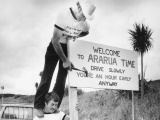
Not everyone was happy. Dairy farmers in particular objected to having to get up in the dark all year round. Others worried that putting their clocks forward would make hens stop laying, curtains and carpets fade faster, and lawns go brown. A novel solution was found in the dairying town of Ararua, which rejected daylight saving and implemented 'Ararua Time' instead.

The seed had been sown in 18th-century Paris, when American envoy Dr Benjamin Franklin wrote a satirical letter to the Journal of Paris proposing that people save candles by going to bed early and waking at sunrise. Church bells and cannon fire could be used to 'awaken the sluggards'. More than a century later, Germany and its First World War allies were the first to implement daylight saving. Britain and other European countries soon followed.

The earliest-known New Zealand advocate was entomologist and astronomer George Hudson, who made an unsuccessful proposal in 1895. The cause was taken up more than a decade later by Dunedin MP Sir Thomas Sidey. After some 20 years of annual Member's Bills, a half-hour of daylight saving was established in 1928. This became a permanent year-round shift during the Second World War, and it wasn't until 1974 that summertime daylight saving was reintroduced.

Daylight saving has twice been extended, most recently in 2007 after more than 42,000 New Zealanders signed a petition to Parliament. It was argued that an extension to the 'peak summer season' would benefit recreation and tourism, and avoid a clash with the start of the fourth school term.

Reported ill effects include disruption to some people's body clocks, especially for those with sleeping disorders. Parents have cited the horrors of persuading toddlers to sleep – or teenagers to get up – an hour earlier. Others welcome the change for providing long, light evenings, encouraging barbecues and heralding the arrival of summer.

Since 2007, New Zealand daylight saving has run for more than half the year, from the last Sunday in September until the first Sunday in April.