
What happened that day?

Kiwi of the Week

  • freyberg.biog.jpg

    Bernard Freyberg

    A First World War hero and commander of the 2nd New Zealand Expeditionary Force, Bernard Freyberg was British-born but New Zealand-raised. He proved to be a charismatic and popular military leader who would later serve a term as Governor-General

This WeeK's Quiz

Today in History

previous30 Junenext

rss feed
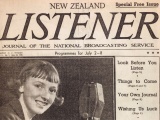
First issue of NZ Listener published

1939 First issue of NZ Listener published

Free to all 380,000 radio licence holders, the New Zealand Listener soon expanded its original brief, which was to publicise radio programmes. Today it is the country's only national weekly current affairs and entertainment magazine.

'To what purpose is this waste?', wrote one reader in 1939. Fortunately he was in the minority, and the Listener was welcomed by many as a cut above the alternative, the gossipy Radio Rag.

Founding editor Oliver Duff and his successor, Monte Holcroft, established a reputation for sturdy independence. Famous for his editorials, Holcroft was once called into the assistant director’s office after taking a stand against the British seizure of the Suez canal – a bold move for the official journal of the government’s New Zealand Broadcasting Service. It was not until 1990 that the Listener was 'privatised' and bought by New Zealand Magazines, now part of APN Specialist Publications NZ Ltd.

From major stories to RHW’s famous crossword clues, the Listener has reflected the serious, the trivial and everything between. Features like the 1939 war diary about clothes for the well-dressed soldier, Aunt Daisy’s instructions on cooking a swan, and the recent 'Power Lists' of influential New Zealanders have traced our changing preoccupations over the years.

From the outset, the arts have been a major focus and the Listener has published works by leading figures such as James K. Baxter, Janet Frame and Maurice Shadbolt.

Circulation peaked at 375,885 in 1982. Some feared the Listener’s demise when it lost its monopoly on programme schedules in the free-market 1980s, but it adapted and survived. Today it remains one of New Zealand’s top-selling magazines.