What happened that day?

Kiwi of the Week

  • freyberg.biog.jpg

    Bernard Freyberg

    A First World War hero and commander of the 2nd New Zealand Expeditionary Force, Bernard Freyberg was British-born but New Zealand-raised. He proved to be a charismatic and popular military leader who would later serve a term as Governor-General

This WeeK's Quiz

Today in History

previous9 Maynext

rss feed
First School Journal published

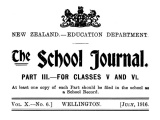
1907 First School Journal published

In May 1907 New Zealand schoolchildren were able to read a school book published in their own country for the first time. The School Journal was initiated by Inspector-General George Hogben to provide New Zealand schoolchildren with a free publication containing information on history, geography and civics, replacing the need for several separate textbooks.

Until 1939, when the School Publications Branch was formed, the School Journal was the Department of Education's sole publication for children. Today the School Journal  is published by Learning Media for the Ministry of Education. It is believed to be the longest-running serial publication for children in the world. Catering for children aged from 7 to 13 years, the Journal continues to provide children with New Zealand-based reading material that is relevant to their lives. Around 750,000 copies of the School Journal are published annually in four parts.

Many of New Zealand's foremost authors and illustrators, including Alistair Campbell, James K. Baxter, Jack Lasenby, Russell Clark, Rita Angus and E. Mervyn Taylor, have had their work published in the School Journal over the past 100 years.

NZ celebrates Victory in Europe

1945 NZ celebrates Victory in Europe

Germany surrendered on 7 May, New Zealand time. But acting Prime Minister Walter Nash insisted that celebrations should wait until Winston Churchill officially announced peace at 1 a.m. on 9 May, New Zealand time.

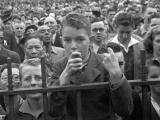
Huge headlines in the morning papers of 8 May announced Germany's surrender. The nation was obviously excited by the news and there was a mood of celebration. The rug was pulled out from under the feet of many when Nash announced over the radio that New Zealanders should go about their usual business and that VE Day would be held on the 9th. The New Zealand Herald summed up the mood of many: ‘The feeling of victory was in the air, but no-one was inclined to let off steam without official authorisation'. It reported a comment from a mayor who remarked, 'In 20 years' time, school children will be asked to define the word anti-climax, and the answer will be "March [sic] 8, 1945".'