See historic events for any day of the year by entering the date below. Why not try your birthday?

In the early hours of 11 March 1845 anti-government Maori attacked Kororareka. While the settlement had fallen into decline since the capital was moved from nearby Okiato to Auckland in 1841, it was still a major trading and ship-provisioning centre and the fifth largest settlement in New Zealand.
Hone Heke and Kawiti were key figures in the attacking forces. The opposition to them included another Nga Puhi leader, Tamati Waka Nene. The motives for the fighting were complex. Heke wanted to see the Maori version of the Treaty of Waitangi applied. He also wanted to preserve Maori independence and chiefly authority from what he saw as increasing interference from the government.
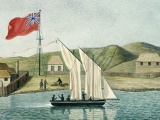
The one-gun battery and two blockhouses defending the settlement were quickly captured. For a fourth, and final, time the British flag on Maiki Hill was cut down. Heke had been reluctant to harm settlers and most of the townspeople were evacuated to the ships Victoria and Active, which were anchored in the harbour.
The attack on Kororareka was one of the rare occasions in the Northern War where the British forces were outnumbered. Yet the attackers seemed unwilling to press home their advantage. There was a largely insignificant exchange of gunfire during the morning. Shortly after lunch the powder magazine at Polack's Stockade was accidentally blown up. Following this explosion, HMS Hazard began to bombard the town. Maori took this as a signal to commence plundering. The British ships sailed for Auckland on 12 March, effectively surrendering the town to Heke and Kawiti's forces.
The fall of Kororareka was a serious blow to the British in terms of morale and finances, with an estimated £50,000 worth of property lost.