What happened that day?

Kiwi of the Week

  • barratt-boyes-biog.jpg

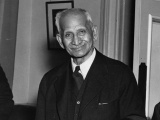
    Brian Barratt-Boyes

    At Green Lane Barratt-Boyes assembled a team that was at the forefront of heart surgery. He pioneered new surgical techniques involving the replacement of defective heart valves. In 1958 Barratt-Boyes performed New Zealand's first cardiopulmonary bypass using an imported Melrose Heart-Lung machine.

This WeeK's Quiz

Today in History

previous14 Julynext

rss feed
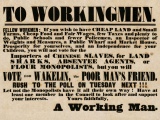
NZ's first general election begins

1853 NZ's first general election begins

The first member of New Zealand's inaugural Parliament, Hugh Carleton, was elected unopposed at Russell in the Bay of Islands. Few of the district's 142 registered electors were present outside the courthouse when Carleton was nominated and, in the absence of any opponent, duly declared elected.

The level of popular interest and participation in early parliamentary elections varied widely throughout the colony. In a number of seats, like the Bay of Islands, the 1853 elections aroused little excitement. Others, especially in the capital, Auckland, were fiercely contested, and tainted by allegations of corruption and bribery.

Due to the difficulties of travel and the small number of electoral officials available, early elections were staggered over weeks or months. In 1853 it would take a further two and a half months to elect the remaining 36 members of the House of Representatives, as well as the superintendents of the colony's six provinces and the 87 members of the Provincial Councils. Parliament met for the first time in Auckland on 24 May 1854.

Image: 1853 electoral poster

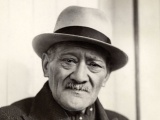
Death of Sir Apirana Ngata

1950 Death of Sir Apirana Ngata

Ngata contributed hugely to the revival of the Maori people in the early 20th century. His intelligence, tact, persistence and political skill helped him to promote Maori culture and identity.

Apirana Ngata (1874-1950), of Ngati Porou, was born at Te Araroa on the East Coast. He attended Te Aute College, and later completed an MA and a law degree. He was the first Maori to complete a degree at a New Zealand University. He returned to the East Coast and became involved in improving Maori social and economic conditions.

He was elected to Parliament in 1905 representing Eastern Maori, a seat he would retain until 1943. In 1928 Ngata became Native Minister in the United government, and he soon set up Maori land development schemes all over the country. He also helped set up a Maori school of arts at Rotorua, the Board of Maori Ethnological Research, and the Maori Purposes Fund Board.

Most Europeans had little sympathy for Maori land development, though, and by 1932 Ngata faced increasing criticism. A 1934 Committee of Inquiry report criticised many aspects of his administration, and he immediately resigned as Minister. Ngata's development schemes remained a key element of the first Labour government's Maori land policy, however, and many continued until the 1970s and 1980s.

Sir Apirana Ngata died in 1950. He made an immense contribution to the Maori cultural and economic revival in the first half of the 20th century.

Image: Apirana Ngata (DNZB