See historic events for any day of the year by entering the date below. Why not try your birthday?

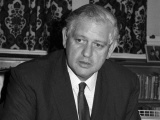
Leader of the Labour Party since 1965 and Prime Minister from late 1972, 'Big Norm' died suddenly at the age of 51. He was the fifth New Zealand PM to die in office.
Kirk had faced a number of health issues during 1974 but maintained a punishing work schedule. Following a Cabinet meeting on 19 August he went home to his ministerial house in Seatoun with flu. On the 28th a heart specialist persuaded him to check into Our Lady’s Home of Compassion hospital in Island Bay. He died three days later of ‘congestive cardiac failure’ and ‘thromboembolic pulmonary heart disease’.
The public display of grief that followed Kirk's death was reminiscent of that aroused by the death of Labour’s first Prime Minister, M.J. Savage, in 1940. Michael Bassett described Kirk as ‘Labour’s last passionate believer in big government, someone whose commanding presence and extravagant rhetoric introduced a new idealism to political debate in New Zealand’.
Kirk’s popularity with the New Zealand public was perhaps best demonstrated by the song ‘Big Norm’. Performed by Wellington band Ebony, it peaked at No. 4 on the national charts in January 1974 and won the band a New Zealand music award for ‘group of the year’. The last telegram Kirk sent before his death was to Ebony congratulating them on their win.
Image: Norman Kirk in 1971

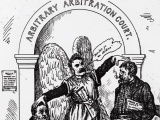
The new Industrial Conciliation and Arbitration (IC&A) Act, a flagship policy of Richard Seddon's Liberal government, made New Zealand the first country in the world to outlaw strikes in favour of compulsory arbitration. There were no major strikes for 11 years and wages and conditions generally improved.
New Zealand's trade union movement had grown strongly in the late 1880s but was devastated by defeat in the trans-Tasman Maritime Strike of late 1890. In the early 1890s some leading employers like the Union Steam Ship Company refused to recognise unions, blacklisted members and slashed wages and conditions. The Liberal government that came to power in 1891 was determined not only to find a lasting solution to the problem of industrial conflict but also to revive the struggling union movement, which it saw as a key electoral ally.
The brainchild of Minister of Labour William Pember Reeves, the IC&A Act recognised trade unions and individual employers or 'industrial unions of employers' as responsible parties in negotiating wages and other conditions of employment. Once they were registered under the Act, each party was required, if they were in dispute with each other, to discuss the matter at district Boards of Conciliation. If these proceedings failed to produce an agreement, the dispute would be submitted to the national Court of Arbitration. The industrial agreements or awards concluded under the Act were made enforceable by law.
The arbitration system would remain the cornerstone of New Zealand's industrial relations system until 1973, when the IC&A Act was superceded by a new Industrial Relations Act.
Image: Strikers march in Wellington, 1913 (Timeframes)