Some people who served at Gallipoli

The link under a name goes to the person's full biography on the Dictionary of New Zealand Biography website. 

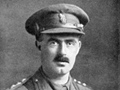
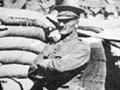
Charles Mackie Begg (1879–1919): Field Ambulance supervisor

On 17 April 1915 Charles Begg, a qualified doctor and Field Ambulance superviser, embarked for Gallipoli from Alexandria. When the Anzacs landed on 25 April, casualties were unexpectedly heavy. Begg sent his bearer sections ashore while his surgical teams provided treatment on various ships. These were quickly filled by casualties ferried on barges, and many did not get the surgery they needed. On 28 April Begg dug in a dressing station on the beach. Surgery began immediately and continued through incessant shelling and small-arms fire until 27 June, when a Turkish shell destroyed the station and wounded Begg. Nevertheless, he took his depleted unit along the beach to start up again under Walker's Ridge. Between 25 April and 5 August the dressing station treated over 15,000 wounded Anzacs.

On 7 August 1915 the New Zealanders suffered grievous losses during their attack on Chunuk Bair, and the understaffed Field Ambulances could not handle the casualties. On 9 August Colonel Neville Manders, assistant director of medical services of the New Zealand and Australian Division, was shot, and Begg took his place. By this time there was a breakdown in the collection and evacuation of the wounded, and hundreds were lying unprotected on the beach. When Begg made a direct approach to Generals Alexander Godley and F.C. Shaw, infantry units arrived to help the bearers, and the navy resumed its barge transport. By 13 August the beach had been cleared. A few days later Begg was taken to a hospital ship for treatment of paratyphoid fever and was transported to the No. 1 General Hospital, Camberwell, England. After a short convalescence, he returned to Gallipoli at the beginning of November. As winter approached, he helped to plan the successful withdrawal of troops from the peninsula. General I.S.M. Hamilton mentioned Begg in dispatches on 26 August 1915, and he was appointed a CMG on 8 November 1915.

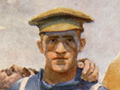
George Wallace Bollinger (1890–1917): soldier

The diary that Bollinger kept from the time he left Wellington on 16 October 1914 documents superbly the experiences and shifting attitudes of a New Zealand soldier during the Gallipoli campaign. At first there is unqualified enthusiasm for battle, expressed in his desire for a 'brush-up' with the 'niggers' of Cairo and his excitement at departing for the Dardanelles. But when he lands on the Gallipoli Peninsula in the early morning of 26 April 1915 and faces the smells, flies and the constant presence of death on a Turkish hillside, Bollinger's attitude changes. He is openly joyful to be relieved from the trenches at Cape Helles in early May, and he comments that the heroic images of war in the New Zealand newspapers serve to conceal the ghastly reality. When he returns to the peninsula in mid-August, after a month recovering from gastritis in Egypt, he is 'very quiet', and by the time he is evacuated to Moúdhros Bay on 15 September, he has become bitter about mismanagement and the betrayal of his mates' self-sacrifice.

Back in New Zealand the following year, Bollinger, whose father was Bavarian, was investigated by the Defence Department following complaints from anti-German campaigners.

Read an extract from Bollinger's Gallipoli diary

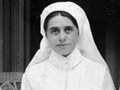
Evelyn Gertrude Brooke (1879–1962): nurse

Evelyn Brooke was appointed matron on the hospital ship Maheno, which embarked for Turkey in July 1915. As a hospital ship matron, she was responsible for all nursing arrangements. Much of the work was carried out by male orderlies, who were trained by Brooke but were under the command of a non-commissioned officer (the ward master). It was thus necessary for everyone to be tactful and generous, but, from the first, disputes arose over rank. Nurses were commissioned officers, but many male officers refused to recognise this, and the women were 'subjected to a great deal of unpleasantness'.

Seasickness devastated many of Brooke's staff, and the horrors of war could not be avoided: during August and September 1915 the Maheno made five visits to Anzac Cove at Gallipoli. In extreme heat, while bullets raked the decks, the nurses worked with the 'poor, torn, mangled fellows' amid the 'horrible sickly odour' of dysentery, disease and decay.

Brooke returned to New Zealand in January 1916 to be matron of the military hospital at Trentham.

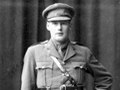
Alexander John Godley (1867–1957): military commander

Major General Godley commanded the 1 New Zealand Expeditionary Force during the First World War. At Gallipoli he was in charge of the New Zealand and Australian Division that landed on 25 April 1915. Like many senior officers of the time, he had difficulty coming to terms with the conditions of modern warfare and also the situation on the Gallipoli Peninsula.

Godley and his troops were harshly tested in the campaign. If the men came out with a better reputation than Godley, it was at least partly because their courage was supplemented by his training. Godley himself, however, appears not to have allowed for the steep, rugged ground and the need to reconnoitre it closely, the very poor communications, the losses of some of his most competent officers, and the debility of the troops after time spent on the peninsula. Neither should Godley later have claimed the troops were adequately fed; the food was appalling.

The New Zealand minister of defence, James Allen, writing to Major General Andrew Russell, said it would have been better if somebody else had been placed in command once Godley had completed his training programme. But from 1914 to 1915 the alternative, for a then unknown division, would probably have been a retired British general less competent administratively and even less in touch operationally. Early in the war neither Andrew Russell nor Edward Chaytor would have been regarded as qualified for divisional command. Moreover, when questions were raised in Parliament and elsewhere about Godley and he offered to resign, Allen publicly supported him.

After the failure of the Gallipoli campaign, the New Zealand Division was sent to France in 1916 as part of Lieutenant General Birdwood's I Australian and New Zealand Army Corps. Godley, who had been promoted to lieutenant general in November 1915, was in command of II Australian and New Zealand Army Corps, to which the New Zealand Division was transferred on October 1916, after serving in the battle of the Somme.

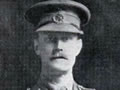
William George Malone (1859–1915): military commander

The Wellington Battalion, which Malone commanded, landed on the Gallipoli Peninsula on 25 April. Malone immediately began to impose order. By example, determination and drive he transformed weak defences held by frightened men into ordered garrisons that dominated their Turkish opponents. He consolidated and secured the Australian and New Zealand Army Corps perimeter whenever it was threatened. The losses suffered at Helles on 8 May confirmed for him that 'this is the day of digging and machine guns and that prepared positions cannot be rushed'. As post commander at Courtney's Post and Quinn's Post between June and August, he put this into practice by consolidating a precarious position at Quinn's Post, where an advance of 20 metres by the Turks would have forced the evacuation of the Australian and New Zealand Army Corps.

Malone fought his superiors for building material and for basic comforts for his men as fiercely as he fought the Turks. His diaries chart a growing disenchantment with impractical British regular officers and a growing love for his men. Malone would not take no for an answer, and this led to a clash of wills between him and his New Zealand Infantry Brigade commander, Colonel F.E. Johnston, and his staff. Malone survived with the support of Johnston's superiors, Major General Sir A.J. Godley, commander of the New Zealand and Australian Division, and Lieutenant General Sir William Birdwood, commanding the Australian and New Zealand Army Corps.

George Malone was killed during the fight for Chunuk Bair on 8 August 1915.

Read and extract from Malone's Gallipoli diary.

Paul Thomas Silva (1897–1974): soldier

In December 1914 Paul Silva enlisted as a private in the Auckland Battalion, New Zealand Infantry Brigade. He arrived in Egypt in March 1915, and on 25 April he took part in the Gallipoli landings. Three weeks later he was shot in the face and spent three days unconscious on a hospital ship. He received severe injuries to his jaw and his left eye, which was removed before he regained consciousness. He spent most of the remainder of the year recuperating in Maltese hospitals. He later became a competitive wood chopper.

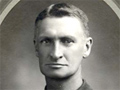
Francis Morphet Twisleton (1873–1917): soldier

Francis Twisleton landed at Gallipoli on 20 May 1915. He wrote a number of private letters that provide an insight into the reality of trench warfare. Soon he adjusted to the 'very funny sort of life one leads, we burrow like rabbits and live more or less underground and do most of our work at night'.

Twisleton took part in the bloody assaults on Bauchop's Hill and Hill 60 during August 1915. In his vivid account of the second of these actions he described the roar of battle as so overpowering that he felt as though he 'was being driven into the ground by being hit on the head'. Twisleton was slightly wounded during the initial charge, and he took the opportunity afforded by a lull in the fighting to dig small pieces of shrapnel out of his leg with his pocket knife. In the aftermath of the battle for Hill 60, he commanded a post where the stench was appalling because it was partly constructed out of the bodies of Turkish soldiers. Later he wrote, 'I felt as though I could scrape the smell of dead men out of my mouth and throat and stomach in chunks.'

At the beginning of September 1915 Twisleton was evacuated from Gallipoli with severe dysentery; he did not return. For his bravery and initiative during the campaign, he was awarded the Military Cross and mentioned in dispatches.

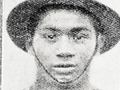
Henare Wepiha Te Wainohu (1882–1920): chaplain

Henare Wepiha Te Wainohu was a chaplain during the Gallipoli campaign. At first there was official opposition to sending Maori troops into battle, and after months of training in Egypt and garrison duty at Malta, they were becoming restless. Eventually the Maori Contingent was sent to reinforce the New Zealand troops at Gallipoli, and they arrived in July 1915. On 6 August they were sent into battle beside their Pakeha comrades at Sari Bair. On the eve of the battle, Te Wainohu preached a sermon that was later much quoted and that formed the basis for a proverb. As well as exhorting the soldiers to be fearless in battle and not to turn their backs on the enemy, he reminded them of their duty to uphold the warrior tradition of the Maori: 'remember you have the mana, the honour and the good name of the Maori people in your keeping this night'. This appeal, in particular, gave courage to the soldiers.

Henare Te Wainohu risked his life for others on many occasions at Gallipoli. In the company of the medical officer, Major Peter Buck, he carried out the wounded, distributed water and comforted the dying – often under fire. He was wounded in the back in September 1915. After the evacuation of Gallipoli, Te Wainohu accompanied the New Zealand Pioneer Battalion, into which the contingent was now integrated, to France.

See also other people on the Dictionary of New Zealand Biography website who were involved with the Gallipoli campaign:

How to cite this page: 'Gallipoli biographies', URL: http://www.nzhistory.net.nz/war/anzacday-biographies, (Ministry for Culture and Heritage), updated 11-Aug-2008