
The Māori response to the declaration of war
‘The price of citizenship’
Telegrams from Māori leaders offering men for both home defence and overseas service reached Parliament soon after war was announced in September 1939. Māori requests for their own military unit followed.
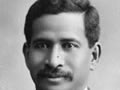
One group proposed naming the battalion ‘Treaty of Waitangi’ to draw the attention of both Māori and Pākehā to their respective obligations under the Treaty. The Treaty focus was in line with the stance that many iwi took during the First World War. Article Three imparted the rights of British citizenship to Māori. In accepting those rights, Māori agreed that the Treaty imposed on them certain obligations and duties. As British subjects Māori should serve in the defence of the Empire. ‘British sovereignty was accepted by our forefathers,’ explained Sir Apirana Ngata, ‘and it has given the Māori people rights which they would not have been accorded under any conqueror.’
We are participants in a great Commonwealth, to the defence of which we cannot hesitate to contribute our blood and our lives. We are the possessors of rights which we must qualify to exercise, also of obligations which the Māori must discharge always in the future as he has done in the past.
Moreover, if Māori were to have a say in shaping the future of the nation after the war they needed to participate fully during it. Ngata summed the situation up:
We are of one house, and if our Pākehā brothers fall, we fall with them. How can we ever hold up our heads, when the struggle is over, to the question, ‘Where were you when New Zealand was at war?’
The government agreed. 28 (Maori) Battalion was formed on racial lines and organised on a tribal basis. The Official history of New Zealand in the Second World War 1939–1945 described its formation as follows:
The battalion was to be organised on a tribal basis, and to this end men from North Auckland (the Ngāpuhi and subtribes) were marched into A Company lines; B Company received the men from Rotorua, Bay of Plenty, Taupo, and the Thames–Coromandel areas, mostly from the Arawa confederation and Tuhoe tribes; C Company comprised the tribes of the East Coast from south of Gisborne to the East Cape, Ngātiporou, Rongowhakaata, and sub-tribes; D Company, unlike the others, which were from compact areas with a closely-knit tribal organisation, extended from the Waikato–Maniapoto confederation area south of Auckland and included the Taranaki tribes, the Ngāti Kahungunu of Hawke's Bay–Wairarapa, the Wellington Province, the whole of the South Island, the Chathams and Stewart Island, and odd men from the Pacific Islands.
The government decided to keep Māori enlistment voluntary after conscription was introduced at the end of May 1940.
Dissenting voices
Some Māori opposed the formation of an infantry battalion. They argued that casualties were bound to be numerous and that the Māori population could not maintain a constant flow of reinforcements. ‘Let our young men enlist by all means,’ said one leader, ‘but let our men join up dispersed among Pākehā units. This will lessen the possibility of heavy losses.’
Some supported the idea of a pioneer role where Māori would provide logistical support, similar to that performed in the First World War. They believed that the manpower available from a race numbering not quite 90,000 would be unable to keep up its commitments to an infantry battalion, while the strength of a pioneer unit could be maintained no matter how long the struggle.
Some objected to Māori troops being deployed overseas at all and called for any Māori unit to be kept in New Zealand for home service only. The root cause among those who objected to overseas service could be traced back to the legacy of the wars of the 1860s.
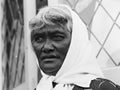
This attitude focused attention once more on Te Puea Hērangi, who reaffirmed her unwavering opposition to Waikato people fighting overseas while the government ignored their land grievances. During the First World War, Te Puea had been accused of being a German sympathiser, and these old accusations and rumours lingered in 1940. She summed up her feelings and those of many in Tainui, however, when she told Prime Minister Peter Fraser in 1941, 'Look, Peter, it's perfectly simple. I'm not anti-Pākehā; I'm not pro-German; I'm pro-Māori.’
Her position had softened somewhat since the First World War when she had actively opposed Waikato participation and resisted the introduction of conscription. Those who volunteered to enlist in the Second World War would not be stopped, and by 1942 nearly 1000 Waikato men had volunteered for service.


