
The loss of Singapore to the Japanese in 1942 seriously undermined New Zealand’s confidence in Britain’s ability to protect the far-flung parts of its empire. New Zealand began to look to the United States as a backstop to Commonwealth defence in Asia and the Pacific. During the 1940s and 1950s the country signed a series of collective treaties with Britain and the United States aimed at countering the threats of Japanese military resurgence and communist expansion.
The Canberra Pact (1944)
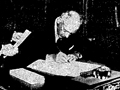
In 1944 New Zealand and Australia signed the Canberra Pact. This was not a military alliance; its focus was on working together on issues of mutual interest. Of particular concern was the post-war fate of the Pacific islands captured by US forces.
United Nations Charter (1945)
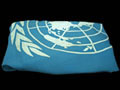
New Zealand was one of 51 nations to pledge its support for the principle of collective security by signing the United Nations Charter in June 1945. This was seen as an important way of ensuring that small nations would have a voice in world affairs. Support for the United Nations and collective security was behind New Zealand’s decision to send military forces to Korea in 1950.
ANZAM (1949)
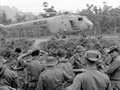
In 1949 New Zealand joined an evolving Commonwealth defence plan known as ANZAM, a name derived from the countries it encompassed – Australia, New Zealand and British-ruled Malaya. Its initial concern was the protection of wartime sea communications in the area. The Malayan Emergency extended the scope of ANZAM to include the defence of Malaya, previously solely the responsibility of Britain.
ANZUS (1951)

The ANZUS treaty was a mutual defence pact signed between Australia, New Zealand, and the United States. For the US it was an alliance to counter the spread of communism in the Asia and Pacific region; for Australia and New Zealand it provided security against any threat of Japanese military resurgence. New Zealand’s fear that a failure to stand by the United States might compromise ANZUS was largely responsible for its decision to commit combat troops to Vietnam in 1965.
SEATO (1954)
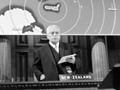
The South-East Asia Treaty Organisation (SEATO) grew out of the Manila Pact signed in September 1954, following France’s defeat in and withdrawal from Indochina. The defence pact was designed to block further communist advances in the region. Its signatories were Australia, Britain, France, New Zealand, Pakistan, the Philippines, Thailand and the United States. South Vietnam, Laos and Cambodia were offered protection under the treaty without being formally included. Significantly, India, Indonesia and Malaya declined to take part.
SEATO has been commonly cited as the key reason for New Zealand’s participation in the Vietnam War. But while the American, Australian and New Zealand governments used it to justify their involvement, SEATO did not act collectively in this war, which some of its members opposed.


