
The Northern War was in part a reaction to the colonial government’s increasing control over Māori affairs. New rules and regulations cost Māori in the Bay of Islands trade and other economic opportunities. The imposition of customs duties and shipping levies increased prices and deprived Māori of sources of revenue. A ban on the felling of kauri and Crown control of land sales added to fears that Māori authority was being undermined.
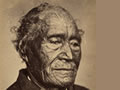
The murder trial and public execution of Maketū in 1842 was confirmation for Hōne Heke Pōkai that chiefly authority was now subservient to that of the British Crown. Tāmati Wāka Nene shared this concern. But by 1844, as tensions grew, Nene had accepted the reassurances of men like Governor Robert FitzRoy and the missionary Henry Williams. Heke had not.
The war that was to follow was no simple matter of Māori versus British. Two factions of Ngāpuhi fought against each other. One, led by Heke and Te Ruki Kawiti, fought both the Crown and another Ngāpuhi faction led by Tāmati Wāka Nene, Eruera Maihi Patuone, Mohi Tawhai and Makoare Te Taonui.
There were three major engagements involving the British army and Māori: Puketutu, Ōhaeawai and Ruapekapeka. But there were also battles in which the British took no part, such as Te Ahuahu in June 1845. Nene and his men scouted for the British and skirmished vigorously but played no significant role in the other three major battles.
A symbol of ‘Māori despair’
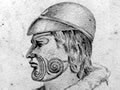
The British flag flying above Kororāreka (Russell) became the focus of Heke’s protest. After the signing of the Treaty of Waitangi the Union Jack had replaced the flag of the United Tribes as New Zealand’s official flag. Hobson had the United Tribes flag removed from the flagstaff at Kororāreka (the New Zealand Company’s version of the flag was also hauled down at Port Nicholson). Heke saw this as denying Māori equal status with the government. He had gifted the flagstaff to Kororāreka so that the Māori flag could be flown there. Attacking the flag would emphasise that his grievance was with the government. He had no desire to hurt or alarm settlers.
The flagstaff was cut down for the first time on 8 July 1844. Heke himself had it re-erected, but then chopped it down again on 10 and 19 January and 11 March 1845. Governor FitzRoy referred to the flagstaff as ‘a mere stick’, but argued that as it was ‘connected with the British flag it [was] of very great importance’.


