
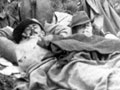
The New Zealanders who served in the South African War not only had to endure the stress of combat but also the harsh climate and landscape of southern Africa. Much of the conflict took place in the open uplands known in Afrikaans as veldt.
Life on the veldt was made tougher by the extreme contrasts in temperature. New Zealand soldiers often endured severe daytime heat, then at night slept in the open with only an overcoat to protect them from the freezing cold.
The daily grind
Soldiers on trek began their day as early as 4 a.m. and could spend up to 12 hours on patrol. To preserve their mounts, they often switched between riding and leading their horses on foot. Mounted troops could cover more than 30 km a day in this way.
Because their success relied upon mobility, the soldiers carried only limited supplies. Water was scarce and rations comprised hard army biscuits, bully beef, sugar and tea. They were supplemented by whatever food could be acquired through foraging or looting. Soldiers often spent much of their pay on additional food.
And of course there was an ever-present threat of Boer ambush. Men wounded while on trek often had to endure a three-day journey to hospital. Infection was a constant threat in the unsanitary conditions.
Mobile warfare
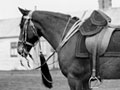
Trained in the basics of British regular warfare, the New Zealand soldiers found themselves fighting against an unconventional enemy in unfamiliar terrain. Although they relied upon their mounts, the New Zealand contingents were not cavalry. They operated as mounted infantrymen, using their horses to get as close as possible to the enemy before engaging them on foot.
The New Zealanders respected the Boer as a capable fighter and worthy opponent. However, as the war dragged on the Boers were hampered by a lack of ammunition and supplies. Their weaponry deteriorated and ammunition had to be rationed. With no official uniform, some were reduced to wearing animal skins or stolen British khakis. The British considered the latter act a breach of the rules of war, and Boers caught wearing khaki risked being executed.
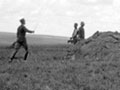
While the British army acted as a disciplined and cohesive force, the Boers fought as independent groups of commandos. These units were not formally structured and men could choose to leave one to join another. Although they excelled in guerrilla warfare, the Boers’ tactics were not suitable for fighting in heavily defended areas such as British-held towns.


