
As the Pākehā population of New Zealand increased during the 1850s, Māori faced growing pressure to sell their land. By the late 1850s the entire South Island was in settler hands. In the North Island, where the great majority of Māori lived, meeting settler demand for land was proving much harder. In his first term as governor, George Grey had overseen sizeable purchases in Porirua, Rangitīkei, Wairarapa and Hawke’s Bay. His successor from 1855, Thomas Gore Browne, achieved few significant land purchases in the North Island.
Māori became more reluctant to sell land in the North Island in the early 1850s. The idea of a Māori king was suggested. It was hoped that a king would have sufficient mana for land to be placed under his protection, thwarting the ‘divide and conquer’ approach to buying it.
Belich on the King Movement
Historian James Belich argues that the emergence of the Kīngitanga did not represent a radical change. Rather, the profile of Māori independence was raised from a level which the British disliked but tolerated to a level which they found unacceptable.
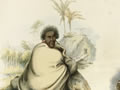
In 1858 the Waikato leader Pōtatau Te Wherowhero was installed as the first Māori king. He set up a boundary separating his area of authority from that of the British Crown. Several major iwi did not join the Kīngitanga. Nevertheless, there were fears that the Māori king posed a direct challenge to British authority. The settler community viewed the Kīngitanga as an anti-land-selling league that should be ‘nipped in the bud’.
Having achieved political and numerical supremacy (the non-Māori population exceeded that of Māori for the first time in 1858), the settlers expected more to be done to free up Māori land for settlement. Particular pressure points were Auckland and New Plymouth, which were surrounded by large Maori populations reluctant to sell land.
Tensions in New Plymouth
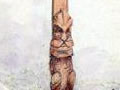
The European settlement of New Plymouth had been plagued from the outset by the unavailability of sufficient land. In 1848 it remained confined to just 3500 acres (1400 ha). Grey had secured an additional 32,000 acres (13,000 ha) by 1853, but this was not enough to satisfy settler demand. A few local Te Ātiawa leaders, including Rāwiri Waiaua, Ihaia Kirikumara and Te Teira Mānuka, were willing to sell land, but they faced strong opposition from chiefs such as Te Waitere Katatore and Wiremu Kīngi Te Rangitāke.
Te Ātiawa politics had been complicated by the return to northern Taranaki of many of those who had migrated south a generation before, following the Waikato invasion of Taranaki. In 1848 Wiremu Kīngi and nearly 600 of his people returned from Waikanae and established a new base on the south bank of the Waitara River. As he consolidated his authority, tensions with Te Teira began to emerge.
The Puketapu feud
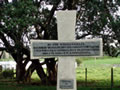
In August 1854 the disagreement within Te Ātiawa came to a head. Rāwiri Waiaua, his brother Pāora and three other members of his Puketapu hapu were killed in a dispute over a block of land Rāwiri wished to sell. The killings were carried out by a group of fellow Puketapu men acting on behalf of Katatore. New Plymouth braced itself for a backlash. There were fears for the long-term prospects of the town if other ‘friendlies’ should fall victim to the ‘anti-land-selling league’.
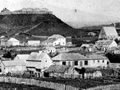
The first New Zealand Parliament was only a few months old and the country was between governors (Grey’s replacement, Thomas Gore Browne, did not arrive until September 1855). Donald McLean, the chief land purchase commissioner, was sent to New Plymouth to deal with the matter. Rāwiri’s people were told that as this was a ‘quarrel between natives’, the government would not get involved.
These events were overtaken in early 1855 by the fallout from another killing. Rimene of the south Taranaki iwi Ngāti Ruanui was murdered for allegedly having had an affair with the wife of Ihaia Kirikumara, an ally of the recently slain Rāwiri. Around a dozen Māori were killed in the conflict that followed.
Wiremu Kīngi initially refused to take sides in the Puketapu feud. When it appeared that land at Waitara might get caught up in this dispute, he threw his support behind Katatore. He and his wife, Hēni, tried to bring the feud to an end in 1856 by visiting a number of local pā. These efforts appeared to be working. But in January 1858, Katatore was ambushed and killed near Bell Block on the instructions of Ihaia. Fresh panic gripped Māori and settlers alike.


