
Confusion and uncertainty surrounded the New Zealand Company’s land purchases from the time of its first settlement at Port Nicholson (Wellington) in 1840. This contributed to violence between settlers and Māori at Wairau in 1843 and in Hutt Valley in 1846. It came as no surprise when fighting broke out in the company’s second settlement, Whanganui, in 1847. This conflict also involved long-standing rivalries between upper and lower Whanganui River Māori.
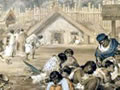
By early 1847 Whanganui was a garrison town. The Rutland Stockade dominated the landscape, its presence angering the upriver chief Tōpine Te Mamaku. In April 1847 tensions increased when a young Māori man was accidentally shot in the face by a British sailor. The murder of Mary Gilfillan and three of her children a few days later created panic in the settlement. Five of those responsible for the killings were captured by lower-river Māori and handed over to the British military. Four were executed. Te Mamaku responded with a blockade of the town. Two months of minor skirmishes followed before the blockade was lifted in July 1847.
Fresh fighting erupted in 1864 when lower-river Māori resisted the attempts of Pai Mārire disciples to bring the new religion to the Whanganui River. In a decisive battle fought at Moutoa Island in May, those from the lower river inflicted a heavy defeat on the Pai Mārire force. Over the next 12 months the government and its Māori allies mounted a successful campaign to crush the Pai Mārire threat in the region. The policy of land confiscation which followed contributed to the outbreak of Tītokowaru's war in 1868, when conflict returned to the Whanganui hinterland.


