
A British military court sentenced four of the men captured in the aftermath of the Gilfillan killings to death. They were hanged at the Rutland Stockade on 26 April. The fifth escaped execution because of his youth (he may have been as young as 12) and was instead banished from the region for life. Despite this quick resolution to the crime, the Gilfillan killings raised fears in the settler community that conflict would escalate.
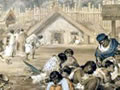
The British military were convinced that Te Mamaku had intended to use the shooting of Ngārangi to provoke the British and the Pūtiki Māori to go to war. Unable to act quickly enough to save his condemned kinsmen, he showed that the matter was far from over when he arrived on the outskirts of Whanganui in May with up to 700 Ngāti Hāua-te-rangi fighters. Many outlying settlers took refuge in the town and its defences were strengthened.
On 19 May Te Mamaku attacked. He attempted to draw the British out of the Rutland Stockade and bring his numerical advantage to bear. The homes of outlying settlers were plundered and burnt and stock was stolen, but the British did not rise to the bait and the fighting remained low-key.
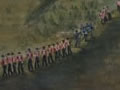
Governor George Grey sent in reinforcements from the 65th (Yorkshire) Regiment. By June, 800 British soldiers were on hand to protect the 200 European settlers and the Māori at Pūtiki, who also bolstered the town’s defences. The siege ended after inconclusive fighting at St John’s Wood, just north of the settlement, on 20 July. Two British soldiers had been killed and 11 wounded. Māori had suffered a similar number of casualties.
With neither side able to inflict a decisive defeat on the other, a truce was called. Having bolstered his mana, Te Mamaku returned upriver to his stronghold near Pipiriki. With the planting season approaching, the Māori force had other affairs to attend to.
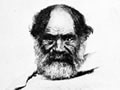
Hōri Kīngi Te Ānaua, a strong ally of the government, acted as Grey’s negotiator in peace talks with Te Mamaku in February 1848. Te Ānaua had signed the Treaty of Waitangi and was close to the missionary Richard Taylor. Keen to help end the conflict, he was also present at a meeting a few weeks later at which Te Mamaku pledged peace.
Underlying tensions over land ownership were not so easily resolved. In 1846 the purchase of a further 40,000 acres (16,000 ha) north of the town had been negotiated. The transaction had not been finalised because of the fighting in 1847. In May 1848 Donald McLean purchased more than 85,000 acres (35,000 ha) on behalf of the government for £1000. Just over 5000 acres (2000 ha) of this land was reserved for Māori. With concerns about the New Zealand Company’s original purchase largely unresolved, this deal ensured that tensions over land would continue to dog Whanganui.


