
Jump to: 1914; 1915; 1916; 1917; 1918; 1919
This detailed timeline of activities of the Wellington Mounted Rifles Regiment is derived from the unit diaries kept during the First World War. Each year of the timeline is introduced by a summary of the main activities in which the regiment was involved.
1914
August 1914
The Wellington Mounted Rifles Regiment (WMR) is formed from the three Territorial Force mounted rifles regiments of the Wellington Military District. It is raised for service overseas as part of the New Zealand Expeditionary Force (NZEF).
Lieutenant-Colonel William Meldrum is appointed to command the new regiment, which is assembled and brought up to full strength at Awapuni Race Course – ‘Awapuni Camp’ – in Palmerston North by the end of the month.
The regiment’s horses come from two sources. A man can enlist with his own horses. Those who do not are allocated a horse (known as a ‘remount’) from the stock that the army purchases at the start of the war. This leads to skulduggery as men attempt to acquire a suitable mount.
September 1914
- 22nd – The regiment leaves Awapuni Camp by train for Wellington.
- 23rd – The men arrive in Wellington and board transport ships along with the rest of the NZEF Main Body:
- HMNZT Arawa – Headquarters Staff, 2nd Squadron (less one troop) and the Machine Gun Section;
- HMNZT Tahiti – 6th Squadron (less one troop);
- HMNZT Orari – 9th Squadron, one troop each from the 2nd and 6th squadrons and all the regiment’s horses.
- 28th – The departure of the NZEF Main Body troop convoy is postponed and the transports return to port. The troops remain quartered aboard their ships.
- 29th – Training resumes onshore.
October 1914
- 15th – The WMR and the rest of the NZEF Main Body re-embark on the transport ships.
- 16th – The Main Body convoy leaves Wellington at 6 a.m.
- 21st – The convoy arrives at Hobart, Tasmania.
- 22nd – The men of the Main Body, including the troopers of the WMR, undertake a route march through Hobart before re-embarking on their transports at midday. The convoy leaves the harbour at 4 p.m.
- 28th – The convoy arrives at Albany, Western Australia, and joins a convoy carrying the main body of the Australian Imperial Force (AIF).
November 1914
- 1st – The combined Australasian main body troop convoy leaves Albany and begins crossing the Indian Ocean.
- 13th – The convoy crosses the Equator and celebrates with traditional ‘crossing the line’ ducking ceremonies during which a New Zealand Medical Corps lieutenant is fatally injured.
- 15th – The convoy arrives in Colombo, Ceylon (Sri Lanka). Over the next two days the men are given shore leave in groups.
- 17th – The convoy leaves Colombo.
- 30th – The convoy arrives at the port of Suez, Egypt, at the head of the Red Sea and enters the Suez Canal.
December 1914
- 2nd – The transports carrying the men and horses of the WMR complete their voyage through the Suez Canal and reach Port Said, on the Mediterranean coast of Egypt.
- 3rd – The transports carrying the men and horses of the WMR arrive at Alexandria, Egypt.
- 4th – The WMR disembarks at Alexandria and travels on three trains to what will shortly become Zeitoun Camp, near Cairo, the capital of Egypt. Only 14 of the 728 horses carried on HMNZT Orari have died during the seven-week voyage.
The regiment soon settles into a routine of training interspersed with sightseeing and sport.
1915
For the first four months of 1915, the Wellington Mounted Rifles Regiment (WMR) continues training in Egypt. Hopes of action in defence of the Suez Canal and then in the invasion of the Dardanelles are dashed. In May, however, the WMR and the rest of the New Zealand Mounted Rifles Brigade (NZMR) are thrown – as infantry – into the desperate struggle to seize the commanding heights of the Gallipoli Peninsula. In the next four months the regiment suffers more than half of all its casualties in the war.
January 1915
- 9th – The WMR begins training as a regiment.
- 30th – The Second Reinforcements arrive in Zeitoun Camp. About 105 men and 130 horses join the WMR.
February 1915
- 1st – The NZMR begins training as a brigade. These exercises in large-scale unit coordination are important for the senior officers but tedious for the men.
March 1915
- 26th – The Third Reinforcements arrive in Zeitoun. The WMR receives 115 horses, some of poor quality.
April 1915
- 2nd – Rioting by Anzac soldiers in Cairo’s Wazzir brothel district is put down by mounted troops. All leave is stopped.
- 3rd – The Australian and New Zealand Infantry Division receives orders to prepare for the invasion of Gallipoli. The bulk of the NZMR (including the WMR) and the two Australian Light Horse brigades will remain in Egypt to continue training and to defend the Suez Canal against the Ottoman Turks.
Training focuses on long-distance marches and inter-brigade maneouvres.
May 1915
- 5th – The NZMR receives orders to move to Gallipoli as infantry.
- 8th – The WMR leaves Zeitoun and travels by train to Alexandria. The regiment, along with the rest of the NZMR, is to reinforce the Australian and New Zealand Army Corps (ANZAC) at Anzac Cove on the Gallipoli Peninsula. The Anzacs are part of General Sir Ian Hamilton’s Mediterranean Expeditionary Force (MEF), which has been given the task of capturing the Gallipoli Peninsula and seizing control of the Dardanelle Straits from the Ottoman Turks.
Because of the small size of the Anzac beachhead, and the rugged terrain, the regiments of the NZMR are ordered to leave their horses behind in Egypt. They will fight as standard infantry units at Gallipoli. Arrangements are made to take officers’ horses and a few draught horses to meet transport requirements. - 9th – The WMR is divided into two groups that embark on two transport ships:
HMT Grantully Castle – 25 officers, 453 other ranks
HMT Kingstonian – one officer, 30 other ranks and the horses
HMT Grantully Castle leaves Alexandria at 6 p.m. - 12th – HMT Grantully Castle arrives off Anzac Cove at 12.30 p.m. The men of the WMR are transferred onto destroyers, taken closer inshore and landed by lighters at the jetty. Though they are exposed to Ottoman small-arms fire from the heights overlooking Anzac Cove during this process, only one man is wounded. On landing the strength of the regiment is 25 officers and 451 other ranks.
The WMR bivouacs in Reserve Gully. - 13th – The NZMR is ordered to relieve the Royal Naval Brigade and take over No. 4 Section of the Anzac Cove defensive perimeter (a line which includes positions on Russell’s Top and Walker’s Ridge). The WMR goes into the line on Walker’s Ridge, completing its relief of the Nelson and Deal battalions by 3 p.m.
HMT Kingstonian, which is carrying the first-line transport, arrives off Anzac Cove but returns to Alexandria without disembarking any of the men or horses on board. - 24th – A truce is in effect at Anzac Cove between 7.30 a.m. and 5 p.m. This allows both sides to collect and bury their dead from the ‘no-man’s land’ between the two front lines. Medical officers supervise the truce, during which each side clears half of no-man’s land. The bodies of enemy dead are brought to collection points in the centre to be handed over to the other side. Men of the WMR in the front line collect and bury bodies.
- 25th – The WMR is relieved by the 8th Australian Light Horse Regiment and bivouacs in Shrapnel Valley.
- 28th – The 6th (Manawatu) Squadron is ordered to support an attack by the Canterbury Mounted Rifles on a Ottoman position 450 m north-east of No. 2 Post. Shortly after the Ottoman position is captured by the Canterbury Mounted Rifles at approximately 11.30 p.m., the 6th (Manawatu) Squadron moves up and relieves them. Its orders are to consolidate the newly captured position – now named No. 3 Post – and hold it until relieved.
- 29th – The 6th (Manawatu) Squadron does what it can to strengthen No. 3 Post. However this is surrounded on three sides by Ottoman positions on higher ground and badly exposed to rifle, machine-gun and artillery fire during the day. This both prevents the men from working on the defences and allows the Ottoman Turks to concentrate their forces dangerously close to the outpost.
At 9 p.m. the 6th (Manawatu) Squadron is relieved by the 9th (Wellington East Coast) Squadron (less one troop) under the command of Major Selwyn Chambers – total strength 5 officers and 93 other ranks. At approximately 10 p.m. the Ottomans begin a sustained and heavy attack on the post. At 11.30 p.m. the signal line to the post is cut, severing communication with Major Chambers and his men. An attempt to send a troop of the Queen Alexandra’s 2nd (Wellington West Coast) Squadron to the beleaguered post fails. At midnight the remainder of the 2nd Squadron under the command of Major James Elmslie tries to break through to No. 3 Post. After initial progress Elmslie’s men strike strong Ottoman resistance and are held up roughly halfway between posts 2 and 3.
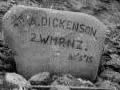
- 30th – Fighting continues all night at and around No. 3 Post. Elmslie’s squadron has advanced far enough to take some of the pressure off Major Chambers and his men, who fend off repeated Ottoman assaults on their position. At daybreak communication between No. 3 Post and the main line is restored via signal flags and two mountain guns are brought to bear on the Ottoman positions.
6th (Manawatu) Squadron is ordered to reinforce 2nd Squadron in a renewed effort to break through to No. 3 Post. The relieving squadrons get within 100 m of No. 3 Post but make no further headway. The attacking Ottoman troops have also brought supporting weapons into play – artillery fire from a mountain gun on nearby Hill 971 and machine-gun fire from closer range make it all but impossible to cross the ground between the two posts unscathed.
At 6 p.m. Lieutenant-Colonel William Meldrum is told that two squadrons of the Canterbury Mounted Rifles will be arriving under cover of darkness at 8 p.m. to relieve 9th Squadron. At 7 p.m. Major Chambers gets word out that the northern section of the post is so badly damaged by grenade attacks that he can no longer defend it. But as darkness falls the Ottoman attacks finally ease.
The relief of 9th Squadron from No. 3 Post by the Canterbury Mounted Rifles is completed by 11 p.m. The evacuation of the wounded is the most difficult and time-consuming aspect of the operation.
The other two WMR squadrons also withdraw and are relieved by the Canterbury Mounted Rifles. The 2nd and 6th squadrons move out from No. 2 Post around midnight and join the 9th Squadron at Fishermen’s Hut. - 31st – The Canterbury Mounted Rifles’ commanding officer, Major G.F. Hutton, soon decides that No. 3 Post is untenable and retires to Fishermen’s Hut. The Ottoman forces quickly reoccupy No. 3 Post (known from now on by the Anzacs as ‘Old No. 3 Post’) and advance towards the gully between Fishermen’s Hut and No. 1 Post. Alerted to this sudden threat, Lieutenant-Colonel Meldrum immediately stands to all three of his squadrons and extends them in a makeshift defensive line from Fishermen’s Hut across to No. 1 Post. Met with a hail of fire, the Ottoman infantry break off their attack and fall back to Old No. 3 Post.
The strength of the WMR is 21 officers and 353 other ranks.
June 1915
- 1st – The WMR bivouacs in Shrapnel Valley.
- 7th – The WMR relieves the 8th Australian Light Horse Regiment and goes back into the line at Walker’s Ridge.
- 21st – The WMR is relieved and moves into a bivouac on Walker’s Ridge.
- 30th – The strength of the WMR is 24 officers and 327 other ranks.
July 1915
- 1st – Reinforcements arrive. Four officers and 97 other ranks are taken on strength by the regiment.
- 18th – The WMR relieves the Canterbury Mounted Rifles Regiment and goes back into the line.
- 31st – The WMR is relieved by the 10th Australian Light Horse Regiment and bivouacs on the southern slopes of Walker’s Ridge.
The strength of the WMR is 24 officers and 351 other ranks.
August 1915
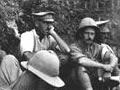
- 5th – Battle of Chunuk Bair: The WMR takes part in the biggest offensive undertaken by the Allies at Gallipoli. This has three main components:
1) A large-scale British landing at Suvla Bay, 8 km north of Anzac Cove;
2) An attack by New Zealand, Australian and British forces from Anzac Cove aimed at linking up with the British at Suvla and capturing the strategic heights of the Sari Bair range;
3) Diversionary attacks by the Australian Division at Lone Pine and British forces at Cape Helles.
The NZMR is assigned to the Right Covering Force of the Allied attack on the Sari Bair range. This force is to clear the way for the Right Assaulting Column to capture the ridge at Chunuk Bair (part of the Sari Bair range) by taking six key features: Old No. 3 Post, Big Table Top, Destroyer Hill, Little Table Top, Bauchop’s Hill and Walden Point. The WMR is to capture Destroyer Hill and Big Table Top.
The WMR moves to a new bivouac area at No. 1 Post. - 6th – Battle of Chunuk Bair: After resting all day at No. 1 Post, the WMR concentrates in the Sazli Beit Dere after nightfall and at 9.30 p.m. begins to move out to attack.
The 6th (Manawatu) Squadron overruns Ottoman positions on Destroyer Hill in a close-quarters action using bayonets and grenades. The squadron suffers just three casualties in this action, but one of those wounded is the squadron commander, Major Charles Dick. The 2nd and 9th squadrons now pass through the 6th Squadron and Destroyer Hill to attack Big Table Top. The 6th Squadron remains behind to consolidate its possession of Destroyer Hill and mop up any remaining pockets of Ottoman resistance.
The planned route up the western slopes of Big Table Top is found to be too exposed and Lieutenant-Colonel Meldrum decides to continue around to the eastern side of the base of this feature and take the Ottoman garrison by surprise from the rear. Distracted by the ongoing fighting at Old No. 3 Post and Destroyer Hill, the Ottoman troops on Big Table Top fail to detect the New Zealanders. The lead elements of the 2nd and 9th squadrons use entrenching tools to cut steps in the north-east face of the steep escarpment until they reach more gentle ground just below the crest. An advance guard overpowers a nearby Ottoman night post, the rest of the assault force is quickly brought up and the trenches on Big Table Top are overrun in a matter of minutes. By 11.15 p.m. Big Table Top is securely in the possession of the 2nd and 9th squadrons, which have taken 150 Ottoman prisoners.
The NZMR has achieved all its objectives. Casualties have been very few for the WMR, but heavy for the Otago and Canterbury mounted rifles regiments. - 7th – Battle of Chunuk Bair: Overall Allied progress has slowed and the advance of the main assault columns has fallen badly behind schedule. Two WMR troops move to Old No. 3 Post to relieve the Auckland Mounted Rifles. Most of the WMR consolidates its position on Big Table Top under constant Ottoman machine-gun and sniper fire. Major Chambers, commander of 9th Squadron, is shot and killed. The 6th Squadron moves up from Destroyer Hill to rejoin the rest of the regiment in the morning. The two platoons of the Maori Contingent originally assigned to support the regiment also rejoin it at Big Table Top during the day.
- 8th – Battle of Chunuk Bair: In the early hours of the morning the Wellington Battalion captures Chunuk Bair. The Ottoman counter-attack them repeatedly.
In an attempt to renew the general attack on Sari Bair, the Allied troops are reorganised into three columns. No. 1 Column consists of the New Zealand Infantry Brigade, the Wellington and Auckland Mounted Rifles regiments, 8th (Pioneer) Battalion, The Welsh Regiment, the 7th Battalion, The Gloucestershire Regiment, and the 26th Indian Mountain Battery. No. 1 Column is to consolidate the ground already taken on the south-western slopes of Chunuk Bair and, in conjunction with the other two columns, gain the whole of Chunuk Bair and extend out from it as far as possible to the east and south.
At 12.15 p.m. the WMR is warned that it is needed to reinforce the firing line at Chunuk Bair. At 3 p.m. Lieutenant-Colonel Meldrum and the 2nd and 6th squadrons leave Big Table Top and move to the head of Chailak Dere, where Meldrum reports to the commander of No. 1 Column, Brigadier-General F.E. Johnston. The 9th Squadron remains behind to garrison Big Table Top. The total effective strength of the WMR at Chailak Dere is 173 all ranks.
Lieutenant-Colonel Meldrum is ordered to attach his force to Lieutenant-Colonel Athelston Moore’s Otago Infantry Battalion (effective strength approximately 400) and to hold Chunuk Bair at all costs. After Chunuk Bair is reached at 10.30 p.m. the WMR occupies the central position – the ‘Cockpit’. At 11 p.m. Moore is wounded and evacuated. Meldrum assumes command of the post. - 9th – Battle of Chunuk Bair: Attempts to improve the defences and bring in those wounded in the previous two days’ fighting continue until 4 a.m., when the Turks resume their attacks on the position.
Over the next 10 hours Ottoman infantry repeatedly assault the position, supported by heavy artillery, machine-gun and rifle fire. Some Allied naval gunfire and artillery fire is reported to fall short and hit the New Zealand and British trenches at Chunuk Bair and its approaches. The Ottoman infantry attacks cease after 2 p.m., giving the defenders some respite.
The WMR and the Otago Battalion are relieved by the 6th Battalion, The Loyal North Lancashire Regiment, and 5th Battalion, The Duke of Edinburgh’s (Wiltshire) Regiment, at 10.30 p.m.
Casualties for the 24 hours at Chunuk Bair amount to 117: two officers and 38 other ranks killed, and three officers and 74 other ranks wounded (the three officers all die of their wounds). Major Elmslie, commander of 2nd Squadron, is among those killed in action. - 10th – The remnants of the regiment (less 9th Squadron) move from Chailak Dere to bivouac at No. 1 Post. The 9th Squadron is divided into two groups of 50 men each, one garrisoning Big Table Top and the other garrisoning Old No. 3 Post.
- 11th – The WMR (less 9th Squadron) leaves No. 1 Post. Detachments occupy posts at Camel’s Hump and Destroyer Hill. The remainder of the regiment goes into brigade reserve in the Sazli Beit Dere.
- 21st – The WMR is relieved from its posts by the Canterbury Infantry Battalion and rejoins the rest of the NZMR further north at Kabak Kuyu, near Hill 60, at 5.15 p.m. Five officers and 125 other ranks are sent forward to a recently captured section of trenches on the western slopes of Hill 60 to relieve the Canterbury Mounted Rifles. The rest of the regiment bivouacs at Kabak Kuyu.
Reinforcements arrive; two officers and 77 other ranks are taken on strength. - 25th – The WMR men in the trenches at Hill 60 are relieved by troopers from the Canterbury and Otago Mounted Rifles.
- 26th – Three officers and 100 other ranks of the WMR relieve a similar number of men from the Canterbury and Otago Mounted Rifles in the trenches at Hill 60.
- 27th – A second attack on Hill 60 is mounted in an effort to expand the foothold gained on the 21st. The attacking force is divided into three groups: a Right Force of 350 Australian infantry, a Left Force of 250 infantry from the Connaught Rangers, and a 400-strong Centre Force made up of 300 men of the NZMR and 100 from the 18th Battalion, Australian Imperial Force (AIF). Five officers and 100 other ranks from the WMR are part of this group and Major James Whyte, WMR, has overall command of Centre Force.
At 4 p.m. an artillery bombardment opens up on the Ottoman trenches. At 5 p.m. this ceases and the first wave of attackers – 160 men of the Auckland and Canterbury Mounted Rifles – quickly capture the first line of Ottoman trenches. The second wave, consisting of the Wellington and Otago Mounted Rifles, passes through them and on to the second line of trenches 40 m further back. These too are captured, but both waves suffer heavy casualties and the Ottoman defenders respond with fierce counter-attacks. The advance is halted and Centre Force is ordered to consolidate its hold on the second line of Ottoman trenches. The 100 men from 18th Battalion, AIF, reinforce the New Zealand line.
The New Zealanders defend the position for the rest of the day and night under constant artillery, machine-gun and rifle fire. A number of Ottoman counter-attacks are beaten off.
Another 50 men of the 18th Infantry Battalion, AIF, and 250 men of the 9th Australian Light Horse arrive around 10 p.m. to reinforce the New Zealanders.
The 140 m of Turkish trenches taken is the only success of the attack. Right Force has failed to take its objective because of heavy machine-gun fire. Left Force took its objective but was forced out of the position by the Turks by 9.30 p.m.
- The remainder of the WMR also arrives overnight to reinforce the position.
Casualties for the day are two officers and 48 other ranks killed, and three officers and 54 other ranks wounded. - 28th – The WMR continues to hold the newly captured trenches on Hill 60 against constant Ottoman counter-attacks throughout the day and night.
At midday Lieutenant-Colonel Meldrum relieves Major Whyte and takes command of the post.
Later in the day 180 men of the 10th Australian Light Horse Regiment arrive to reinforce the line.
Chaplain Class III William Grant, WMR, is killed while attempting to reach a wounded man in the open. - 29th – The WMR and the rest of the NZMR are relieved by troops of the 19th Battalion, AIF, and 3rd Australian Light Horse Brigade. They move into trenches at the rear of the Hill 60 position.
September 1915
- 2nd – The WMR and the rest of the NZMR move to a bivouac just behind the front line on Cheshire Ridge, which was captured during the August offensive.
- 4th – The WMR and the rest of the NZMR relieve the Royal Welsh Fusiliers in the front-line trenches on Cheshire Ridge.
- 12th – The WMR is relieved by 27th Battalion, AIF.
- 13th – The WMR (less the Machine Gun Section of one officer and 13 other ranks) is ordered to move down to the beach and embark on HMT Osmanich. Just three officers and 67 other ranks embark. Along with the rest of the NZMR, the WMR is transported from Anzac Cove to the island of Lemnos in the Aegean Sea for rest and training.
- 14th – The WMR disembarks in Mudros Harbour and goes into Sarpi Camp.
- 18th – Lieutenant-Colonel Meldrum departs for Egypt and Lieutenant John Strang of the Otago Mounted Rifles takes temporary command of the regiment.
- 28th – The officer and 13 other ranks of the Machine Gun Section left behind at Anzac rejoin the regiment at Mudros.
October 1915
- 4th – Reinforcements arrive at Mudros; four officers and 307 other ranks are taken on strength by the regiment.
Major Albert Samuel, who is amongst the reinforcements, temporarily assumes command of the regiment. - 7th – The four regiments of the NZMR reallocate their recently arrived reinforcements to the regiment from the military district in which they were recruited. Some of these men change units for the second time in four days.
November 1915
- 10th – The WMR embarks on HMT Osmanich to return to Anzac Cove. Its total effective strength on return to Gallipoli is nine officers and 363 other ranks.
- 13th – Reinforcements of one officer and 68 other ranks are taken on strength. Lieutenant-Colonel Meldrum resumes command of the regiment.
- After landing at Anzac, the regiment moves into a bivouac at ‘Wellington Gully’.
- 25th – Lieutenant-Colonel Meldrum assumes temporary command of the NZMR and Major Samuel assumes temporary command of the WMR.
- 27th – The WMR moves into the front-line trenches between ‘Carisbrooke Castle’ and ‘Norfolk Street’, and also holds the sap leading from ‘Kaiajik Sap’.
Snow starts to fall late in the day and continues falling until the next day. For men in the trenches with little shelter, this is a miserable time.
December 1915
- 18th – Six WMR officers and 153 other ranks embark as part of the general evacuation of Suvla and Anzac Cove by the Allies. They are transported to Lemnos.
- 20th – The rearguard party (Captain John Burnet Davis and 11 other ranks) from the WMR leaves Anzac Cove for transportation to Lemnos. With the evacuation of Anzac Cove complete, the involvement of the WMR in the Gallipoli campaign is over.
The regiment (total effective strength 375 men) camps on Lemnos awaiting transport to Egypt. - 22nd – The WMR embarks on HMT Hororata and leaves Lemnos for Egypt.
- 26th – The WMR disembarks at Alexandria, Egypt, and travels by train to Zeitoun Camp, near Cairo. Its strength on arrival in Egypt is 18 officers and 342 other ranks. Since landing on Gallipoli it has suffered 640 casualties and absorbed 524 reinforcements.
- 27th – The WMR arrives at Zeitoun Camp. Mounted training resumes.
1916
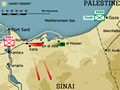
The Wellington Mounted Rifles Regiment (WMR), like the rest of the New Zealand Mounted Rifles Brigade (NZMR), soon recouped its strength after returning to Egypt from Gallipoli. When most of the New Zealand Expeditionary Force sailed for France in April 1916, the NZMR remained in Egypt as part of an Anzac Mounted Division which was helping defend Egypt against the Ottoman Turks. A rethink of British strategy in the region saw this defensive effort changed into an offensive one designed to take the fight to the enemy and destroy or neutralise his bases in the Sinai Peninsula.
The advance this new strategy required was made feasible by the construction of a railway and water pipeline eastwards from the Suez Canal across the Sinai Desert. This would supply the food, ammunition and most importantly water needed to keep the British forces – the ‘Egyptian Expeditionary Force’ (EEF) – fighting in a harsh environment.
By the end of the year the EEF had won a series of actions against Ottoman forces, driven them out of the Sinai, and reached the border of Palestine in one of the most successful Allied campaigns of the war.
January 1916
Reinforcements bring the WMR up to full strength plus 10% of establishment. The regimental Machine Gun Section is reorganised and strengthened from one to two sections (two to four machine guns).
- 23rd – The WMR and the rest of the NZMR leave Zeitoun Camp for the Suez Canal, 140 km to the east. The WMR bivouacs overnight at the village of Nawa. The journey takes seven days in all.
- 29th – The WMR completes its journey with a 5½-hour trek from Moascar to Serapeum, near the canal. A camp is set up and the WMR resumes training alongside the rest of the brigade.
February 1916
The WMR spends the month training, playing sport and swimming in the Suez Canal.
- 19th – Major James Whyte assumes temporary command of the WMR.
March 1916
- 1st – Lieutenant Allan Wilder of 6th (Manawatu) Squadron is appointed Regimental Adjutant.
- 5th – The WMR moves from Serapeum Camp to Ferry Post railhead, near Ismailia, where it bivouacs for the night.
- 6th – The WMR relieves Australian infantry in the Suez Canal defences at Ferry Post railhead.
- 9th – Lieutenant-Colonel William Meldrum resumes command of the regiment.
- 11th– The Australian and New Zealand Mounted Division is officially established. Commanded by an Australian officer, Major-General ‘Harry’ Chauvel, it comprises:
- Divisional Headquarters
- 1st Australian Light Horse Brigade
- 2nd Australian Light Horse Brigade
- 3rd Australian Light Horse Brigade
- New Zealand Mounted Rifles Brigade
- 31st – The strength of the WMR is 30 officers, 546 other ranks and 562 riding horses.
April 1916
- 3rd – The WMR and the rest of the NZMR are relieved by Australian troops and move back to Serapeum.
- 6th – The WMR and the rest of the NZMR move to Moascar to farewell the men of the New Zealand Division, who are soon to embark for France.
- 7th – The WMR and the rest of the NZMR are concentrated at Salhia, in the desert north-west of Ismailia.
- 9th – A New Zealand Mounted Rifles Training Regiment is formed at Moascar. Major Albert Samuel is transferred from the WMR to command this regiment and promoted to lieutenant-colonel. Four other WMR officers are attached to the training regiment: Captain Philip Oldham and Lieutenants William Foley, William Janson and Reuben Bird.
- 23rd – The WMR and the rest of the Anzac Mounted Division receive an urgent order to move to Kantara in response to a Turkish raid on British outposts near Katia. They cover the 40 km from Salhia to Kantara overnight.
- 24th – The NZMR arrives at Kantara in the morning and takes over part of No. 3 Section of the Suez Canal defences. The WMR and Auckland Mounted Rifles man an outpost line near Hill 70, 10 km north-east of Kantara.
May 1916
- 4th – The WMR conducts a day-long patrol around Point 331.
- 7th – The WMR moves to Romani, near the coast 40 km north-east of Kantara, and occupies the outpost line there.
- 8th – The WMR returns to the camp at Hill 70.
- 12th – The WMR and the rest of the NZMR advance from Hill 70 to Bir Etmaler, just south of Romani, to cover the wells at nearby Katia.
- 14th – Major James Whyte is detached to the 2nd Australian Light Horse Brigade as brigade major.
- 16th – A patrol from the 2nd (Wellington West Coast) Squadron suffers severe heatstroke casualties on a hotter than usual day – a temperature of 52°C is recorded inside the hospital tent at Bir Etmaler.
- 29th – The WMR and the rest of the NZMR ride overnight to Debabis, 25 km south-east of Bir Etmaler.
- 30th – The WMR and the rest of the NZMR ride overnight to attack an Ottoman Turkish outpost at Salmana, 20 km north-east of Debabis.
June 1916
- 1st – The WMR and the rest of the NZMR return to camp at Bir Etmaler after a successful attack on the outpost at Salmana. The Ottoman Turks mount an air raid on the camp later that day, but hit the tent lines of the 1st Australian Light Horse Brigade instead of the New Zealanders.
- 5th – The WMR and the rest of the NZMR leave Bir Etmaler at 2 p.m. and ride for 4 hours to Oghratina.
- 6th – The WMR and the rest of the NZMR leave Oghratina at 3 a.m. for Bir el Abd, 20 km to the east, to clear the area of Ottoman troops.
By 7 a.m. it is clear that there are no Ottoman forces in Bir el Abd, and orders are received to return to camp at Bir Etmaler, which is reached at 5.15 p.m. - 10th – The WMR and Auckland Mounted Rifles move east to Oghratina to support reconnaissance patrols by the 1st Australian Light Horse Brigade.
- 11th – The WMR arrives back at Bir Etmaler at 5.15 p.m.
- 15th – The WMR and the rest of the NZMR move to Katia to assist a reconnaissance sweep by the Australian Light Horse.
- 16th – The WMR and the rest of the NZMR return to Bir Etmaler.
- 21st – The WMR act as covering troops at Katia for the 1st Australian Light Horse Brigade.
- 24th – The WMR returns to Bir Etmaler and is attached to the 2nd Australian Light Horse Brigade (in exchange, the 5th Australian Light Horse Regiment is attached to the NZMR).
The 2nd Australian Light Horse Brigade is under the temporary command of Brigadier-General John Royston while its usual commanding officer, Brigadier-General Granville de Laune Ryrie, attends an Empire Parliamentary Conference in England (Ryrie is the MP for the Australian federal seat of North Sydney). - 29th – The WMR carries out a reconnaissance to Bir el Abd.
- 30th – Finding no Ottoman forces in Bir el Abd, the WMR is ordered to continue its reconnaissance towards Salmana. The regiment returns to bivouac at Bir Etmaler around 5 p.m.
The strength of the WMR is 25 officers, 481 other ranks and 556 horses.
July 1916
- 8th – The WMR and the 2nd Australian Light Horse Brigade ride to Katia in preparation for a reconnaissance.
- 9th – The WMR and the 2nd Australian Light Horse Brigade undertake a reconnaissance to Salmana. The WMR returns to Bir Etmaler at the end of the day.
- 15th – The three NZMR machine-gun sections are reorganised as a single autonomous unit, the New Zealand Machine Gun Squadron. The WMR transfers two officers (Lieutenants Dudley Batchelor and Richard Chapman), 52 other ranks, 72 horses, three Maxim guns and one Vickers gun to the new squadron.
Lewis guns are issued to the NZMR regiments. - 19th – Late in the afternoon an aerial reconnaissance mission, with Brigadier-General Edward Chaytor acting as the observer, locates long columns of Ottoman troops advancing westwards on a 12-km front in the vicinity of Bir el Abd and Bayud, 30 km east of Romani.
The WMR and the 2nd Australian Light Horse Brigade are ordered to establish an outpost line at Katia. They are to maintain patrols and make a fighting withdrawal towards Romani if attacked in strength. - 20th – A WMR patrol clashes with a small Ottoman force near Oghratina, 6 km east of Katia. It takes prisoners who reveal that the Ottoman Turks intend to attack the British railhead at Romani.
- 22nd – WMR patrols clash with Ottoman forces near Sagia, 12 km south-east of Katia. A patrol from the 2nd (Wellington West Coast) Squadron captures seven prisoners.
- 28th – Patrols from the 2nd (Wellington West Coast) Squadron discover a strong Ottoman force at Hod Umm Ugba, less than 10 km from the Romani defences. Lieutenant-Colonel Meldrum receives permission from Brigadier-General ‘Galloping Jack’ Royston to attack the position and drive the Ottoman Turks out. Meldrum allocates two squadrons supported by two guns from the Ayrshire Battery, Royal Horse Artillery, to the attack, which is carried out that afternoon. The operation is a success. The Ottoman force is driven out of Hod Umm Ugba, losing 16 men killed and eight captured. The Wellingtons’ casualties are two killed and three wounded.
- 31st – The strength of the WMR is 25 officers, 461 other ranks and 516 horses.
August 1916
- 3rd – Battle of Romani: The 2nd Australian Light Horse Brigade takes over the role of watching the Ottoman advance from the 1st Australian Light Horse Brigade at Katia. The 2nd Australian Light Horse Brigade returns to Bir Etmaler that night.
The Battle of Romani begins shortly before midnight when the 1st Australian Light Horse Brigade outpost lines report that a large Turkish force is moving in front of them.
The first wave of Ottoman attacks commences shortly after midnight. Concentrated against the Australian position on a sandhill known as Mount Meredith, these are thrown back by the 1st Australian Light Horse Brigade.
The WMR and the 2nd Australian Light Horse Brigade are ordered to stand to but are not committed to battle. - 4th – Battle of Romani: A second wave of Ottoman infantry assaults that begins around 2 a.m. is pressed home with much more determination than the first. Intense fighting takes place all along the line. By daybreak the Turks have forced the Australians off Mount Meredith and pushed the 1st Australian Light Horse Brigade back towards Wellington Ridge, south-west of Bir Etmaler.
The 2nd Australian Light Horse Brigade is sent into action to support 1st Australian Light Horse Brigade on Wellington Ridge. The WMR is ordered to take up a position on the northern slope of the ridge as the brigade reserve. The 6th and 7th Australian Light Horse Regiments go into the line alongside the 1st Australian Light Horse Brigade.
The 1st Australian Light Horse Brigade is driven off Wellington Ridge by the Ottoman infantry and falls back towards Bir Etmaler. The WMR moves up to cover the withdrawal of the now exposed 6th and 7th Australian Light Horse regiments to new defensive positions.
At approximately 11 a.m. the NZMR and British yeomanry launch a counter-attack on the Ottoman southern flank at ‘Mount Royston’, a large sandhill at the western end of Wellington Ridge. The Ottoman attack falters and the battle swings decisively in favour of the British. Fighting continues until nightfall, when the Ottoman force begins to retreat. - 5th – Battle of Romani: The WMR joins in the pursuit of the Ottoman forces. It overwhelms Ottoman rearguards and gathers prisoners until halted at daybreak by heavy fire from Katia.
At 10 a.m. Lieutenant-Colonel Meldrum is informed of his appointment as temporary commander of 2nd Australian Light Horse Brigade. Brigadier-General Royston was wounded in the previous night’s action. Major C.R. Spragg assumes command of the regiment.
During the morning and early afternoon the rest of the 2nd Australian Light Horse Brigade and the Anzac Mounted Division arrive at Katia. An attack launched at 2.30 p.m. is driven off by the Ottoman rearguard. The WMR’s casualties are one officer and nine other ranks wounded, several mortally. - 6th – The WMR and the rest of the 2nd Australian Light Horse Brigade are ordered to stand down. Men and horses are exhausted.
- 8th – The WMR joins in a general advance by all mounted units of the Egyptian Expeditionary Force to Bir el Abd, 25 km east of Katia, to which the Turks have retreated.
- 9th – The 2nd Australian Light Horse Brigade approaches Bir el Abd after an overnight ride. At 5 a.m. the WMR spearheads the attack and seizes high ground 1 km in front of its start line, where it comes under Ottoman artillery fire.
- Later that morning the WMR makes another advance under fire and takes its objective as part of a general attack on the Ottoman positions. But the overall attack bogs down, with the Ottoman superiority in numbers and firepower proving too much for the Anzac horsemen to crack. In mid-afternoon the Ottoman troops counter-attack and by 4 p.m. a general withdrawal is ordered (although the NZMR is delayed in doing so until nightfall).
After collecting the wounded the withdrawal is completed and the regiment bivouacs at Oghratina overnight. The WMR’s casualties are three other ranks killed in action and three officers and 26 other ranks wounded. - 10th – An outpost line is established to observe Ottoman movements at Bir el Abd.
- 12th – Patrols confirm that the Ottoman Turks have pulled out of Bir el Abd and retreated 10 km to Salmana. They soon withdraw to El Arish, with an outpost at Mazar.
- 13th – The WMR returns to camp at Bir Etmaler.
- 27th – Lieutenant-Colonel William Meldrum relinquishes command of the 2nd Australian Light Horse Brigade and resumes command of the WMR.
- 31st – The WMR moves back to Swing Bridge Camp, near Kantara.
The strength of the WMR is 22 officers, 407 other ranks and 437 horses.
September 1916
The WMR is at Swing Bridge Camp undergoing training and sending men on leave.
October 1916
- 10th – The WMR returns to Bir Etmaler in the Sinai.
- 23rd – The WMR and the rest of the NZMR leave Bir Etmaler to begin an in-depth reconnaissance between the railhead at Ge’eila and Mazar, looking for Ottoman outposts and oases.
- 24th – The NZMR reaches Ge’eila after a 40-km ride and begins a month of intensive patrolling.
- 27th – The WMR moves to the outpost line at Mossefig, 11 km east of Salmana.
- 31st – Major Arthur Batchelor assumes temporary command of the regiment.
The strength of the WMR is 23 officers, 479 other ranks and 453 horses.
November 1916
- 6th – Major James Whyte assumes temporary command of the regiment.
- 13th – The WMR and the rest of the NZMR establish a new base of operations at Mustagidda, 23 km east of Mossefig. Patrols are pushed as far as the fortified town of El Arish.
- 30th – The strength of the WMR is 22 officers, 430 other ranks and 525 horses.
December 1916
- 8th – Lieutenant-Colonel William Meldrum resumes command of the WMR.
- 20th – The WMR, the rest of the Anzac Mounted Division and the Imperial Camel Corps ride overnight to attack El Arish at dawn.
- 21st – The WMR and the rest of the attacking force arrive at El Arish to discover that the Ottoman garrison has abandoned the town three days ago. However the Ottoman outpost at the hamlet of Magdhaba, 37 km to the south-east, is still garrisoned. The Anzac horsemen are ordered to again ride overnight, this time to Magdhaba, as soon as British infantry arrive to secure El Arish.
- 22nd – Scottish soldiers of the 52nd (Lowland) Division march into El Arish, allowing the Anzac Mounted Division and the Imperial Camel Corps to strike out for Magdhaba.
- 23rd – After an all-night ride across the desert, the Allied raiding force halts about 6 km from Magdhaba, in which campfires can clearly be seen. The tiny village is defended by five redoubts interspersed with trenches. Despite the element of surprise these prove harder to take than was expected. The attack goes on all day, with the Ottoman garrison putting up stubborn resistance. In late afternoon the attackers begin to break in to the Ottoman defences and the redoubts are soon captured in swift succession. The WMR is involved in some close-quarter fighting during the final stages of the capture of ‘Redoubt No. 5’.
The WMR’s casualties are one officer and three other ranks killed in action; another man dies of his wounds.
After rounding up the surrendered Ottoman garrison (1282 prisoners) and gathering as much enemy weaponry and other material as they can, the WMR and the rest of the raiding force return to El Arish by night march – their third in four days. Men and horses are exhausted. - 24th – The WMR bivouacs on the beach near Masmi, 5 km west of El Arish.
- 27th – As the WMR moves to a new bivouac beside the beach at Masaid, a storm that will rage for 12 days begins.
1917
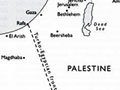
During 1917 the Wellington Mounted Rifles Regiment (WMR) and the rest of the New Zealand Mounted Rifles Brigade (NZMR) take part in three battles for Gaza. After two setbacks, the third battle is won. The way is now clear for the Egyptian Expeditionary Force to advance along the coast of Palestine as far as modern-day Tel Aviv, and into the Judean Hills towards Jerusalem.
January 1917
- 1st – The WMR and the rest of the NZMR move west to the railhead at Kilo 139 (markers give the distance from Kantara), mainly because of the difficulty of transporting supplies by camel across 15 km of desert to El Arish.
- 4th – The WMR and the rest of the NZMR move further west to Wilder Hod because of the poor watering arrangements for the horses at Kilo 139.
- 8th – The WMR and the rest of the NZMR cross the flooded Wadi el Arish. They join the Australian units of the Anzac Mounted Division, which moves off as a divisional column at 4 p.m. to ride 45 km to Rafah overnight and attack the isolated Turkish garrison there.
- 9th – The Anzac Mounted Division crosses the frontier into Palestine and surrounds Rafah. After a 30-minute bombardment, the attack begins at 10 a.m. The WMR, less two troops, is placed in support of the Canterbury Mounted Rifles. The two detached troops are to act as a flank guard and warn of the approach of Ottoman reinforcements from Khan Yunis, 10 km to the north-east.
The initial advance is slow but steady. By 12.15 the attackers are within 500 m of the redoubt. No further progress is made against heavy Ottoman fire, and at 1 p.m. the WMR moves into the line to assist the attack. By late afternoon the situation is becoming desperate, with Ottoman reinforcements approaching. At 4.30 p.m. Lieutenant-General Sir Philip Chetwode, in charge of the operation, orders a withdrawal. However the NZMR has launched an attack on the redoubt shortly after 4 p.m. Fire from Lewis guns and the New Zealand Machine Gun Squadron allows the New Zealanders to take the redoubt at bayonet point. With the redoubt and the high ground taken, resistance in the other position is quickly overcome by the Australian Light Horsemen and the Imperial Camel Corps.
As Ottoman reinforcements continue to approach, the WMR withdraws at 6.30 p.m. and goes into bivouac at Sheikh Zowaiid, 15 km south-west of Rafah, at 9.30 p.m.
The WMR has lost eight men killed in action; four die of wounds and 18 are wounded. - 10th – While the rest of the NZMR moves back to Masaid, near El Arish, the WMR remains at Sheikh Zowaiid to protect the Field Ambulance and then escort it back to El Arish.
- 11th – The WMR leaves Sheikh Zowaiid with the Field Ambulance at midday. After reaching El Arish at 7.45 p.m., the WMR bivouacs at Wilder Hod.
- 17th – 5% of officers and men depart for Cairo after being granted leave.
- 22nd – Four officers and four other ranks arrive from the New Zealand Mounted Rifles Training Regiment as reinforcements for the WMR.
A further 10% of officers and men are granted leave in Cairo. - 31st – The strength of the WMR is 27 officers, 496 men and 499 riding horses.
February 1917
- 4th – Lieutenant-Colonel William Meldrum departs on leave and Major Charles Dick assumes temporary command of the WMR.
- 12th – The WMR receives nine other ranks from the Training Regiment as reinforcements.
- 22nd – The WMR and the rest of the NZMR join the Anzac Mounted Division column and move forward to Sheikh Zowaiid.
- 23rd – The WMR, the rest of the NZMR and the 2nd Australian Light Horse Brigade leave Sheikh Zowaiid at 1 a.m. for Khan Yunis, 30 km to the north-east, which is reported to have been abandoned by Ottoman forces. It is hoped to capture Sheikh Ali el Hirsch, a suspected Ottoman spy.
Reports that the Ottomans have left Khan Yunis prove to be premature when the WMR, which has formed the advance guard, comes under fire at 5.30 a.m. Despite making progress, the WMR receives orders for a general withdrawal at 7.50 a.m. and the operation is abandoned. The WMR has lost one man killed and seven wounded during the attack.
The WMR returns to bivouac near Sheikh Zowaiid. - 26th – The WMR and the rest of the NZMR conduct a day-long reconnaissance around Shokh es Sufi, 8 km south-east of Rafah. Elements of the advance guard make intermittent contact with Ottoman patrols but suffer no casualties. The column returns to bivouacs at Sheikh Zowaiid that evening.
- 27th – The WMR receives four other ranks from the Training Regiment.
- 28th – The WMR and the rest of the NZMR conduct a day-long reconnaissance around Rafah. They again returns to bivouacs in Sheikh Zowaiid.
- Khan Yunis is abandoned by the Turks and occupied by elements of the Desert Column.
The strength of the WMR is 22 officers, 490 men and 510 riding horses.
March 1917
As part of a reorganisation of the British forces operating against the Ottoman Turks, the 22nd (Yeomanry) Mounted Brigade is incorporated into the Anzac Mounted Division. The Desert Column now comprises the Anzac Mounted Division, the Imperial Mounted Division and the 53rd (Welsh) Division.
- 3rd – The WMR and the rest of the NZMR conduct a day-long reconnaissance east and south-east of Karm Ibn Musleh, which is 6 km south of Rafah. Ottoman patrols are seen but the WMR suffers no casualties. The regiment returns to bivouacs at Sheikh Zowaiid at 6.30 p.m.
- 7th – The WMR and the rest of the NZMR undertake a reconnaissance around Khan Yunis. The WMR returns to Sheikh Zowaiid at 4.30 p.m.
- 9th – The WMR receives 16 reinforcements from the Training Regiment.
- 10th – The WMR moves to Bir el Esha, on the coast near Rafah, and sets up a new bivouac and outpost line.
- 11th – The WMR and the rest of the NZMR undertake a reconnaissance towards Gaza. The WMR returns to its bivouac at Bir el Esha at 6.30 p.m.
- 18th – The WMR and the Canterbury Mounted Rifles leave their bivouacs at 3.15 a.m. and patrol around Um el Kelab with the intention of capturing any Ottoman patrols in the area. No Ottoman Turks are found, and by 9.15 a.m. the two regiments withdraw to Khan Yunis to protect a party of Royal Engineers working on the wells. The WMR returns to bivouac at Bir el Esha at 4 p.m.
- 23rd – After receiving orders from Brigade Headquarters, the WMR begins preparations for an operation on the 25th which will result in the Battle of Gaza.
- 25th – The WMR forms the advance guard for an NZMR column which leaves Bir el Malalha at 2 a.m. for Deir el Belah (15 km from Gaza). The NZMR and the 22nd Mounted Brigade are to provide a screen for the Desert Column while it moves up to and crosses Wadi Ghazze.
- 26th – First Battle of Gaza: The WMR leaves its bivouacs at 2.30 a.m. to join the rest of the NZMR in the Anzac Mounted Division’s operations against Gaza. The division is to block the roads north of Gaza to prevent an Ottoman withdrawal or the arrival of reinforcements. The Imperial Mounted Division will play a similar role east of Gaza. The 53rd (Welsh) Division and a brigade of the 54th (East Anglian) Division are to attack the town from the south at 8 a.m.
The WMR arrives at its blocking position at Tellul el Humra at 10 a.m.
While the NZMR carries out its initial role, the infantry attack from the south faces more difficulties. Fog obscures the routes across Wadi Ghazze. The infantry is in position to begin the assault at 9 a.m., but there is further confusion about the location of some of the assault force, and the artillery preparation is slow to come into action. By the time the attack is launched at 11.45 a.m. the Gaza garrison is well prepared and precious time before Ottoman reinforcements can arrive has been lost. - With the infantry attack in disarray and behind schedule, the Anzac Mounted Division launches an attack from the north-east at 4 p.m. to assist. The WMR advances on the left, the Canterbury Mounted Rifles in the centre and the 2nd Australian Light Horse Brigade on the right. With most of the Ottoman defenders facing the infantry attack from the south, the mounted regiments make good progress and quickly break into the town. The WMR captures a field hospital, two field guns and a strongpoint near a cemetery. As darkness approaches, they also come under fire from Australian Light Horsemen to their rear.
- As Ottoman reinforcements approach Gaza from the north, Lieutenant-General Chetwode, in charge of the operation, makes a controversial decision to withdraw across Wadi Ghazze.
The WMR receives the orders to withdraw at 6.45 p.m. It takes until 9.15 p.m. for the regiment to fully extract itself, its wounded and its prisoners from Gaza. The WMR rejoins the Anzac Mounted Division at Tellul el Humra at 9.40 p.m. The divisional column rides through the night.
The WMR has lost one man killed (64 year old Arthur Fitzherbert) and 19 wounded. - 27th – The WMR arrives back at Deir el Belah at 8.30 a.m. After resting for the day, it joins the Canterbury Mounted Rifles in forming an outpost line between Inseirat and El Iaire.
- 28th – The WMR is relieved by a regiment of Australian Light Horse and moves to a new bivouac by the beach at Deir el Belah.
- 29th – The WMR moves back to the outpost line at Inseirat for a period of duty.
- 30th – The WMR is relieved by a regiment of Imperial Mounted Horse and moves back to bivouac in Deir el Belah.
- 31st – The strength of the WMR is 21 officers, 470 other ranks and 566 horses.
April 1917
- 2nd – The WMR moves to an outpost line near Deir el Belah.
- 3rd – The WMR is relieved from the outpost line and moves back to bivouac at Deir el Belah.
- 4th – The WMR’s Lewis guns are replaced by Hotchkiss automatic rifles.
- 8th – The WMR moves to an outpost line near Deir el Belah.
- 9th – The WMR is relieved from the outpost line and moves back to bivouac at Deir el Belah.
- 10th – The WMR spends the day helping the Royal Engineers improve roads.
- 11th – The WMR receives 23 other ranks from the Training Regiment.
- 16th – The WMR receives orders to move inland to Shellal (15 km south of Gaza) to take part in the second attempt to take Gaza. The regiment moves out of Deir el Belah as part of the NZMR column at 6.30 p.m.
- 17th – Second Battle of Gaza: The WMR reaches Shellal at 6 a.m.
The situation facing the Allied forces has become more difficult since the First Battle of Gaza. The 18,000 Ottoman troops now holding the line between Gaza and Tel el Sheria occupy more elaborate and extensive defences. A frontal assault from the south is now the only practical option. This is undertaken in stages. On the 17th the infantry move up close to Gaza. The artillery move into place on the 18th, with the final assault to be made next day.
The Desert Column has two subsidiary roles in the assault: to protect the right flank of the infantry; and to keep the redoubts at Atawineh and Hareira (10–12 km from Gaza) busy, preventing the Turkish commanders there moving men to the main battlefield at Gaza.
The WMR moves out of Shellal at 8.30 a.m. and advances along the Rafa–Beersheba road as part of the NZMR’s ‘demonstration’. The WMR briefly clashes with Ottoman Arab cavalry, then moves onto Point 550, which overlooks the Ottoman defences. The rest of the day passes quietly and the regiment moves back to Shellal to bivouac for the night. - 18th – Second Battle of Gaza: The WMR moves up to Point 550 in the morning and continues its role in the demonstration. The regiment returns to Shellal at 9.30 p.m.
- 19th – Second Battle of Gaza: The Imperial Mounted Division is to attack the Atawineh redoubt to assist the infantry assaults. The NZMR is placed in reserve with a view to exploiting any breach in the Ottoman line.
At 9.30 a.m. the WMR receives orders to assist the 5th Mounted Regiment by clearing ‘Sausage Ridge’. This attack starts at 11.30 a.m. An hour later the WMR has advanced halfway along the ridge against heavy Ottoman resistance, but with Ottoman reinforcements arriving the attack starts to bog down. By 3 p.m. the Ottoman defenders have launched counter-attacks against the WMR.
The Ottoman attacks are repelled, but the day has not gone well for the Allied forces. The assaults by the infantry and the mounted horsemen have both been unsuccessful and it is decided to abandon the attack.
The WMR receives orders to withdraw at 6 p.m. and begins doing so at 7.45. By 8.20 p.m. the WMR has extracted itself and begun riding back towards Tel el Jemmi, just across Wadi Ghazze 10 km south of Gaza.
The WMR’s casualties are one killed and 23 wounded. - 20th – The WMR arrives at Tel el Jemmi at 1 a.m. and sets up a bivouac.
During the night it is decided not to renew the assault on Gaza because of the strength of the defences. The Allied units are redeployed to defensive positions.
At 10 a.m. the WMR rejoins the rest of the NZMR and occupies the redoubt at Point 360. - 21st – The WMR is relieved by the 2nd Australian Light Horse Brigade and moves to a bivouac at Abasan el Kebir, 5 km east of Khan Yunis.
- 22nd – The WMR moves to Point 310 and forms the reserve for the NZMR’s outpost line.
- 23rd – Lieutenant-Colonel Meldrum is appointed to temporary command of the NZMR. Major Charles Dick assumes temporary command of the WMR.
- 29th – The AMR is relieved and moves to a bivouac at Tel el Fara, south of Shellal and about halfway between Rafah and Beersheba.
- 30th – The strength of the WMR is 20 officers, 462 men and 566 horses.
May 1917
- 11th – The NZMR leaves Tel el Fara at 3.30 a.m. and rides towards El Buggar, 15 km to the east, to look for 2000 Turks who are reported to be in the area. Only Ottoman patrols are contacted and the WMR returns to bivouac at Tel el Fara at 2 p.m.
- 12th – The NZMR holds a sports day to mark the anniversary of its landing at Gallipoli.
- 17th – The WMR relieves the 6th Mounted Brigade in the El Shauth defences.
- 18th – The WMR is relieved and moves back to bivouac at Tel el Fara.
- 22nd – The NZMR moves out of bivouac. The New Zealanders hold a defensive position in the desert to provide a link between the Imperial Mounted Division, which is conducting a demonstration against Beersheba, and the 1st Australian Light Horse Brigade, which is demolishing as much of the Asluj–Auja railway (south of Beersheba) as it can. The raid is a success, destroying 11 km of track and five bridges. The WMR returns to Tel el Fara without making contact with Ottoman forces.
- 28th – The WMR moves to Abasan el Kebir and bivouacs for the night.
- 29th – The WMR moves 10 km north-east to Fukhari and sets up a new bivouac.
- 31st – The strength of the WMR is 24 officers, 485 other ranks and 506 horses.
June 1917
- 2nd – The men of the WMR exchange their Short Magazine Lee Enfield (SMLE) Mark III rifles for new SMLE Mark III* rifles.
- 3rd – The WMR moves to Khan Yunis to have their clothes and blankets fumigated, then return to their bivouac at Fukhari in the afternoon.
- 8th – The NZMR moves to the beach by Marakeb, just north of Khan Yunis, for a period of rest and training.
- 12th – Major James Whyte is promoted to lieutenant-colonel and assumes command of the WMR.
- 18th – The NZMR moves to Kazar.
- 20th – The WMR receives 23 men from the Trainin Regiment.
- 30th – The strength of the WMR is 23 officers, 479 other ranks and 588 horses.
July 1917
- 3rd – At 11.45 p.m. the WMR and the rest of the NZMR ride to Taweil el Habari to support a reconnaissance towards Beersheba by the Australian Mounted Division.
- 4th – The WMR returns to its bivouac at Kazar at 6 p.m.
- 6th – The NZMR moves to Tel el Fara.
- 8th – The WMR takes part in a day-long reconnaissance east of Issiri by the Anzac Mounted Division. The WMR overruns a Ottoman outpost and is the target of artillery fire, but suffers no casualties.
- 10th – In the early hours of the morning the WMR takes part in an NZMR operation to capture Ottoman patrols in the Khasif–El Buggar area, 15 km west of Beersheba. None are found and the WMR spends the morning supporting Somerset Battery (18th Brigade Royal Horse Artillery), which is harassing Ottoman positions. When the artillery withdraw, the WMR returns to bivouac at Tel el Fara.
- 12th – The WMR again assists Somerset Battery while it harasses Ottoman positions at Point 630. The WMR then returns to bivouac at Tel el Fara.
- 18th – The WMR moves to Khalasa, about 20 km south-west of Beersheba. It clears an Ottoman post on Hill 860 and conducts reconnaissance in the area before returning to Tel el Fara.
- 20th – The WMR conducts a reconnaissance around Bir Ifties. The regiment comes under shellfire at around 11 a.m.; one man is killed and two wounded. At 2 p.m. the WMR arrives back at bivouac at Tel el Fara.
- 23rd – The NZMR makes a reconnaissance to Beersheba to investigate false reports that the Ottoman Turks have abandoned the village.
- 24th – The WMR makes a reconnaissance along the Abu Ehawish road, south-east of Beersheba.
- 27th – The WMR makes a reconnaissance through Wadi Imleih and Wadi Sheria, north-west of Beersheba.
- 29th – The WMR makes a reconnaissance across Wadi Ghazze.
- 31st – The strength of the WMR is 26 officers, 459 other ranks and 582 horses.
August 1917
- 1st – The WMR makes another reconnaissance through Wadi Imleih and Wadi Sheria.
- 6th – The WMR makes a reconnaissance around Wadi Imalaga.
- 8th – The WMR makes a reconnaissance around Khalasa.
- 11th – The WMR and the rest of the NZMR leave bivouac at 7 p.m. to support a raid by the Imperial Camel Corps on the Sana redoubt at Beersheba.
- 13th – The WMR and the rest of the NZMR leave bivouac at 6.20 p.m. to support a 2nd Australian Light Horse Brigade operation. The regiment returns to the Tel el Fara bivouac at 8.15 a.m next day.
- 16th – The WMR takes part in an Anzac Mounted Division operation in support of a reconnaissance by the Desert Mounted Corps to the south of Beersheba.
- 18th – The NZMR moves to the beach at Marakeb for a period of rest.
- 31st – The strength of the WMR is 26 officers, 493 men and 576 horses.
September 1917
- 18th – The NZMR moves from Marakeb to Fukhari for a month of training.
- 30th – The strength of the WMR is 24 officers, 483 men and 502 riding horses.
October 1917
- 24th – The WMR spends the day preparing to move. At 5 p.m. it leaves with the NZMR for Esani, 20 km west of Beersheba. This move is part of a concentration of forces for a third assault on the Gaza line.
- 25th – The WMR arrives at its bivouac in Esani at 1 a.m. and is issued with gas masks.
- 26th – The WMR patrols to the north of Esani.
- 28th – The WMR leaves its bivouac at 5.55 p.m. and rides 10 km south-east to a bivouac at Khalasa.
- 29th – The NZMR leaves bivouac at 5 p.m. for Asluj, 15 km to the south-east.
- 30th – Third Battle of Gaza: The WMR moves out with the Anzac Mounted Division to ride through the night to take part in the third assault on the Gaza line. In the Second Battle of Gaza the emphasis was on a frontal assault. This time 21 Infantry Corps will threaten Gaza at the western end of the Ottoman line, but the main attack will come from 20 Infantry Corps and the Desert Mounted Corps (including the NZMR) around Beersheba at the eastern end of the line. Once the Desert Mounted Corps captures Beersheba, 20 Corps will roll up the Ottoman line from the east and ultimately take Gaza. Beersheba must be captured quickly before the Ottoman garrison can blow up the wells there. The Desert Mounted Corps and 20 Corps are operating away from the coastal railway that supplies the Allied forces. Without Beersheba’s water, implementing the plan will be difficult, if not impossible.
- 31st – Third Battle of Gaza: The WMR initially provides the advance guard for the NZMR. As the brigade nears Beersheba, the WMR moves to the rear of the column.
During the morning the WMR is in reserve. The Auckland and Canterbury Mounted Rifles are ordered to take 300-m high Tel el Saba, 5 km east of Beersheba. Its occupation will greatly aid the Australian assault on the town. At 2 p.m. the WMR is ordered to send forward the 2nd (Wellington West Coast) Squadron to assist the Auckland Mounted Rifles in the final assault on Tel el Saba. By 3 p.m. these units have overrun the Ottoman positions after some fierce close-quarters fighting.
The 4th Australian Light Horse Brigade, supported by 5th and 7th Mounted Brigades, now makes a wild mounted charge with drawn bayonets into Beersheba directly against and through the Ottoman trenches, an action which breaks the back of the Ottoman resistance. By 6.30 p.m. the town and most of the vital water supplies are in Allied hands. The infantry can now outflank the main Ottoman defences and advance on Gaza.
The WMR spends the night in bivouac on Tel el Saba. Its casualties for the day have been one man killed and five wounded, with three horses killed and 32 wounded.
The strength of the WMR is 26 officers, 488 other ranks and 566 horses.
November 1917
- 1st – Third Battle of Gaza: The WMR is ordered to advance and occupy the ridge west of Khurbet el Likiyeh (11 km north of Tel el Saba). The regiment begins to move north at 7 a.m. At 9.15 a.m. it comes under fire from Ottoman cavalry about 1 km from its objective. By 11 a.m. the WMR and a troop of the Canterbury Mounted Rifles have driven off the Ottoman cavalry and taken the ridge.
At 9.50 p.m. the WMR is relieved by the 1st Australian Light Horse Brigade and returns to bivouac at Tel el Saba.
The WMR has had 15 horses wounded. - 2nd – Third Battle of Gaza: The WMR moves into the Judean Hills and takes over an outpost line at Bir Imshash, 17 km east of Beersheba. Both men and horses soon suffer from a shortage of water.
- 4th – Third Battle of Gaza: The NZMR is ordered 20 km north to Khuweilfe to relieve the 5th Mounted Brigade, which is in contact with Ottoman forces.
- 5th – Third Battle of Gaza: The WMR holds a position on Ras el Nagb, 1½ km north-east of Khuweilfe, against Ottoman attacks.
During the period at Khuweilfe, 19 WMR men are wounded, with six horses killed and 13 wounded.
By now the NZMR’s horses have had no water for 48 hours, and it is decided to lead them back to Beersheba for watering. - 6th – Third Battle of Gaza: The NZMR is relieved by the Imperial Camel Corps during the morning. The men march 8 km north-east to Khurbet el Ras and occupy an outpost line.
The brigade’s horses arrive that night after being watered. The NZMR remains at Khurbet el Ras until the 9th. The horses are led to Beersheba each day for watering. - 7th – Third Battle of Gaza: Ottoman forces abandon Gaza and are pursued north.
- 10th – The WMR and the Canterbury Mounted Rifles move to a bivouac at Beersheba.
The WMR receives 22 reinforcements from the Training Regiment; 12 remount horses also arrive. - 11th – The WMR and Canterbury Mounted Rifles begin a two-day ride to Hammame, near the coast 25 km north of Gaza.
- 13th – The WMR and Canterbury Mounted Rifles move to Yebna, 30 km further north, where the Auckland Mounted Rifles rejoins them.
- 14th – Battle of Ayun Kara: Following the collapse of the Gaza defensive line, the Ottoman defence of Palestine is centred on Jerusalem and Jaffa. The Allied plan is to cut communication between the two towns and then attack each separately. The NZMR is ordered to advance to Kubeibeh (10 km south of Jaffa) and conduct reconnaissance towards Surafend, 6 km further north-east. Kubeibeh is reached at 9.30 a.m., but when the Canterbury Mounted Rifles moves towards Surafend it comes into contact with Ottoman troops. The NZMR launches an attack at 12.30 p.m. The Auckland Mounted Rifles are on the left, the WMR in the centre and the Canterbury Mounted Rifles on the right. By 2.30 p.m. the attack has come to a halt and Ottoman forces are counter-attacking with increasing vigour, particularly against the Auckland and Wellington regiments. The New Zealanders withstand the pressure, and by 4.15 p.m. the counter-attacks have stopped and the Ottoman infantry pull back.
The NZMR’s victory has been costly for the WMR, which has lost 11 men killed and 46 wounded. - 15th – During the morning the WMR buries its dead. At 12.30 p.m. the NZMR moves forward and sets up an outpost line near Richon le Zion, a Jewish village 8 km south-east of Jaffa.
- 16th – The WMR conducts reconnaissance around Jaffa. By 9.30 a.m. it is clear that the Ottoman Army have abandoned the town, which the WMR enters unopposed.
That night the WMR occupies an outpost south of Jaffa. - 17th – The WMR moves back to Ayun Kara and rejoins the brigade.
- 18th – The WMR moves through Jaffa and occupies an outpost line on the south bank of Nahr el Auja, 4 km north of the town.
- 19th – The WMR is relieved from the outpost line by the Canterbury Mounted Rifles at 5 p.m. It moves back to Jaffa to undertake garrison duties.
- 22nd – The WMR returns to the outpost line on Nahr el Auja, relieving the Auckland Mounted Rifles.
- 24th – The WMR is relieved from the outpost line to prepare for an attack. Along with the Canterbury Mounted Rifles it crosses the river at 1 p.m. and quickly establishes positions on the far bank. By nightfall the WMR has secured Khurbet Hadra, where the 2nd (Wellington West Coast) Squadron sets up a defensive position. The other two squadrons bivouac on the south side of the river.
The WMR suffers no casualties during this operation. - 25th – At 2.45 a.m. two Auckland Mounted Rifles squadrons to the right of the WMR come under heavy attack. So does the 2nd (Wellington West Coast) Squadron at 5.30 a.m. By 5.45 a.m. the Aucklanders have been forced back into a supporting line of British infantry. By 8 a.m. the position has become untenable and the British infantry are ordered to withdraw across a bridge to the south side of the river. They are followed by the two Auckland Mounted Rifles squadrons, and then by the 2nd (Wellington West Coast) Squadron and a squadron from the Canterbury Mounted Rifles that has been sent to support them. This ends the Allied incursion on the north side of the Auja.
During the day the WMR has had two men killed and 12 wounded. Four horses were killed and six wounded. - 26th – The WMR moves from Nahr el Auja to a bivouac at Sarona, just outside Jaffa.
- 30th – The strength of the WMR is 20 officers, 390 other ranks and 552 horses.
December 1917
- 4th – The NZMR relieves the Imperial Camel Corps in muddy trenches at Sakia, 7 km south-east of Jaffa.
- 10th – The WMR is relieved by two British battalions and bivouacs near Ayun Kara.
The WMR receives 44 reinforcements. - 11th – Eleven WMR men take part in the formal Allied entry into Jerusalem.
- 12th – The WMR moves to Beit Dejan, 6 km south-east of Jaffa, where it is attached to the 54th (East Anglia) Division as the divisional reserve.
- 21st – The WMR receives 16 reinforcements.
- 22nd – The WMR crosses Nahr el Auja and spends the day conducting reconnaissance towards Ferrekhiyeh, then returns to bivouac at Beit Dejan.
- 23rd – The WMR moves 11 km south-west to a new bivouac at Wadi Hanein.
- 25th – The WMR’s attachment to the 54th (East Anglia) Division ends. The regiment moves 20 km south to Nahr Sukereir and rejoins the NZMR.
- 30th – The WMR goes to nearby Esdud to have its clothes disinfected. At midday the regiment returns to its bivouac at Nahr Sukereir.
- 31st – The strength of the WMR is 14 officers, 422 other ranks and 534 horses.
1918
The Wellington Mounted Rifles Regiment (WMR) and the rest of the New Zealand Mounted Rifles Brigade (NZMR) move east across Palestine into the Jordan Valley in early 1918 as part of the Anzac Mounted Division. Two raids into the highlands east of the Jordan are costly failures. A third raid in September as part of a general offensive reaches Amman and takes 7000 Ottoman prisoners. An armistice with the Ottoman Empire comes into effect on 31 October.
January 1918
- 12th – The WMR moves north from Nahr Sukereir to Richon le Zion.
- 13th – The WMR receives 400 horse blankets that will be needed to ward off the cold in the Judean Hills.
- 24th – The WMR receives one officer and 21 other ranks as reinforcements.
- 31st – The strength of the WMR is 20 officers, 472 other ranks and 546 horses.
February 1918
- 4th – In a break from training, the men of the WMR use the hot baths at Richon le Zion.
- 9th – After a pause in operations, General Sir Edmund Allenby wants the Anzac Mounted Division to take the shortest route east from Bethlehem, 9 km south of Jerusalem, to the northern end of the Dead Sea, then clear the Jordan Valley west of the Jordan River as far north as Wadi el Auja. Meanwhile the infantry will advance down the main road from Jerusalem to Jericho. Allenby hopes that with the Mounted Division threatening to cut off their line of retreat, the Ottoman defenders will abandon their defences along the road, avoiding the need for a potentially costly assault.
In preparation for its role in this operation, the WMR is to move to Bethlehem, where the NZMR is concentrating. The WMR rides to Latrun in heavy rain. It is ordered to remain in bivouac until the weather clears. - 11th – The rain stops and the WMR continues its trek. The regiment leaves bivouac at 7 a.m. and rides to Mar Elias, between Jerusalem and Bethlehem. 6th (Manawatu) Squadron is sent 8 km east to Ibn Obeid to provide patrols for the 179th Brigade.
- 17th – The WMR concentrates in Ibn Obeid and is temporarily attached to the 179th Brigade.
- 18th – The WMR is ordered to assist an infantry attack on El Muntar hill, 8 km east of Ibn Obeid, the following morning.
- 19th – During the attack on El Muntar the WMR has two roles on the right flank of the infantry advance: to cut off any retreat by Ottoman forces, and to conduct reconnaissance.
At 5 p.m. the WMR comes back under the command of the NZMR and rejoins the mounted rifles column. - 20th – The NZMR leaves bivouac at 4 a.m. and continues to move towards the floor of the Jordan Valley. During the morning contact is made with Ottoman forces defending two hills 4 km apart and about 10 km north-east of El Muntar. The WMR attacks Tubk el Kuneitra and the Canterbury Mounted Rifles assaults Jebel el Kalimun. When the Canterburys climb the wrong ridge, the Auckland Mounted Rifles is brought up from reserve to bolster the attack. Jebel el Kalimun is eventually taken.
The NZMR continues to push forward during the afternoon and regiments bivouac on the line they hold at dusk. - 21st – The NZMR resumes the advance at 6 a.m. It is quickly discovered that the Ottoman forces have withdrawn overnight and the WMR moves into the Jordan Valley. The 1st Australian Light Horse Brigade occupies the village of Jericho, 12 km north-east of Tubk el Kuneitra. The 9th (Wellington East Coast) Squadron moves east to Rujm el Bahr on the northern shore of the Dead Sea to secure the landing there.
That night the WMR bivouacs near Jericho. - 22nd – The WMR and the Canterbury Mounted Rifles are ordered to return to the Bethlehem area.
The WMR starts to move out of the Jordan Valley at 6 p.m. - 23rd – The WMR reaches its bivouac at Mar Elias at 3 a.m.
- 24th – Parties of men under the command of an officer are sent to Jerusalem and Bethlehem on leave.
- 25th – The WMR starts a two-day ride to its old bivouac at Richon le Zion. It bivouacs at Zakariye overnight.
- 26th – The WMR arrives at Richon le Zion and begins a period of rest and training.
- 28th – The strength of the WMR is 20 officers, 480 men and 517 horses.
March 1918
- 3rd – The men of the WMR spend the day disinfecting their clothes.
- 13th – The WMR and the Canterbury Mounted Rifles move to Junction railway station.
- 16th – The WMR moves to Zakariye.
- 17th – The WMR moves to Mar Elias and sets up a bivouac. Arrangements are made for 250 men to sleep in a monastery.
- 20th – The WMR leaves Mar Elias at 6.30 p.m. for Talaat ed Dumm, a village halfway between Jerusalem and Jericho.
- 21st – The WMR arrives at Talaat ed Dumm.
- First Raid on Amman: 24th – The WMR, as part of the Anzac Division, rides down into the Jordan Valley. It crosses the Jordan River at Hijla and enters a bridgehead established by the 2/19th London Battalion on 22 March. The WMR, with 181st Brigade on the left flank and Canterbury Mounted Rifles on the right flank, attacks Ottoman positions at Shunet Nimrin, 12 km east of the river. These are taken by midday and at 2.40 p.m. the NZMR column moves into the hills via the Ain es Sir track. The 2nd Australian Light Horse Brigade, the Imperial Camel Corps and an infantry column are approaching Es Salt and Ain es Sir along different routes. The intentiona is for the separate Allied columns to quickly converge upon and seize the Ottoman garrison town and strategically vital logistical centre of Amman. The attack must be executed swiftly and completed before Ottoman relief forces can intervene in strength.
The NZMR’s initial route of march encounters little organised Ottoman resistance but is miserably wet and cold (the hills are 600–900 m above sea level). With the track unsuitable for wheeled vehicles, the column is not supported by artillery.
6th (Manawatu) Squadron is detached to 181st Infantry Brigade for the attack on Es Salt. - First Raid on Amman: 25th – The NZMR reaches Ain es Sir (25 km north-east of Shunet Nimrin) at noon, having had very little rest overnight. The column bivouacs at 1.30 p.m. and waits for the 2nd Australian Light Horse Brigade and the Imperial Camel Corps to arrive.
- First Raid on Amman: 26th – A WMR troop undertakes a demolition of the railway line south of Amman.
- First Raid on Amman: 27th – The NZMR, the Imperial Camel Corps and the 2nd Australian Light Horse Brigade launch a raid on Amman, which is 12 km east of Ain es Sir. The defenders, well equipped with artillery and machine guns, are too strong for the mounted troops. These hold the ground that has been taken during the day while waiting for the infantry column.
The WMR is not directly involved in the assault. The 2nd (Wellington West Coast) Squadron is sent to high ground 5 km south-east of Ain es Sir to watch for Ottoman reinforcements, while 9th (Wellington East Coast) Squadron is sent with a demolition party to Quseir railway station, 5 km south of Amman.
The WMR bivouacs outside Amman that night. - First Raid on Amman: 28th – The British infantry battalions and mountain guns arrive to reinforce the attack on Amman. The assault is renewed at 1 p.m., but the plan is very similar to that for the previous day and little headway is made.
The WMR spends the day as the NZMR reserve and is not committed to the attack. - First Raid on Amman: 29th – More British troops arrive outside Amman. An Ottoman force is now threatening to cut the line of retreat at Es Salt, and two of the three bridges across the Jordan River have been swept away by floods. With the situation now urgent, a night attack against the outlying Amman defences will be undertaken.
- First Raid on Amman: 30th – The Auckland Mounted Rifles, Canterbury Mounted Rifles and two troops of the WMR attack Point 3039, just south of Amman, at 1.30 a.m. Heavy rain assists a silent approach. At 4.30 a.m. the defences on the hill are overrun by a bayonet charge, and by dawn the brigade overlooks the inner defensive works of Amman. The rest of the WMR reinforces Point 3039 and the New Zealanders in as a precaution against expected Ottoman counter-attacks against the newly captured position.
- The assault on Amman by the Imperial Camel Corps and the infantry fails.
Throughout the day the NZMR defends Point 3039 against Ottoman counter-attacks. But the commander of the raid, Major-General Chaytor, decides that the window of opportunity to take Amman has passed and his raiding force has run out of time. To continue to try and press home the attack now would risk his entire force being cut off by the Ottoman relief forces moving in to the area, so Chaytor orders a withdrawal back over the mountains to the existing British lines in the Jordan Valley.
The WMR withdraws from Point 3039 after dark and moves back to Ain es Sir, where it bivouacs at 3.15 a.m. - First Raid on Amman: 31st – The WMR sets up an outpost line west of Ain es Sir at 3.15 p.m. It is to hold this line until the Canterbury and Auckland regiments, who are mounting a rearguard, have passed through it.
The 6th (Manawatu) Squadron rejoins the WMR at Ain es Sir at 9 p.m.
April 1918
- First Raid on Amman: 1st – The WMR maintains its rearguard position after the Auckland and Canterbury regiments move down the trail towards the Jordan River. It opens fire on approaching Ottoman forces at 7.45 a.m. The 2nd (Wellington West Coast) Squadron must also fight Circassian locals. The WMR extricates itself at the cost of 14 men dead and eight wounded.
The rest of the withdrawal goes without incident for the WMR. Shunet Nimrin is reached at 8.15 p.m. and a bivouac is set up for the night. - 2nd – The WMR withdraws to the Jordan River, which it crosses before setting up a bivouac near Jericho. Over the coming days the regiment provides men to help man the outpost line overlooking the Jordan River.
- 7th – The WMR begins providing daily working parties to improve the defences in the bridgehead on the east bank of the Jordan River at Ghoraniyeh.
- 15th – The WMR receives 21 reinforcements and 24 remount horses.
- 18th – The WMR moves into the Ghoraniyeh bridgehead.
- 19th – The WMR remains saddled up in the Ghoraniyeh bridgehead in case the Canterbury Mounted Rifles, which is conducting a reconnaissance, requires support. At dusk the WMR withdraws across the Jordan and returns to its bivouac near Jericho.
- 23rd – The WMR moves to a bivouac in the foothills south of Jericho.
- Second Raid on Amman: 30th – The WMR moves into the Ghoraniyeh bridgehead at 4 a.m. The 6th (Manawatu) Squadron is the right flank guard for the 180th Infantry Brigade in an attack on Shunet Nimrin. To the north, an attack is launched against Es Salt, the main town in the region. The 180th makes no progress during the day. The WMR suffers no casualties in its support role. The squadron continues to provide the right flank guard for the 180th Infantry Brigade overnight.
The strength of the WMR is 16 officers, 385 other ranks and 521 horses.
May 1918
- Second Raid on Amman: 1st – The attack against Shunet Nimrin resumes, with the WMR again in a supporting role. The attack has no more success than on the previous day. While Es Salt has been taken, the lack of progress against Shunet Nimrin leaves the Allied forces over-extended. Es Salt is abandoned and the offensive grinds to a halt.
- 3rd – The WMR receives 15 reinforcements.
- 4th – The infantry are pulled back into the Ghoraniyeh bridgehead. The WMR remains outside the wire as a cavalry screen.
- 5th – The WMR moves back into the Ghoraniyeh bridgehead at 6 a.m.
- 6th – The WMR receives 19 reinforcements and 11 remount horses.
- 11th – The WMR moves into bivouac on the west bank of the Jordan River.
It receives 55 reinforcements. - 16th – The NZMR leaves bivouac at 7 p.m. At 6 a.m. it arrives at Talaat ed Dumm, 300 m above sea level, and sets up a bivouac.
- 18th – The WMR receives 18 reinforcements.
- 19th – One officer and 19 other ranks are taken on as reinforcements.
- 20th – The WMR receives 18 reinforcements.
- 22nd – The WMR receives 16 reinforcements.
- 23rd – The WMR receives eight remount horses.
- 25th – The WMR receives 10 remount horses.
- 27th – The WMR receives three remount horses.
- 28th – The WMR receives two reinforcements.
- 29th – The NZMR leaves for Bethlehem at 7.30 p.m.
- 30th – The WMR arrives at Solomon’s Pools (south of Bethlehem) at 6 a.m. The regiment rests and trains here for two weeks.
- 31st – 24 reinforcements bring the strength of the WMR to 24 officers, 516 other ranks and 568 horses.
June 1918
- 13th – The NZMR begins moving back to Talaat ed Dumm at 6.30 p.m.
- 14th – The WMR arrives at Talaat ed Dumm at 1 a.m. and sets up a bivouac.
At 5.15 p.m. the WMR leaves for Ain ed Duk, 3 km north of Jericho in the Jordan Valley. Here it relieves the 10th Australian Light Horse Regiment and takes over its bivouac. The WMR will now have to live and patrol in extreme mid-summer heat. - 16th – The WMR takes over the Jordan Valley’s No. 4 sub-section defences. Each squadron rotates through this defensive position while the other two remain in bivouac and provide patrols.
- 30th – The WMR is relieved by the Auckland Mounted Rifles and takes over the latter’s bivouac at Wadi Abeid. The WMR is now in reserve.
The strength of the WMR is 21 officers, 503 other ranks and 537 horses.
July 1918
- 2nd – Major Arthur Batchelor assumes command of the regiment.
- 5th – Each man is issued 10 grams of quinine as a precaution against malaria.
- 9th – A further 10 grams of quinine per man is issued.
Major Charles Dick assumes command of the regiment. - 10th – The WMR receives 13 reinforcements.
- 14th – A German battalion launches an attack against the 1st Australian Light Horse Brigade. As the reserve, the WMR is called upon to assist and takes part in counter-attacks which push back the Germans.
The fighting takes place in extreme heat. A temperature of 54ºC is recorded at the hospital and a number of WMR men faint or fall sick.
The regiment loses four men killed and nine wounded. Eight horses are killed and seven wounded. - 19th – The WMR is relieved, and at 7.30 p.m. begins to move up to Talaat ed Dumm.
- 20th – The WMR arrives at Talaat ed Dumm at 1 a.m. and moves into bivouac. The regiment resumes training. Special squads are organised to combat mosquitoes.
- 25th – The WMR receives 52 reinforcements.
- 27th – The WMR and the rest of the NZMR leave bivouac at 5.30 p.m. and move to Bethlehem.
- 31st – Despite the reinforcements, the strength of the WMR has fallen to 20 officers, 437 other ranks and 544 horses, mainly because of malaria.
August 1918
- 2nd – Lieutenant-Colonel James Whyte resumes command of the regiment.
- 11th – Major Charles Dick assumes temporary command of the regiment.
- 13th – The WMR receives 45 reinforcements.
- 16th – The NZMR leaves bivouac at 3 p.m. for Jericho. The WMR rides via Jerusalem and bivouacs for the night near Bethany, 2½ km east of the city.
- 17th – The WMR resumes its ride at 3 a.m., reaches Talaat ed Dumm (12 km north-east of Bethany) at 7 a.m., and sets up a bivouac.
- 18th – The WMR leaves bivouac at 3 a.m., rides 12 km to Jericho and sets up a bivouac. The regiment is in reserve and focuses on training.
- 31st – The strength of the WMR is 21 officers, 456 other ranks and 544 horses.
September 1918
- 5th – The WMR moves to Wadi Abeid.
- 19th –The last major offensive against the Ottoman Turks is launched along the Mediterranean coast. Careful planning, a sound logistical build-up and a comprehensive intelligence effort help produce one of the most stunning Allied victories of the entire war. The most intensive artillery bombardment ever seen in the Middle East along with British and Empire infantry assaults and, for the first time, the decisive use of strategic and tactical air support by the Egyptian Expeditionary Force, shatter the Ottoman front line at multiple points in a matter of hours. The Desert Mounted Corps exploits these gaps and charges deep into the Ottoman rear echelon areas towards Haifa while the infantry advances north along the Judean Hills and the coastal plain mopping up pockets of Ottoman resistance.
The forces remaining in the Jordan Valley are now known as ‘Chaytor Force’. They comprise the Anzac Mounted Division (including the NZMR), the 20th Indian Brigade, British West Indies Regiment, and two battalions of Royal Fusiliers. With their supply lines to the north about to be cut, the Ottoman troops opposite them will be forced to withdraw. Chaytor Force is to wait until this withdrawal begins, then advance up the western side of the Jordan River and take the bridge at Damieh. They are then to cross the Jordan and advance on Amman in order to cut off the Ottoman Fourth Army’s line of retreat from its outposts along the Hejaz Railway and Arabian Peninsula to the south.
The WMR’s normal daily patrols find no signs of an Ottoman withdrawal. - 20th – Late in the day the anticipated Ottoman Fourth Army withdrawal is detected and the WMR prepares to move.
- 21st – The WMR moves out of bivouac at 7.30 p.m. and follows the Auckland Mounted Rifles up the western side of the Jordan Valley. The WMR’s objective is to cut off the Turks at Nablus by capturing Makhruk, then cross the Jordan River at Damieh.
- 22nd – The WMR captures Makhruk at 4.30 a.m. with little resistance. Much material and 400 Ottoman and German prisoners are captured. The 6th (Manawatu) Squadron is sent to occupy Tel el Mazar, 2 km to the north-west. The bridge at Damieh is secured by the Auckland Mounted Rifles. Units start crossing the Jordan River for the next stage of the operation.
- Third Raid on Amman: 23rd – The 9th (Wellington East Coast) Squadron is detached and ordered to remain at Damieh. The rest of the NZMR crosses the Jordan at 9 a.m., and rides to Es Salt, 25 km south-east of Damieh. The Turks flee and the brigade bivouacs for the night.
- Third Raid on Amman: 24th – The WMR moves out at 8.30 a.m. and assists the Auckland Mounted Rifles on its advance to Suweile, 15 km further east. The town is occupied by midday and a bivouac is set up there.
- Third Raid on Amman: 25th – The WMR leaves its bivouac at 5.35 a.m. to act as the advance guard for the NZMR and the 2nd Australian Light Horse Brigade on the ride to Amman, 15 km to the south-east. It is anticipated that the mounted brigades lack the strength to take the village. A full-scale assault will begin once the slower column of British infantry and artillery arrives.
At 7.45 a.m. the WMR comes under fire. At 10.30 a.m. the Auckland Mounted Rifles is sent forward to help clear the advanced defensive posts.
At 10.40 a.m. the situation changes dramatically. A British aircraft drops a message stating that the Ottoman Turks are abandoning Amman. Chaytor now orders a full-scale assault. The Canterbury Mounted Rifles, assisted by the WMR, push towards the village and capture the ‘Stone Tower’, a key feature of the defences. This allows the NZMR to move into Amman itself and clear out the last Turkish resistance. At the same time the 2nd Australian Light Horse Brigade clears Point 3039 behind the village. By 4.30 p.m. Amman is secure.
That night three troops of the 9th (Wellington East Coast) Squadron patrol in the hills east of Amman, while the rest of the WMR bivouacs in Wadi Amman. - Third Raid on Amman: 26th – The WMR moves to a new bivouac east of Amman’s railway station, which is 4 km north-east of the settlement.
- Third Raid on Amman: 28th – Lieutenant-Colonel James Whyte resumes command of the Regiment.
- Third Raid on Amman: 29th – The NZMR advances to the Quseir railway station, 5 km south of Amman, and bivouacs for the night there.
The 5th Australian Light Horse Regiment arrives at Ziza railway station, 20 km south of Quseir, to find 4600 Turks surrounded by a large Arab irregular force who are keen to loot them. The Turks are unwilling to surrender until an Allied force large enough to protect them arrives. Two Australian regiments join the Turks in the Ziza defences. - Third Raid on Amman: 30th – The WMR, along with the rest of the NZMR, marches out of bivouac at 1.30 a.m. and advances south to El Kastal station to complete the surrender of some 4500 Turks of the Ottoman Fourth Army. When the 2nd Australian Light Horse arrived the previous day, the Turks were surrounded by a large Arab irregular force who were threatening to massacre them. They were unwilling to surrender until an Allied force large enough to protect them arrived. That night Turkish soldiers and Australian Light Horse troopers manned the defences of El Kastal station alongside each other to guard against any attempt by the Arab irregulars to overrun the position under cover of darknesss.
The WMR bivouacs at El Kastal station that night
October 1918
- Third Raid on Amman: 1st – The NZMR moves back to Amman. The WMR bivouacs at Point 3039.
- 3rd – The WMR moves to Ain es Sir, where it is rejoined by the 6th (Manawatu) Squadron. A number of local men suspected of involvement in the 1 April attack on the regiment are detained for escort to Jerusalem to stand trial.
- 4th – The NZMR moves to Shunet Nimrin.
- 5th – The NZMR crosses the Jordan River at Ghoraniyeh and bivouacs 3 km north-west of Jericho.
- 6th – The WMR receives 56 reinforcements.
- 8th – The NZMR rides up to Talaat ed Dumm and sets up a bivouac. By now malaria has decimated its ranks.
- 9th – The WMR moves to Mar Elias and sets up a bivouac.
- 10th – The strength of the WMR is 18 officers, 255 other ranks and 490 horses.
- 13th – The NZMR moves 25 km to Latrun.
- 14th – The NZMR resumes its journey at 8 a.m. and rides 25 km to Richon le Zion.
The WMR receives 138 reinforcements. - 15th – The WMR receives 10 reinforcements.
- 30th – The Ottoman Turks sign an armistice.
- 31st – The armistice comers into effect at midday.
- The strength of the WMR is 17 officers, 410 other ranks and 539 horses.
November 1918
- 11th – The WMR holds a sports day.
- 16th – The WMR holds a day of riding competitions.
- 30th – The strength of the WMR is 21 officers, 440 other ranks and 567 horses.
December 1918
- 10th – Squadrons of the WMR and the Auckland Mounted Rifles are ordered to the village of Surafend, near Richon le Zion, where about 40 Arab men have just been killed by men of the Anzac Mounted Division angered at the murder of a New Zealander, 21 year old Trooper Leslie Lowry of the New Zealand Mounted Machine Gun Squadron, by a thief the previous night. The WMR squadron briefly patrols the perimeter of the village, then withdraws. No soldiers are charged over these deaths.
- 18th – Following the Surafend massacre, the NZMR is ordered to move south. After its first day on the road it bivouacs at Yebna.
- 19th – The NZMR reaches Majdal.
- 20th – The NZMR reaches Gaza.
- 21st – The NZMR reaches Deir el Belah.
- 22nd – The NZMR reaches Rafah at 3 p.m.
- 29th – Major Charles Dick is promoted to lieutenant-colonel and takes command of the WMR.
- 31st – The strength of the WMR is 16 officers, 376 other ranks and 545 horses.
1919
The return home of the New Zealand Mounted Rifles Brigade (NZMR) is delayed by a shortage of shipping. The men take classes designed to ease them back onto ‘civvy street’ after up to five years in the army. They also help quell a revolt in Egypt, where there is anger at the lack of progress towards the independence that has been promised after the war.
January 1919
The Wellington Mounted Rifles Regiment (WMR) remains at Rafah undergoing training and education to prepare the men for a return to civilian life.
February 1919
The WMR remains at Rafah for training and education.
- 14th – 27 D Class horses are destroyed under the supervision of the Brigade Veterinary Officer. 100 C Class horses are sent to the remount depot.
- 15th – 90 C Class horses are sent to the remount depot.
- 25th – The strength of the WMR is 18 officers, 321 other ranks and 80 horses.
March 1919
- 17th – The WMR leaves Rafah by train. The NZMR is being rushed to Egypt to help suppress a nationalist revolt. Martial law is in force.
- 18th – The WMR goes into bivouac at Kantara.
- 22nd – The WMR obtains horses from the remount depot.
- 23rd – The WMR leaves Kantara and moves 35 km south-west to Salhia.
- 24th – The WMR moves 20 km south-west to Faous, where it helps the local police recover weapons looted from the police station and arrest the looters. The regiment bivouacs near the police station.
- 25th – The WMR moves 30 km south-west to Zagazig.
- 26th – The WMR moves 25 km north-west to Mit Ghamr, on the eastern distributary of the River Nile, warning villagers along the way about their future behaviour.
- The 9th (Wellington East Coast) Squadron, led by Major W.R. Foley, travels by train to Cairo, the centre of the nationalist movement, to join a composite regiment.
- 28th – The WMR rides through Mit Ghamr as a show of force. Later in the day several leading local figures are interviewed about the disturbances and given ‘good advice’ about the consequences of any future rioting.
- 29th – The WMR moves 30 km upriver to Benha. It escorts eight rioters arrested in Mit Ghamr to the Military Court.
April 1919
- 1st – The WMR moves 12 km north to Quwesna in the Nile Delta, where it sets up a bivouac. One troop is sent 20 km south-west to garrison Minuf. While passing through Subk ed Eahhak this troop is attacked by the villagers with stones and clods of earth. The troop leader eventually dismounts a section and orders them to open fire. It is believed that three villagers are wounded.
- 10th – Three Egyptians attempting to cut the telephone line between the WMR’s bivouac and the Quwesna railway station are wounded by an ambush party.
May 1919
The WMR remains in Quwesna carrying out garrison duties and playing sport.
June 1919
- 22nd – The WMR travels by train from Quwesna to the Demobilisation Camp at Chevalier Island, Ismailia.
- 26th – The WMR is divided into two groups. One group moves to the New Zealand Training Unit and Depot at Ismailia to await transport to New Zealand in July.
- 30th – The second group embarks on HMT Ulimaroa. The regiment ceases to exist as a formed unit.


