What happened that day?

Influenza at the Featherston barracks

Influenza at the Featherston barracks

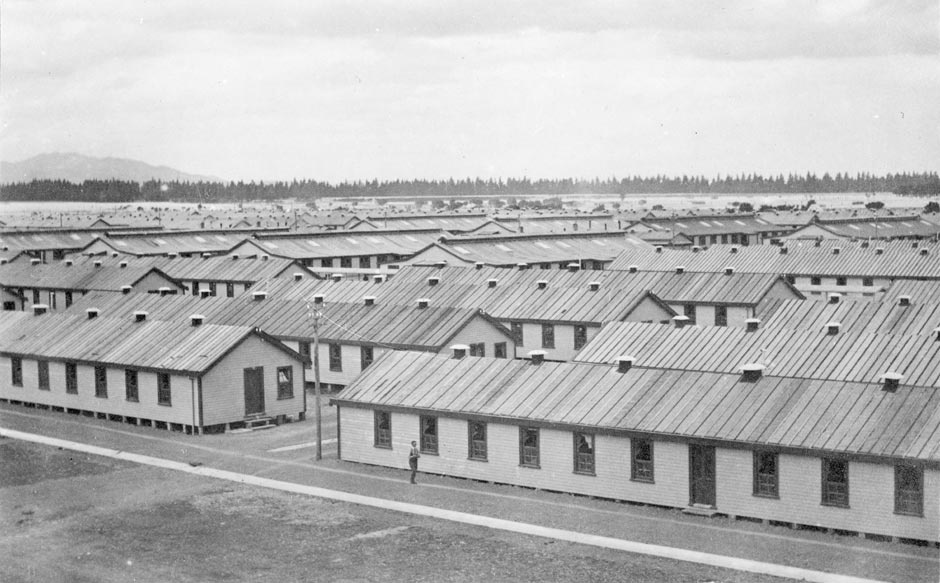
Rows of barracks at Featherston Military Camp, taken c1918.

The 1918 influenza virus proved most deadly among young men, such as those in military camps. Approximately two thirds of all Europeans who died were male, with the worse affected male age group those aged 30–34. Influenza historian Geoffrey Rice suggests that this may have been because many of the male victims never caught the mild first wave of the flu. He also notes that men were more likely to develop pneumonic complications, because unlike their children or wives who could go to bed, they had to ‘soldier on′ as the breadwinners of the family.

Alexander Turnbull Library
Reference: 1/2-104282-F
Further information and copies of this image may be obtained from the Library through its 'Timeframes' website, http://timeframes.natlib.govt.nz
Permission of the Alexander Turnbull Library, National Library of New Zealand, Te Puna Matauranga o Aotearoa, must be obtained before any re-use of this image.

How to cite this page: 'Influenza at the Featherston barracks', URL: http://www.nzhistory.net.nz/media/photo/influenza-featherston-barracks, (Ministry for Culture and Heritage), updated 3-Nov-2008

Community contributions


There are currently no community contributions for this page - please fill out the form to the right if you would like to add your story

What do you know?

Can tell us more about the information on this page?
Perhaps you have a related experience you would like to share?

The content of this field is kept private and will not be shown publicly.
CAPTCHA
This question is for testing whether you are a human visitor and to prevent automated spam submissions.

Comments will be reviewed prior to posting. Not all comments posted. Tell me more...