Historic NZ events in April
Apr
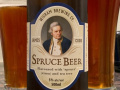
1773 First beer brewed in New Zealand
In an attempt to concoct a preventative against scurvy, Captain James Cook brewed a batch of beer on Resolution Island in Dusky Sound, using rimu branches and leaves.
Read more...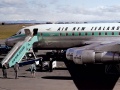
1965 TEAL becomes Air New Zealand
New Zealand’s international airline, Tasman Empire Airways Limited (TEAL), was renamed Air New Zealand Limited.
Read more...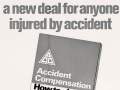
1974 ACC comes into operation
In 1972 legislation established the Accident Compensation Commission (ACC) to provide insurance for all personal injury.
Read more...
1978 Thermal insulation required in NZ homes
Early European-style timber frame construction was not as effective as traditional Māori methods at keeping the heat in buildings. Specified levels of thermal insulation were not required by law until 1978.
Read more...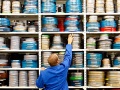
1981 New Zealand Film Archive launched
The New Zealand Film Archive has grown considerably since it shared Wellington premises with the New Zealand Federation of Film Societies.
Read more...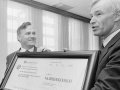
1987 State-owned enterprises are born
The State-owned Enterprises Act heralded a major overhaul of the public sector and was a key part of the strategy of economic liberalisation known as 'Rogernomics'.
Read more...Apr
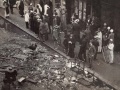
1915 Anzac soldiers riot in Cairo's Wazzir brothel district
Up to 2500 New Zealand and Australian troops rioted in the Haret Al Wassir red-light district of Cairo's Ezbekieh Quarter.
Read more...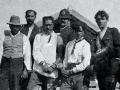
1916 Arrest of Rua Kēnana
On Sunday 2 April 1916, 57 police raided the Ngāi Tūhoe settlement of Maungapōhatu in the Urewera Ranges.
Read more...Apr
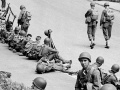
1943 Battle of Manners Street
Soldiers and civilians slugged it out on the streets of Wellington during the ‘Battle of Manners Street’, the best-known clash between New Zealanders and American servicemen during the Second World War.
Read more...Apr
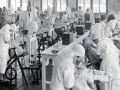
1921 First school dental nurses begin training
In a world first, 30 women began training as dental nurses for the state-funded School Dental Service.
Read more...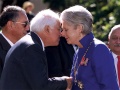
2001 Silvia Cartwright becomes governor-general
The swearing-in of Dame Silvia Cartwright as New Zealand’s 18th governor-general completed a female clean sweep of the country’s most powerful political and legal positions.
Read more...Apr
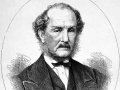
1871 NZ's first overseas diplomatic post created
New Zealand’s first overseas diplomatic post was created when Isaac Featherston was appointed as agent-general in London. Read more...
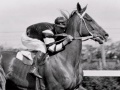
1932 Death of Phar Lap
The champion racehorse Phar Lap was New Zealand-born and bred, but never raced in this country. He won 37 of his 51 races and 32 of his last 35, including the 1930 Melbourne Cup. In the gloom of the great Depression, Phar Lap’s exploits thrilled two countries. Read more...
Apr
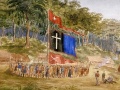
1864 Pai Mārire ambush in Taranaki
A British patrol was ambushed by Pai Mārire fighters near Ōakura. The heads of the seven men killed were taken around the North Island by Pai Mārire disciples to encourage enlistment in the movement.
Read more...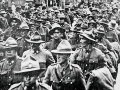
1919 Maori (Pioneer) Battalion returns from war
The Maori (Pioneer) Battalion was one of only three New Zealand Expeditionary Force formations – and the only battalion – to return from the First World War as a complete unit.
Read more...Apr
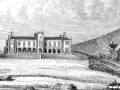
1856 First state secondary school opens
The first state secondary school in New Zealand, Nelson College, opened in temporary premises in Trafalgar St with a roll of just eight boys. It eventually attracted boys from around the country as well as the local area. It now has a roll of over 1000 and continues to take both boarders and day pupils.
Read more...Apr
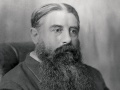
1873 Julius Vogel becomes premier
Julius Vogel was the dominant political figure of the 1870s, serving as colonial treasurer and premier on several occasions, and launching massive programmes of immigration and public works.
Read more...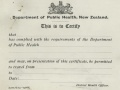
1913 Smallpox epidemic kills 55
By the end of the year the epidemic, which was intoduced by a Mormon missionary, had killed 55 New Zealanders, all of them Māori.
Read more...Apr
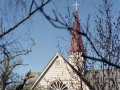
1850 Sisters of Mercy arrive in New Zealand
Nine Sisters of Mercy arrived in Auckland on the Oceanie with Bishop Pompallier and a number of priests.
Read more...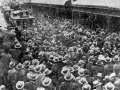
1932 Unemployed disturbances in Dunedin
During the 'angry autumn' of 1932, in the depths of the Great Depression, unemployed workers in Dunedin reacted angrily when the Hospital Board refused to assist them.
Read more...Apr
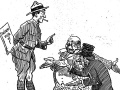
1919 New Zealand votes for prohibition – until soldiers’ votes are counted
A special liquor referendum initially gave prohibition a majority of 13,000 over continuance (the status quo), raising the hopes of those who had for decades campaigned against the manufacture and sale of alcohol.
Read more...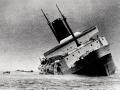
1968 Wahine wrecked in Wellington Harbour
The sinking of the Lyttelton–Wellington ferry Wahine is New Zealand’s worst modern maritime disaster. Fifty-one people lost their lives that day, another died several weeks later and a 53rd victim died in 1990 from injuries sustained in the wreck.
Read more...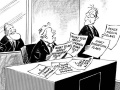
1973 Labour government cancels Springbok rugby tour
Following police warnings of civil strife, Prime Minister Norman Kirk informed the New Zealand Rugby Football Union that the government saw ‘no alternative’ to a 'postponement' of the planned tour by the South African Springboks.
Read more...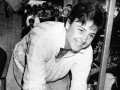
1984 Susan Devoy wins British Open squash tournament
In 1984, Susan Devoy became the first New Zealander to win the women’s title at the prestigious British Open squash tournament, the ‘Wimbledon of Squash’.
Read more...Apr
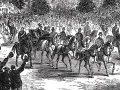
1869 New Zealand's first royal visit
The Duke of Edinburgh, Prince Alfred Ernest Albert, arrived in Wellington as captain of the frigate HMS Galatea. The first member of the British royal family to visit New Zealand, he was greeted with haka, speeches and bunting.
Read more...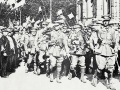
1916 New Zealand Division arrives in France
The Minnewaska, a troopship carrying the headquarters of the recently formed New Zealand Division, arrived in Marseilles, France
Read more...Apr
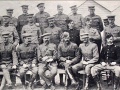
1902 Railway accident in South Africa kills 16 New Zealand soldiers
Sixteen members of the Eighth New Zealand Contingent were killed when their train collided with a goods train at Machavie (Machavierug), near Potchefstroom in Transvaal.
Read more...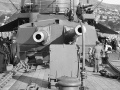
1913 HMS New Zealand begins tour of nation’s ports
The Royal Navy battlecruiser HMS New Zealand arrived in Wellington to begin a 10-week tour during which half a million New Zealanders inspected the vessel.
Read more...Apr
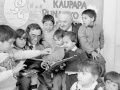
1982 First kōhanga reo opens
Pukeatua Kōhanga Reo, in Wainuiomata, Lower Hutt, accepted its first intake of tamariki on Easter Tuesday in 1982
Read more...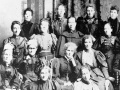
1896 National Council of Women formed
Three years after New Zealand became the first self-governing country in which all women could vote, representatives of 11 women’s groups met in Christchurch’s Provincial Council Buildings to form the National Council of Women.
Read more...Apr
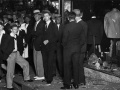
1932 Unemployed riot rocks Queen Street
Auckland’s Queen Street riot was by far the most destructive of the disturbances that rocked the four main centres in the ‘angry autumn’ of 1932.
Read more...
2018 Black Sticks Women win Commonwealth gold
In the 2010s New Zealand’s women’s hockey team was consistently among the best in the world, but until 2018 it had not won a major tournament
Read more...Apr
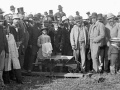
1885 First sod turned for North Island main trunk line
Politicians and Māori leaders ceremonially turned the ‘first sod’ of the central section of the main trunk line – a project that would take 23 years to complete.
Read more...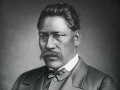
1868 First Māori MPs elected to Parliament
The Maori Representation Act 1867 established four Māori seats in the House of Representatives, initially for a period of five years. The act gave the vote to all Māori males aged 21 and over.
Read more...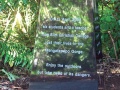
2008 Mangatepopo canyoning disaster
Six students and a teacher from Elim College died in a flash flood while canyoning in the Mangatepopo Stream, Tongariro National Park.
Read more...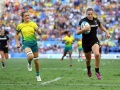
2018 Black Ferns Sevens win Commonwealth gold
New Zealand rugby sevens team turned the tables on 2016 Olympic champions Australia, winning a thrilling final at Robina Stadium on the Gold Coast in extra time.
Read more...Apr
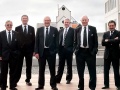
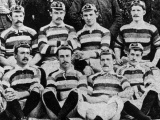
1892 NZ Rugby Football Union founded
As rugby grew in popularity in New Zealand, it became necessary to standardise the administration of the game in the colony. Despite some opposition, a New Zealand Rugby Football Union was founded.
Read more...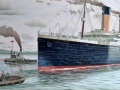
1912 News of Titanic sinking reaches New Zealand
Although no New Zealanders were aboard the world’s largest passenger ship when it sank in the chilly North Atlantic with appalling loss of life, the country followed the news closely.
Read more...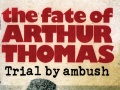
1973 Arthur Allan Thomas convicted of Crewe murders – again
Waikato farmer Arthur Allan Thomas was found guilty – for the second time – of the 1970 murder of his Pukekawa neighbours Harvey and Jeanette Crewe.
Read more...Apr
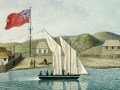
1820 General Gates sent to Sydney under guard
The American sealer General Gates – named for a War of Independence general and commanded by Captain Abimileck Riggs – had sailed from Boston in October 1818.
Read more...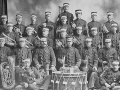
1880 First inter-city brass band contest
About 2500 people attended the first inter-city brass band competition in the Christchurch Drill Hall. The inaugural winners were the Invercargill Garrison Band.
Read more...Apr
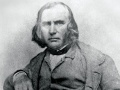
1840 Samuel Revans prints first newspaper
The first newspapers published in New Zealand were printed by Samuel Revans a month after he arrived in Port Nicholson (Wellington).
Read more...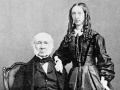
1847 Gilfillan killings near Whanganui
A Māori raid on the Gilfillan farm at Matarawa, just east of Whanganui, left four members of the family dead. The artist John Gilfillan and one of his daughters were severely wounded.
Read more...Apr
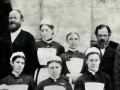
1884 First royal honour for New Zealand woman
The Royal Red Cross was awarded to Miss Annie Alice Crisp, Lady Superintendent of Auckland Hospital, in a ceremony at Government House, Auckland.
Read more...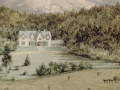
1893 State buys Cheviot Estate
In the 1890s the Liberal government, and especially Minister of Lands John McKenzie, was determined to ‘burst up’ large landholdings for settlement by prospective small farmers, who were among its key supporters. The first property purchased under this policy was the 34,300-ha Cheviot Estate in North Canterbury.
Read more...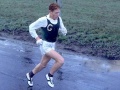
1967 Dave McKenzie wins the Boston Marathon
The 24-year-old McKenzie set a new course record of 2 hours 15 minutes 45 seconds in finishing ahead of American Tom Laris and Yutaka Aoki of Japan. He was the first New Zealander to win the Boston Marathon.
Read more...Apr
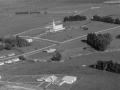
1958 Mormon temple opens in Hamilton
This was the first temple of the Church of Jesus Christ of Latter-day Saints in the southern hemisphere.
Read more...
1981 Allison Roe wins Boston Marathon
Allison Roe became the first New Zealand woman to win the prestigious Boston Marathon, burning off American star Patti Catalano and breaking the course record by nearly eight minutes.
Read more...Apr
1971 Court Theatre stages first play
It was opening night for The prime of Miss Jean Brodie in Christchurch’s Provincial Council buildings.
Read more...Apr
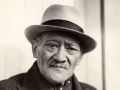
1936 Rātana and Labour seal alliance
The alliance between the Rātana Church and the Labour Party was cemented at an historic meeting between Tahupōtiki Wiremu Rātana and Prime Minister Michael Joseph Savage.
Read more...Apr

1979 Blair Peach killed in London
New Zealander Blair Peach died after a clash between police and protesters at an anti-fascism rally in Southall, London.
Read more...
1983 Prince William meets 'buzzy bee'
Among the highlights of the April 1983 royal tour were photographs of the Prince and Princess of Wales’ infant son, Prince William, playing with New Zealand’s iconic ‘buzzy bee’ toy.
Read more...Apr
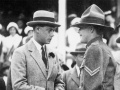
1920 Prince of Wales arrives for New Zealand tour
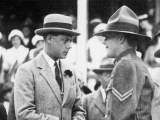
King George V’s son, Edward, Prince of Wales (who later reigned briefly as Edward VIII), visited New Zealand to thank the Dominion for its contribution to the Empire’s war effort.
Read more...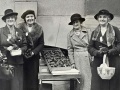
1922 New Zealand's first poppy day
A total of 245,059 small poppies and 15,157 larger versions were sold, earning £13,166. Of that amount, £3695 was sent to help war-ravaged areas of northern France; the remainder went to unemployed returned soldiers and their families.
Read more...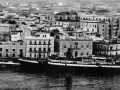
1941 Sinking of the Hellas
Disaster struck during the hurried evacuation of Allied forces from Greece when hundreds of civilians and Commonwealth troops, including New Zealanders, were killed while they were boarding the Greek yacht Hellas at the port of Piraeus, near Athens.
Read more...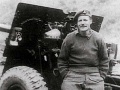
1951 First New Zealander killed in battle in Korean War
Kayforce suffered its first fatal battle casualty with the death of Second Lieutenant Dennis Fielden.
Read more...Apr
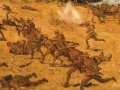
1915 Gallipoli landings
Each year on Anzac Day, New Zealanders and Australians mark the anniversary of the Gallipoli landings of 25 April 1915.
Read more...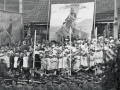
1916 First Anzac Day
People in communities across New Zealand and overseas gathered to mark the first anniversary of the Gallipoli landings.
Read more...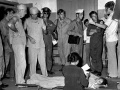
1963 New Zealand medics start work in South Vietnam
On Anzac Day 1963, a six-strong New Zealand civilian surgical team arrived in Qui Nhon, South Vietnam as part of the Colombo Plan assistance programme. Their deployment marked the beginning of New Zealand’s involvement in the Vietnam War.
Read more...Apr
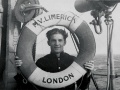
1943 New Zealand ship torpedoed in Tasman Sea
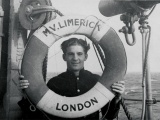
Like many New Zealand merchant ships, the Union Steam Ship Company freighter Limerick undertook military missions during the Second World War, carrying munitions, food and equipment between New Zealand, Australia, North America and the Middle East.
Read more...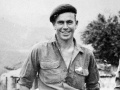
1945 Death of John Mulgan
At the time of his death by suicide in Cairo, many New Zealanders knew little about the Christchurch-born author of Man alone
Read more...
2005 Civil unions come into effect
Couples − heterosexual or homosexual − were now able to register their relationship as a civil union. All couples in New Zealand, whether married, in a civil union, or in a de facto partnership now had the same legal rights and obligations.
Read more...Apr
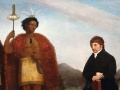
1806 Moehanga becomes first Māori to visit England
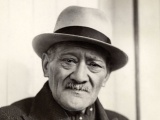
Moehanga of Ngāpuhi became the first recorded Māori visitor to England when the whaler Ferret berthed in London. Moehanga (Te Mahanga) had boarded the Ferret when it visited the Bay of Islands late in 1805.
Read more...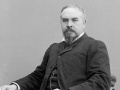
1893 Death of Premier John Ballance
Ballance was the first Liberal premier. He laid the foundation for a government that was widely seen as making New Zealand ‘the social laboratory of the world’.
Read more...Apr
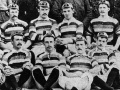
1888 First British rugby tourists take the field
The first British rugby team to tour New Zealand played its first match, against Otago, at Dunedin’s Caledonian Ground in front of 10,000 spectators.
Read more...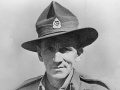
1941 Jack Hinton awarded the Victoria Cross
Southlander Jack Hinton was awarded the Victoria Cross for his actions on the night of 28 April 1941 at Kalamata during the evacuation from Greece.
Read more...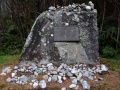
1995 14 die at Cave Creek
Fourteen people standing on a viewing platform at Cave Creek in Paparoa National Park on the West Coast died when it suddenly collapsed and fell into the creek-bed below.
Read more...Apr
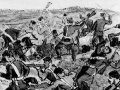
1864 Assault on Gate Pā
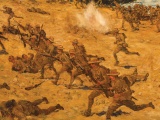
The British attacked the Ngāi Te Rangi stronghold of Pukehinahina (Gate Pā), defended by just 230 Māori fighters, after a heavy artillery bombardment.
Read more...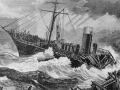
1881 131 perish in worst civilian shipwreck in New Zealand waters
The steamer Tararua, en route from Port Chalmers to Melbourne, struck a reef at Waipapa Point, Southland. Of the 151 passengers and crew on board, 131 were lost, including 12 women and 14 children. Read more...
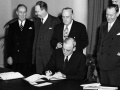
1952 ANZUS treaty comes into force
Signed by Australia, New Zealand and the United States, the ANZUS treaty recognised that an armed attack in the Pacific area on one member would endanger the peace and safety of the others.
Read more...Apr
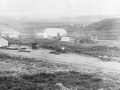
1864 Pai Mārire defeated at Sentry Hill, Taranaki
In one of their first armed operations, several hundred Pai Mārire fighters attacked a British redoubt at Te Mōrere (Sentry Hill) in Taranaki. Scores were killed and wounded.
Read more...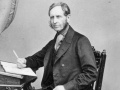
1865 Former Governor FitzRoy dies by suicide
Robert FitzRoy, the second governor of New Zealand (1843-45), took his own life at his home near London. Opinion on his governorship has always been divided.
Read more...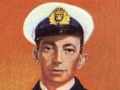
1917 William Sanders awarded New Zealand's only naval VC
William Sanders received the Victoria Cross (VC) for bravery during a German U-boat (submarine) attack on his ship. He became the first – and only – New Zealander to win the British Empire’s highest military decoration in a naval action.
Read more...