

This cartoon from The Free Lance shows the contrasting reception United States temperance advocate ‘Pussyfoot’ Johnson received from Protestant church leaders and the liquor trade during his 1922 visit.
‘Pussyfoot’ Johnson visits New Zealand
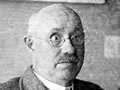
William E. ‘Pussyfoot’ Johnson, one of the leading figures of the American temperance movement, toured New Zealand in the lead-up to the 1922 licensing poll.
Johnson (1862–1945) was a household name in the United States by the early 1920s, and the face of American Prohibition to the rest of the world. An ardent prohibitionist, in 1906 he was appointed a US Marshal to enforce liquor laws in Indian Territory and Oklahoma. His exploits cracking the illicit liquor trade were legendary, and his stealthy pursuit of bootleggers earned him the nicknames ‘Johnson of the Panther Tread’, ‘Johnson the Velvet-Shod’ and ‘Pussyfoot Johnson’. He was said to have arrested 5743 bootleggers by the time he resigned his federal post in 1911.
Johnson thereafter committed his energies to the Anti-Saloon League, the main national prohibition organisation, which helped ensure the United States Congress passed the 18th Amendment in 1919, famously turning the nation ‘dry’. The League was also committed to converting the rest of the world to prohibition, and Johnson was despatched to England to promote the cause. The loss of an eye when he was mobbed by students in London raised his profile even further.
After sailing into Wellington Harbour on 11 September 1922, Johnson spoke to businessmen at the YMCA at lunchtime and to a packed audience at the Wellington Town Hall that evening. He encouraged his listeners to vote for prohibition because it had improved America’s moral tone. Crime had dropped, charity was less necessary, violence towards children had decreased, and cruelty to animals had lessened: ‘even the cats and dogs are happier’. Johnson toured New Zealand for almost two months, speaking in small towns as well as main centres. The country still voted against prohibition on 6 December 1922, though by a narrow margin.


Community contributions