
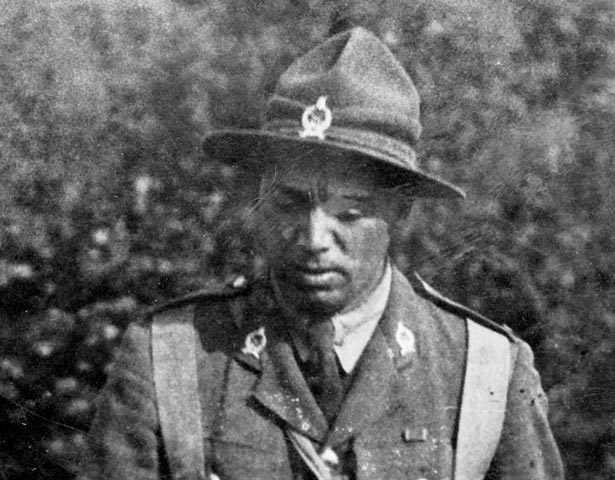
Peter Buck (1877?–1951), also known as Te Rangi Hīroa, was of the Taranaki tribe Ngāti Mutunga. He was educated at Te Aute College and the University of Otago Medical School, where he qualified as a doctor.
In 1905 he worked as a Māori medical officer, under another Te Aute graduate, Māui Pōmare. Buck and Pōmare joined forces to improve the sanitation of Māori settlements and the health of the Māori people. The more conservative Māori leaders often opposed them.
Buck, who was based in Northland, was unexpectedly elected to Parliament representing Northern Māori in 1909. He served on the Native Affairs Committee and was briefly in Cabinet as representative of the Māori people. He stood unsuccessfully for the general (European) Bay of Islands seat in 1914. This marked the end of his parliamentary career.
During the First World War he worked hard to encourage Māori to enlist. He served in the Middle East, Gallipoli and France as a medical officer. He was twice mentioned in dispatches and was made a DSO. By the end of the war he held the rank of major.
After the war Buck was appointed director of the Maori Hygiene Division of the Department of Health. The Māori death rate during the influenza pandemic of 1918 was more than eight times that of Europeans. Subsequently, Māori leaders worked with medical authorities to stop the spread of infectious diseases, making Buck's task a little easier.
Later in life Buck lived mostly overseas, pursuing his interest in anthropology and writing on Māori culture and society. He was awarded honorary doctorates by a number of universities, including the University of New Zealand and Yale. He received a knighthood in 1946.
Adapted from the DNZB biography by M.P.K. Sorrenson
Te Rangi Hīroa
Ko Ngāti Mutunga o Taranaki te iwi o Te Rangi Hīroa (1877?–1951). I kuraina ia ki te Kāreti o Te Aute, ka puta i te Kura Tākuta o Ōtākou.
I te tau 1905 e mahi ana a ia hei āpiha hauora mō te Māori i raro i tētahi atu ākonga o Te Aute, a Māui Pōmare. Ka mahi tahi a Te Rangi Hīroa rāua ko Pōmare kia paru kore ngā kāinga, kia piki te hauora ki te iwi Māori. He rahi tonu ngā rangatira o te ao Māori kāore i rata ki ā rāua mahi.
E noho ana a Te Rangi Hīroa ki Te Tai Tokerau i te tau 1909. Tumeke katoa ia i tana pōtitanga hei Mema Pāremata Māori mō taua rohe. Ka uru a ia hei mema mō te Komiti mō ngā Take Māori, ā, mō tētahi wā poto ko ia tērā te kanohi mō te iwi Māori ki te rūnanga kāwanatanga. Ka tū a ia mō te rohe Pākehā o Pēwhairangi i te tau o 1914, hauwarea. Ko te mutunga tērā o tana whai i ngā tūranga ki te Pāremata.
I te Pakanga Tuatahi o te Ao ka whakapau kaha ia ki te whakahau i ngā Māori kia kuhu hei hōia. Ka haere a ia hei āpiha hauora ki Īhipa, ki Karipori, ki Wīwī. E rua ngā wā ka whakaingoatia a Te Rangi Hīroa i ngā tuhituhi ki ōna āpiha teitei mō tōna māia. Ka whakawhiwhia ia ki te tohu DSO. Tae rawa ki te mutunga o ngā riri kua kake a ia hei meiha.
I tana hokinga ki Aotearoa i te mutunga o ngā riri, ka tohungia a Te Rangi Hīroa hei kaiwhakahaere o te Wāhanga Hauora Māori o te Tari Hauora. E rima ki te whitu whakaraunga te tokomaha ake o ngā Māori i matemate i te urutā rewharewha o te tau 1918 tēnā i te tokomaha o ngā Pākehā. Whāia, ka mahi tahi ngā rangatira Māori me ngā āpiha hauora ki te tāmi i ngā urutā tērā ka pā; nā tēnei mahinga tahitanga, ka māmā ake ngā mahi a Te Rangi Hīroa.
I tōna pakeketanga ka noho ia ki tāwāhi i te nuinga o te wā ki te whai i te mātauranga tikanga tangata, ki te tuhi kōrero hoki mō ngā tikanga me te ahurea o te Māori. Ka whakawhiwhia ia ki te tohu tākuta hōnore e te Whare Wānanga o Aotearoa, e te Whare Wānanga o Yale, e wai atu, e wai atu. I te tau 1946 ka ūhia e taitara Tā ki runga i a ia. Nō te tau 1951 ka mate a Te Rangi Hīroa.
How to cite this page
'Peter Buck', URL: https://nzhistory.govt.nz/people/peter-henry-buck, (Ministry for Culture and Heritage), updated 5-May-2020


Community contributions