
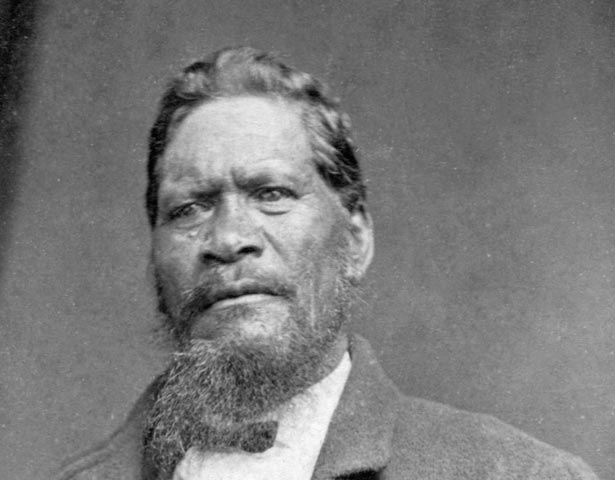
Karaitiana Takamoana (?–1879), of the Ngāti Hawea hapu (sub-tribe) of Ngāti Kahungunu, is said to have been born in Wairarapa. As a young warrior he was involved in the "musket wars" of the 1820s. He later learned to read and write at William Colenso's mission school, and became an influential chief.
In 1851 he was involved in selling the Waipukurau and Ahuriri blocks (totaling about 600,000 acres (242,000 hectares), including the site of Napier) to government land purchase agent Donald McLean. Takamoana and his fellow chiefs anticipated the establishment of towns and trading opportunities. He remained an enthusiastic land-seller during the 1850s and much of the 1860s. When war came to the East Coast he supported the government, and fought against the Hauhau and Te Kooti.
By the late 1860s Takamoana became less willing to sell land. He began to question the methods of both government and private land purchasers, particularly the pressure they placed on those, like him, who were heavily in debt to local storekeepers.
In 1871 he entered Parliament as member for Eastern Māori, an office he held until his death. At the same time the Repudiation movement was growing in Hawke’s Bay, aiming to overturn alleged fraudulent land transactions. Takamoana at first did not support this movement, believing that redress could be achieved through Parliament.
In 1872 Takamoana was involved in setting up a commission to inquire into Hawke’s Bay land loss. When it became clear that the land would not be returned, he became a committed "repudiationist" and contributed significant time and financial resources to the cause. He died in 1879.
Adapted from the DNZB biography by Angela Ballara
Karaitiana Takamoana
E ai ki te kōrero, i whānau mai a Karaitiana Takamoana (?-1879) ki Te Wairarapa. Ko Ngāti Hawea te hapū, ko Ngāti Kahungunu te iwi. He toa ia i ngā Pakanga Mau Pū o te tekau tau atu i 1820. I ākona ia ki te pānui me te tuhi i te kura mīhana o William Colenso (Te Koroneho). Whāia, ka tū a Takamoana he rangatira whai mana.
I te tau 1851 ka whai wāhi ia ki te hokonga o ngā poraka whenua o Waipukurau me Ahuriri (hui katoa e 600,000 eka (e 242,000 heketea), tae rawa ki te wāhi e tū nei te tāone o Nēpia) ki a Te Mākarini (Donald McLean) te āpiha hoko whenua a te kāwanatanga. Ko te wawata o Takamoana rātou ko ngā rangatira o Ngāti Kahungunu i te hokonga, ka whakatūria he tāone, ka tuwhera ngā kaupapa tauhokohoko. I ngā tekau tau o 1850, o 1860, kei te kaha tonu tana hokohoko whenua. I te muranga o ngā ahi o te riri ki Te Tai Rāwhiti, ka tū a Takamoana ki te taha o te kāwanatanga, ka kuhu ki ngā pakanga ki ngā Hauhau, ki a Te Kooti hoki.
Taka rawa ki te paunga o te tekau tau atu i 1860, kua kawa a Takamoana ki te hoko whenua. Ka āwangawanga ia mō ngā tikanga hoko whenua a te kāwanatanga me ētahi atu. Hei tauira, ka pōuri ia mō ngā taumahatanga ka utaina ki runga i ngā Māori pērā i a ia, kei te nui ā rātou nama ki ngā tāngata whakahaere toa o te rohe.
I te tau 1871 ka kuhu ia ki te Pāremata hei Mema mō te tūru Māori o Te Tai Rāwhiti. Nō tana matenga rā anō i whakawāteatia ai tēnei tūranga. I taua wā anō kei te tipu te rōpū Whakahētanga Hoko Whenua ki Te Matau a Māui. Ko tā rātou whāinga kia whakakāhoretia ngā hokonga whenua i whakapaetia he whānako. I te tīmatanga kāore a Takamoana i tautoko i te rōpū, i tana whakapono ko te Pāremata kē te taumata hei whakatika i ēnei raruraru.
I te tau 1972 ka whai wāhi a Takamoana ki te whakatūranga o tētahi kōmihana arotake i ngā whenua i hokona i Te Matau a Māui. I tana mōhio kāore e whakahokia mai ngā whenua, ka huri a ia ki te tautoko i te rōpū Whakahētanga Hoko Whenua. Ka whakapau kaha, whakapau moni ia mō te kaupapa. Ka mate ia i te tau 1879.
How to cite this page
'Karaitiana Takamoana', URL: https://nzhistory.govt.nz/people/karaitiana-takamoana, (Ministry for Culture and Heritage), updated 8-Nov-2017


Community contributions