
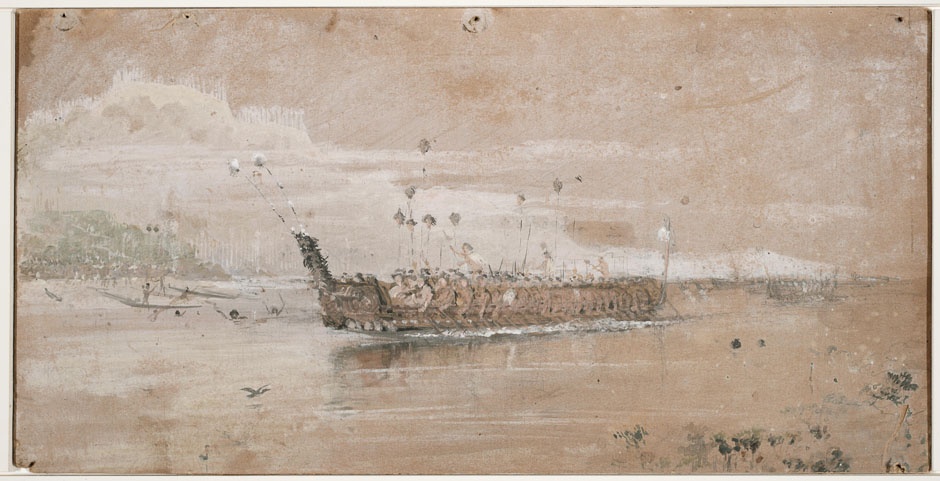
The return of Hongi, 1860s.
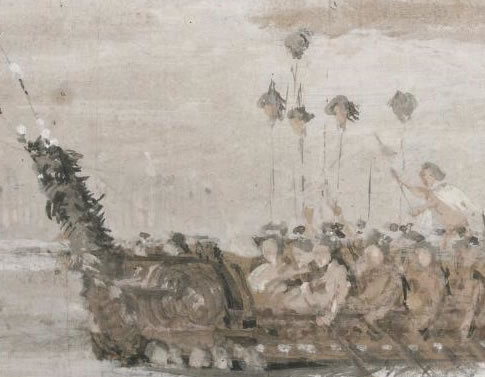
This image by an unknown artist shows a large waka taua (war canoe) decorated with severed heads. The canoe was owned by the Ngāpuhi chief Hongi Hika, who was returning to the Bay of Islands in January 1819 after raiding Bay of Plenty and East Cape tribes. A second large canoe can be seen in the background.
Hongi Hika became one of the most feared leaders in the land. Most of his actions during his period of dominance have been attributed to the notion of utu and a frenzied quest for revenge for the deaths of whānau (family members) at Moremonui in 1807. Simplistic explanations such as this have coloured interpretations of these wars and of Māori warfare in general.
Utu involved returning affected parties to their prior position. Blood did not always need to be spilt. Personal property could be taken as compensation (taua muru) for an offence – deliberate or unintentional – against an individual, community or society. The nature of muru was determined by factors such as the mana of the victim and the offender, the degree of the offence and the intent of the offending party. Utu had to be obtained – either voluntarily or by force – from the party at fault to restore the mana of the offended individual or group. Concern for mana often resulted in disproportionate responses to actions.
Detail:


Community contributions