
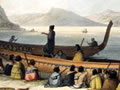
Maori had always fought rival kin groups. Conflict increased as their numbers rose, resources were depleted and insults demanding a response multiplied. Wars were fought in autumn – after food for winter had been stored – using hand-to-hand weapons such as mere and patu. They were often ritualised affairs that caused relatively few deaths. The victors gained land and booty and increased their mana (status). The losers sometimes had to migrate to a less desirable, unpopulated area.
In August 1820 the Nga Puhi chief Hongi Hika arrived in London with the missionary Thomas Kendall. Hongi had heard there 'were a thousand thousand guns at the Tower'.
After meeting King George IV, Hongi was presented with a suit of armour described as a 'coat of mail', as well as other gifts.
On the way home, Hongi traded most of his gifts in Sydney for 300 muskets. Fortunately for him, he kept the armour. In 1821 it was hit twice by musket shots during a battle with Ngati Paoa at Mauinaina, located beside the Tamaki River. His survival gained him a reputation for invulnerability that served him well in future battles.
Firearms revolutionised warfare around the Pacific in the 19th century. The first muskets peddled by European traders were unreliable and slow to reload. When Nga Puhi first used muskets in battle about 1807, they were overwhelmed by conventionally armed Ngati Whatua. Seeking revenge, Nga Puhi – based in the main trading area, the Bay of Islands – bought more of these costly weapons. Led by chiefs like Hongi Hika, they grew potatoes, raised pigs and processed flax on a large scale to exchange for muskets.
From 1815 Nga Puhi taua (war parties) armed with muskets wreaked havoc across the North Island. Their victims faced exile, death or slavery. Hongi's importation of 300 muskets in 1821 brought a new escalation of conflict. Over the next few years he led huge musket armies against iwi (tribes) from Tamaki (Auckland) to Rotorua. Nga Puhi suffered heavy casualties, but their opponents were crushed despite retreating into fortress pa.
Thousands died in the Musket Wars. The lowest recent estimate is 20,000, and it is likely that more New Zealanders were killed in these years than in all post-1840 conflicts combined – including both world wars. Thousands more were enslaved or became refugees.
Tribes under attack soon bought guns and launched their own campaigns. In 1822 Ngati Toa, led by Te Rauparaha, fought their way down the North Island from Kawhia to Kapiti, joined by sections of other tribes as they went. When Waikato tribes, under Te Wherowhero, got muskets, they attacked several Taranaki iwi. More of these now migrated south to join Ngati Toa in a confederation that came to rival Nga Puhi's. This confederation defeated an opposing alliance before attacking Ngai Tahu in the South Island.
Once all tribes had muskets, there were no more easy victories. The new gunfighter pa stood up to musket fire and were difficult to capture. By the 1830s campaigns were too costly. With European diseases also taking a heavy toll, warfare gave way to economic rivalry.
Prev page: New Zealand's 19th-century wars
Next page:The New Zealand Wars