
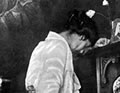
Most New Zealanders responded to the war with great enthusiasm. But as it dragged on, newspaper editorials called for greater sacrifices. By 1917, war-weariness had set in. Things were at a stalemate. Casualty lists and food prices continued to rise. In July 1917, some called for the reduction of New Zealand’s military commitment.
The conscription of married men aroused opposition; huge losses at Passchendaele in October 1917 caused morale to plummet. There was frustration at the time it took to bring to bear the resources of the United States, which had entered the war in April 1917. Newspapers remained sure of ultimate British victory, and there were no calls to bring New Zealand troops home.
Anti-German hysteria
Alleged (and sometimes actual) German atrocities in Europe fired indignation and anger towards all things German. A campaign in the main newspapers tried to root out anything possibly contaminated by German kultur. Growing casualty lists added to this public hysteria, and people of German descent became the target of abuse and harassment. Rumours of German spies and conspiracies abounded.
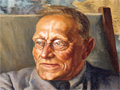
A perfect illustration of this anti-German hysteria was the experience of George William von Zedlitz. The German-born and English-educated von Zedlitz came to New Zealand in 1902 to take up the position of professor of modern languages at Victoria University College in Wellington. In addition to his academic duties, he was official translator to the New Zealand government between 1912 and 1914. On the outbreak of war von Zedlitz volunteered to return to Germany as a Red Cross worker. This created a backlash against him. The government introduced legislation to secure his removal from Victoria University College. The college council defended him but he was removed in October 1915 under the Alien Enemy Teachers Act.
After the war, von Zedlitz helped found the University Tutorial School and became well known as an adult education lecturer and as a broadcaster. In 1936, Victoria University College made him professor emeritus, and in the same year, he was elected to the senate of the University of New Zealand. He died in Lower Hutt in 1949.
Conscription
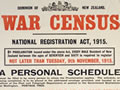
As the war dragged on, the seemingly endless toll in lives and maimed men undermined New Zealand’s ability to maintain the numbers required for the New Zealand Expeditionary Force. Despite public disapproval of those seen as shirkers, 69% of men eligible for military service had not volunteered by 1916. Only with conscription, introduced later that year, could New Zealand maintain its war effort. Some New Zealanders opposed conscription for a variety of reasons, and a few were granted exemption, mainly on religious grounds. Exemption was generally frowned upon.
Authorities imprisoned about 2600 conscientious objectors during war. Some were sent overseas and forcibly sent to the front to break their resolve. Convicted objectors were denied voting rights for 10 years and barred from working for central or local government.
The human impact
Almost 60% of the 100,000 New Zealanders who went to war became casualties. More than 18,000 died of wounds or disease — 12,483 of them in France and Belgium. From a population of little more than a million people in 1914, this meant that about one in four New Zealand men between the ages of 20 and 45 was either killed or wounded. The impact of war, though, reached far beyond the individuals involved; most New Zealand families, communities, workplaces, schools and clubs were affected in a very direct way.
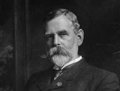
The impact of the First World War on local communities and institutions such as clubs and schools is starkly illustrated by the experience of Wellington College. During the war 1643 of this school’s former pupils served overseas. Of these, 222 were killed and a further 350 were wounded.
As well as the old boys and their families, the war took a heavy personal toll on the headmaster of the college, Joseph Firth. He wrote to every former pupil serving overseas and to the families of all those who were killed. He also urged current pupils to do their bit for the war effort through patriotic fund-raising.


